The first sign is usually not what you see. It is what you hear – layered birdsong above, water moving over stone, leaves shifting in warm air, and the sudden hush that makes every breath feel more deliberate. A true rainforest sensory experience begins before the first waterfall appears. It starts the moment the body realizes it has entered a place that asks for attention.
For travelers who want more than a checklist excursion, that difference matters. A rainforest can be visited quickly, photographed efficiently, and left behind with little more than a few impressive images. Or it can be encountered as a living sanctuary – one that engages sight, sound, scent, touch, temperature, and emotion all at once. The second path is the one people remember long after the trip ends.
Why a rainforest sensory experience feels different
Most tours are built around what can be pointed out. A guide identifies a bird, a tree, a frog, or a viewpoint, and the experience moves forward. That approach can still be enjoyable, but it often keeps nature at arm’s length. A sensory experience is more intentional. It does not treat the rainforest as a backdrop. It treats it as an atmosphere that changes your pace, your breathing, and your awareness.
This is part of what makes luxury nature travel so compelling when done well. Refinement in the rainforest is not about separating guests from the environment. It is about creating the conditions to receive it fully. Privacy, thoughtful pacing, expert interpretation, and comfort all allow the senses to stay open rather than distracted.
That distinction is especially meaningful in Guanacaste, where travelers often seek both beauty and restoration. A day in the rainforest can be adventurous, but it can also be healing. The most memorable experiences manage both.
The senses that shape the experience
Sound is often the first invitation
Rainforests have a kind of acoustic depth that feels almost architectural. You hear distant water before you see it. Bird calls echo across the canopy. Insects create a steady pulse beneath everything else. Even silence has texture.
For many travelers, this becomes the first shift away from ordinary travel fatigue. Noise in daily life is usually demanding. Rainforest sound is different. It surrounds rather than interrupts. That can create an almost immediate sense of calm, especially when the setting is private and free from large crowds.
Scent makes the memory linger
The fragrance of a rainforest is difficult to describe until you stand inside it. Wet earth, mineral-rich water, green leaves warmed by sun, bark, flowers, and clean humidity all mix into something grounding and unmistakable. It is one of the strongest reasons a forest memory stays vivid.
Scent also changes with elevation, rainfall, and time of day. Near thermal waters, the air may carry mineral notes. Near waterfalls, it feels cooler and sharper. Along flowering trails, sweetness appears briefly and then recedes. Those subtle transitions are part of what makes the experience feel alive rather than staged.
Touch turns observation into presence
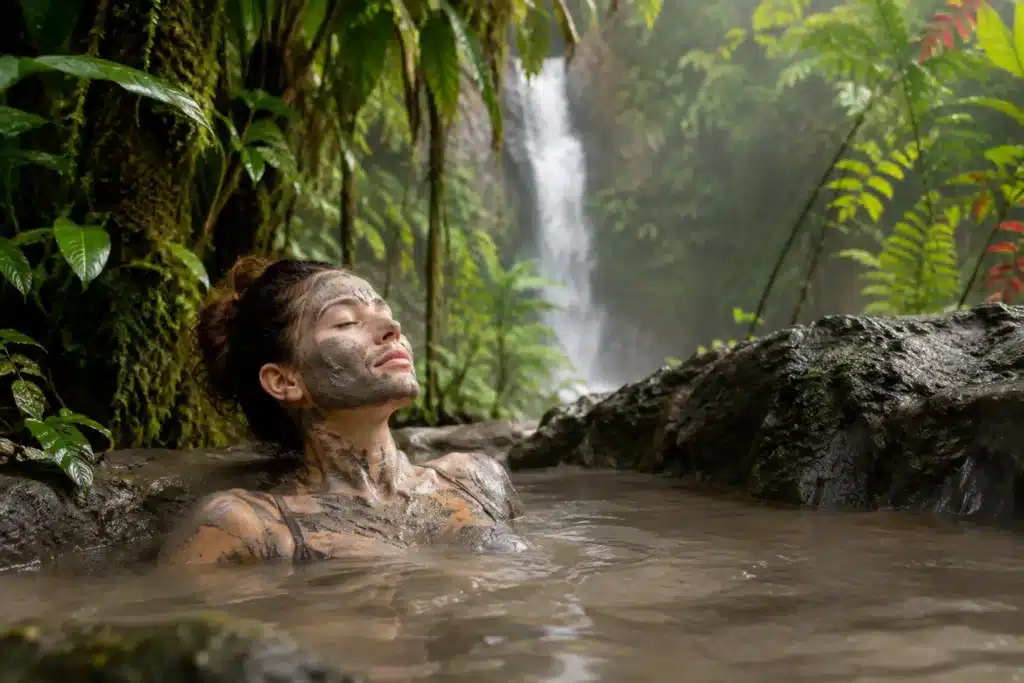
Touch in the rainforest is not limited to what you place your hand on. It is the cool mist near a cascade, the warmth of thermal pools, the softness of mud treatments, the shift from stone path to wooden bridge, the robe after a soak, and the gentle contrast between shaded air and sunlight.
This is where wellness becomes a natural extension of exploration. The body responds to temperature, moisture, and texture with surprising immediacy. A guided walk followed by thermal immersion can feel less like a schedule of activities and more like a coherent reset.
Sight becomes richer when it slows down
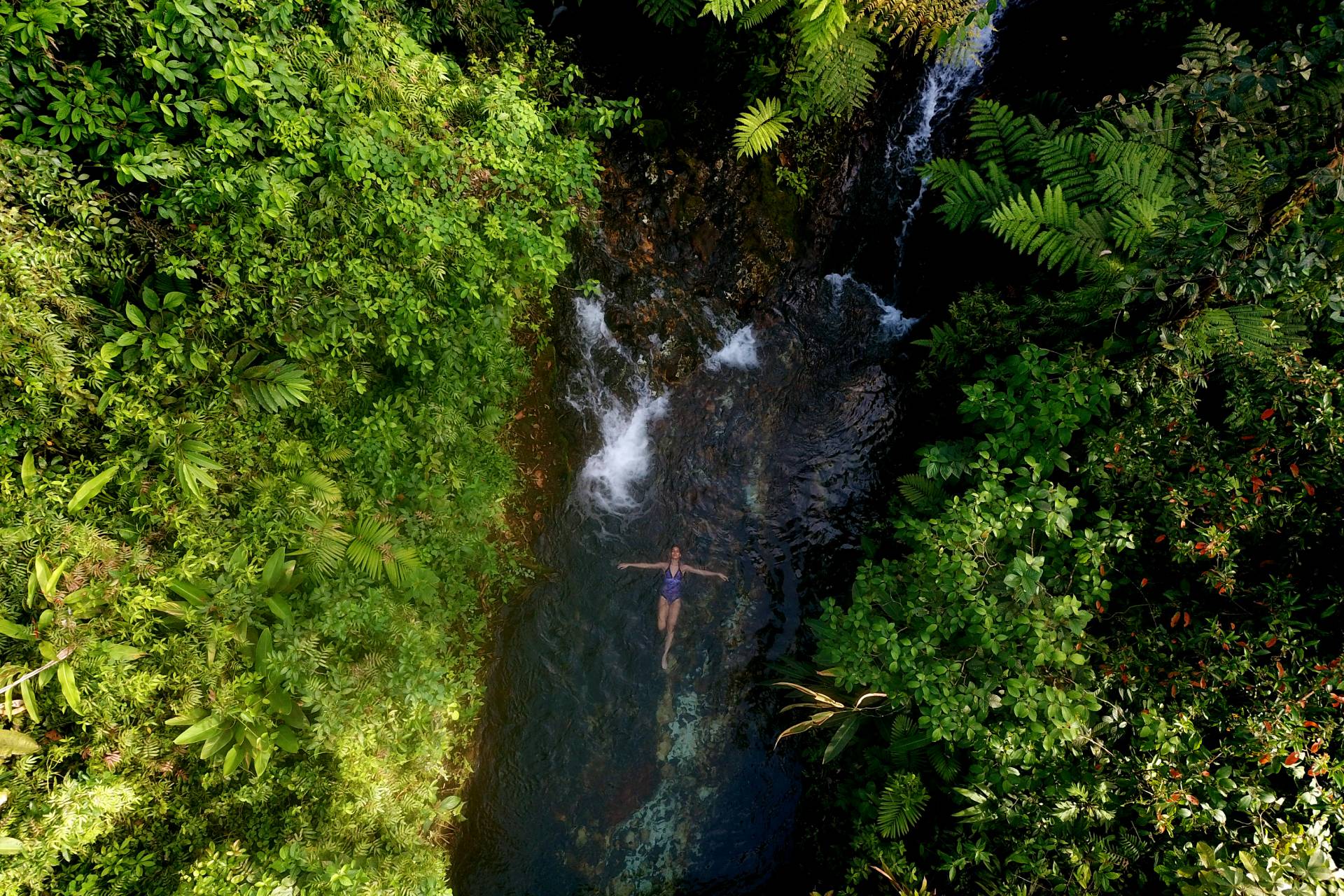
Of course, the rainforest is visually stunning. But visual beauty alone is not what makes it transformative. The real shift happens when people stop scanning for highlights and begin noticing detail – tiny orchids, glints of light through leaves, the changing greens of moss and canopy, the amber tone of suspended roots, the smooth power of falling water.
Luxury in this setting often means having the time and quiet to notice what others rush past. Not everyone wants a strenuous, fast-moving outing. For many guests, a more curated pace creates deeper appreciation.
Why exclusivity changes the emotional quality
A rainforest sensory experience is strongly shaped by context. The same waterfall feels different when reached with a small private group than it does in a crowded stop on a busy route. The same thermal soak feels more restorative when there is space, calm, and attentive hosting.
Exclusivity is not only about status. In nature, it is about intimacy. When there are fewer distractions, guests hear more, notice more, and relax more completely. This is one reason private reserves and carefully managed access matter so much in premium ecotourism. They preserve not just the landscape, but the quality of encounter.
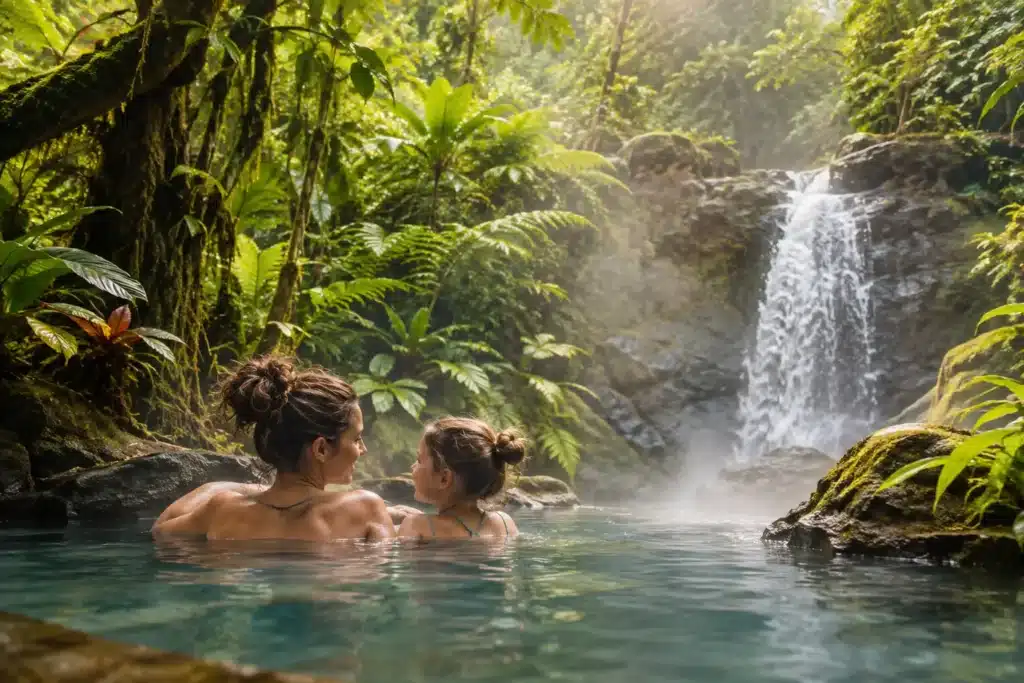
For couples, that can make the day feel deeply romantic. For families, it creates room for curiosity instead of hurry. For wellness travelers, it supports the kind of mental quiet that is rarely available in conventional tourism settings.
The role of expert guidance in a rainforest sensory experience
The best guides do more than share facts. They shape attention. They know when to explain and when to pause. They can identify wildlife, medicinal plants, geologic features, and microclimates, but they also understand how to let the forest speak for itself.
That balance is crucial. Too little interpretation, and guests may miss what makes the environment extraordinary. Too much, and the experience can begin to feel instructional rather than immersive. A refined guided experience respects both knowledge and atmosphere.
In a place as biodiverse as Costa Rica, this guidance can also deepen emotional connection. When travelers understand how a forest functions – how water, wildlife, heat, shade, and preservation are interwoven – the experience becomes more meaningful. Conservation stops being an abstract value and becomes something felt.
Wellness is not an add-on here
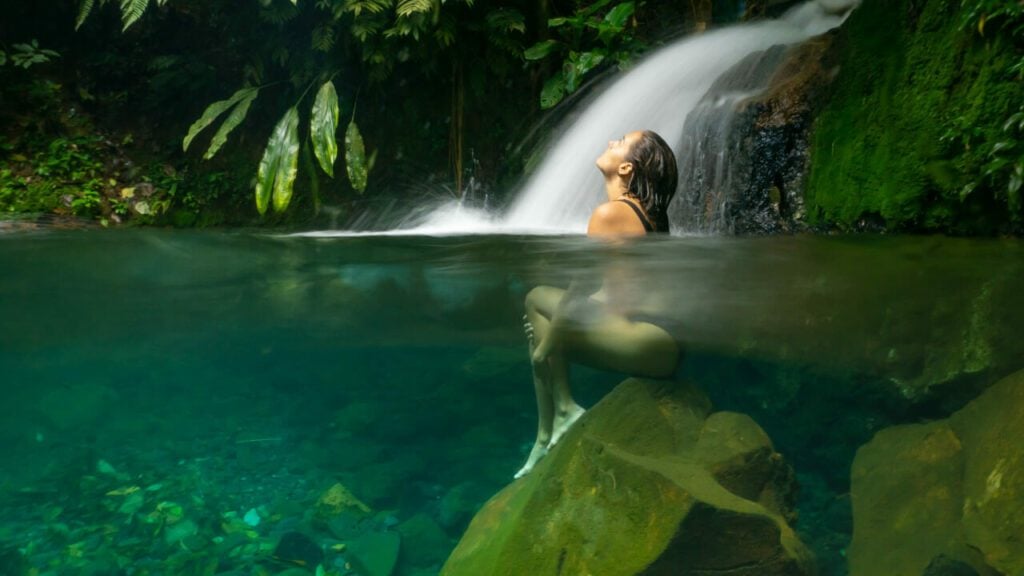
In many travel settings, wellness is treated as a separate category from adventure. In the rainforest, they naturally belong together. Walking beneath the canopy stimulates the senses. Waterfalls refresh the nervous system. Thermal pools release muscular tension. Mineral-rich mud and spa-style rituals add another layer of restoration.
This is why the most elevated experiences in Guanacaste resonate so strongly with discerning travelers. They do not force a choice between beauty and comfort, or between exploration and ease. They allow guests to move through all of it in one day with intention.
Sensoria has built its approach around this idea – that the rainforest can be both invigorating and deeply restorative when every element is thoughtfully curated.
Who will appreciate this kind of experience most
Not every traveler is looking for the same thing. Some want maximum activity, others want maximum convenience, and some simply want a quick scenic stop. A rainforest sensory experience tends to appeal most to guests who value emotional depth as much as visual beauty.
That often includes honeymooners, couples celebrating something meaningful, families seeking a more elevated nature day, and wellness-minded travelers who want to feel renewed rather than exhausted. It is also a strong fit for people who prefer privacy, personalized hosting, and a sense that their time in nature has been carefully composed.
There is, however, a trade-off to acknowledge. Premium, low-density experiences can cost more than mainstream tours, and they are designed for a different expectation. If someone only wants a fast photo opportunity, the added care may feel unnecessary. But for travelers seeking memory, restoration, and rarity, it is precisely that care that creates value.
How to choose the right rainforest sensory experience
Look beyond the word luxury and ask what actually supports immersion. Is access private or crowded? Is the pace rushed or considered? Does the experience include time in water, places to rest, and thoughtful transitions between activity and relaxation? Are the guides deeply knowledgeable? Is dining part of the day handled with the same care as the trail itself?
Also consider the emotional arc. The finest experiences are not just collections of features. They unfold well. There is anticipation, discovery, pause, renewal, and a feeling of being gently carried through the day rather than managed through a schedule.
That is what transforms a beautiful outing into something far more lasting. You leave with wet hair, tired legs, calmer breath, and a mind that feels noticeably quieter. The rainforest has not simply entertained you. It has recalibrated you.
And that may be the clearest sign you chose well. A true rainforest sensory experience does not ask you to consume nature. It invites you to belong to it, if only for a day.