A warm thermal pool in a rainforest is more than a beautiful place to pause. Its temperature, texture, and mineral character are the final expression of a long underground journey. What makes thermal water mineral-rich is a precise meeting of heat, time, geological depth, and the particular rocks through which the water travels.
In volcanic landscapes such as Guanacaste, that journey can be especially remarkable. Rainwater enters the earth, moves through fractures in ancient rock, is warmed by geothermal energy, and slowly gathers dissolved elements before returning to the surface. The result is water that feels elemental: soft against the skin, gently buoyant, and deeply calming after a day among waterfalls and rainforest trails.
What makes thermal water mineral-rich?
Mineral-rich thermal water begins as ordinary precipitation. Rain falls across a watershed, seeps into porous ground, and descends through layers of soil, sediment, and bedrock. As it moves, water acts as a natural solvent. It carries tiny amounts of minerals from the surrounding geology into solution.
Heat accelerates this exchange. Deep below the surface, geothermal activity raises the temperature of groundwater. Warm water can dissolve minerals more readily than cool water, particularly when it remains underground for an extended period. The longer its route and the more mineral-bearing rock it encounters, the more distinctive its composition may become.
That composition is never identical from one spring to another. A thermal source that travels through volcanic rock may carry different dissolved minerals than one moving through limestone or granite. Even springs located close together can vary in temperature, pH, scent, clarity, and mineral concentration because their underground pathways are not the same.
The word “mineral” does not simply mean that water is warm or that it comes from a natural spring. It refers to measurable dissolved substances in the water, often including calcium, magnesium, sodium, potassium, bicarbonate, silica, sulfate, chloride, and trace elements. The exact balance is shaped by the landscape itself.
Volcanic heat is part of the story
Costa Rica’s volcanic terrain gives thermal water its dramatic beginning. Beneath regions influenced by volcanic systems, the earth retains heat from magmatic activity and the movement of hot fluids below ground. Groundwater circulating near these heat sources can emerge at the surface as a thermal spring.
Yet heat alone does not create a mineral spring. It creates the conditions for a deeper conversation between water and stone. As warmed water passes through volcanic formations, it may interact with mineral-rich material such as basalt, ash-derived soils, and altered rock. Each contact point leaves a subtle signature.
This is why thermal pools are best understood as living expressions of place. Their warmth comes from the earth’s internal energy, while their mineral profile reflects the terrain, the depth of circulation, and the pace of the water’s return. A pool beneath rainforest canopy is not merely heated water placed in a scenic setting. It is geology made tangible.
The minerals you may find in thermal water
Many guests notice a difference between thermal water and a conventionally heated pool before they know its chemistry. Some springs feel silky. Others have a faint mineral aroma, a slightly different taste on the lips, or a natural cloudiness caused by dissolved compounds and fine mineral particles. These qualities are not defects. They can be clues to the water’s origin.
Calcium and magnesium are commonly associated with water that has traveled through mineral-bearing rock. Sodium and chloride may be present in springs influenced by certain deep geological formations. Bicarbonate can contribute to a smooth, soft sensation, while silica is often linked with the velvety feel people associate with geothermal waters.
There is no single ideal mineral formula. A spring with a high concentration of one element is not automatically superior to another with a more balanced profile. The character of a thermal pool depends on what guests seek: comforting warmth, a tranquil setting, a sense of immersion in nature, or a lingering ritual of rest after movement.
For this reason, responsible thermal experiences do not rely on vague claims. Water chemistry can shift with rainfall, seasonal recharge, groundwater levels, and natural changes within the geothermal system. Regular monitoring matters, both for guest comfort and for the protection of the fragile source itself.
Why the journey underground matters
A thermal spring’s mineral content is shaped by several conditions working together. The first is geology: rocks contain different minerals, and water can only collect what its route makes available. The second is temperature: hotter water often interacts more actively with rock. The third is residence time, meaning how long water remains underground before emerging.
Pressure and acidity also influence what dissolves into the water. At depth, groundwater experiences conditions very different from those at the surface. As it rises and cools, some minerals may remain dissolved, while others may form deposits around spring channels or pool edges. Those pale, textured formations found near some springs are visible evidence of an ongoing mineral process.
Rainfall adds another layer of nuance. In a tropical rainforest, abundant rain continuously replenishes groundwater systems. During wetter periods, increased recharge can alter the volume and temperature of a spring. The source remains natural, but it is not static. It responds to the larger ecosystem around it.
That interdependence is one reason preservation matters. Forest cover helps regulate water cycles, stabilize soil, and support the watershed that feeds streams and springs. Protecting a thermal landscape means protecting more than the pool itself. It means honoring the forest, rock formations, and underground hydrology that make the experience possible.
Mineral water and wellness: a thoughtful perspective
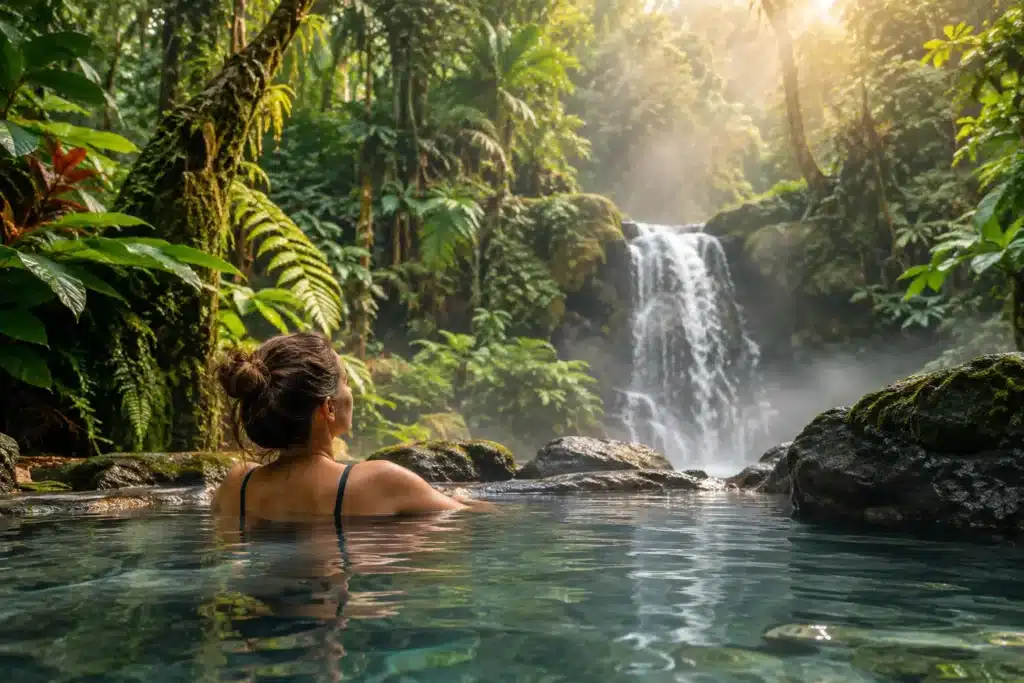
The enduring appeal of thermal bathing is easy to understand. Warm water invites the body to release tension. The sound of a nearby waterfall lowers the volume of the outside world. Surrounded by rainforest, even a short soak can feel like a return to a more natural rhythm.
Minerals add to the sensory and cultural significance of the experience, but they should be approached with honesty. Thermal water is not a cure-all, and no pool should be presented as a substitute for medical care. Individual comfort also varies. Those who are pregnant, managing a health condition, sensitive to heat, or taking certain medications should seek professional guidance before using very warm pools.
For most guests, the value is experiential rather than clinical: unhurried warmth, quiet reflection, and a feeling of being held by a landscape far older than any itinerary. Hydration, moderation, and attentive listening to the body make the ritual more enjoyable. A brief soak followed by cooling off, resting, and drinking water is often more restorative than trying to stay immersed for too long.
How to recognize a meaningful thermal experience
The most memorable thermal settings reveal a connection between water and place. Rather than treating the spring as an isolated amenity, they invite guests to understand its natural context: the rainfall that replenishes it, the volcanic landscape that warms it, and the rainforest that shelters its watershed.
Privacy and thoughtful design also change the experience. When a thermal pool is integrated with forest trails, waterfalls, quiet resting areas, and attentive hospitality, bathing becomes part of a fuller sensory journey. The contrast is powerful: cool mist on a morning trail, the call of birds in the canopy, then the enveloping warmth of water that has traveled from deep within the earth.
At Sensoria, this sense of place is central to the encounter. The rainforest is not a backdrop to a thermal pool. It is part of the same living system, creating a setting where restoration feels both refined and profoundly natural.
The next time you step into a warm mineral pool, consider the distance the water has traveled to meet you. It has moved through rain, stone, heat, and time, carrying the quiet character of the land in every rising breath of steam.