The rainforest asks for more than a camera and a sense of adventure. It asks for presence. Knowing how to prepare a jungle excursion means arriving ready for changing weather, uneven trails, vivid encounters with wildlife, and the rare pleasure of letting the natural world set the pace.
In Guanacaste, a single day can hold cool forest mist, warm sunlight, rushing waterfalls, and mineral-rich thermal waters. The most rewarding preparation is not about packing for every possibility. It is about choosing well, moving thoughtfully, and allowing enough room in your schedule to experience the forest rather than simply pass through it.
Begin With the Experience You Want
A jungle excursion can be energetic, restorative, or both. Before choosing what to wear or bring, consider the rhythm you want from the day. A family with young children may prefer a shorter guided walk paired with waterfalls and time to rest. Couples may seek a quieter, more private journey that ends in thermal pools or a wellness treatment. A seasoned traveler may welcome a longer hike and deeper naturalist interpretation.
This is where a curated experience changes the day. A guide does more than lead the route. They read trail conditions, recognize subtle wildlife movement, explain the forest’s interconnected systems, and know when to pause. In a living rainforest, the moments that stay with you are often not the grandest ones. They may be the call of a distant howler monkey, the intricate geometry of a leaf, or the cool air rising from a shaded stream.
If your excursion includes thermal waters, waterfalls, or dining, confirm the day’s sequence in advance. Knowing when you will be walking, swimming, resting, and eating helps you pack lightly without arriving unprepared.
What to Wear for Rainforest Trails
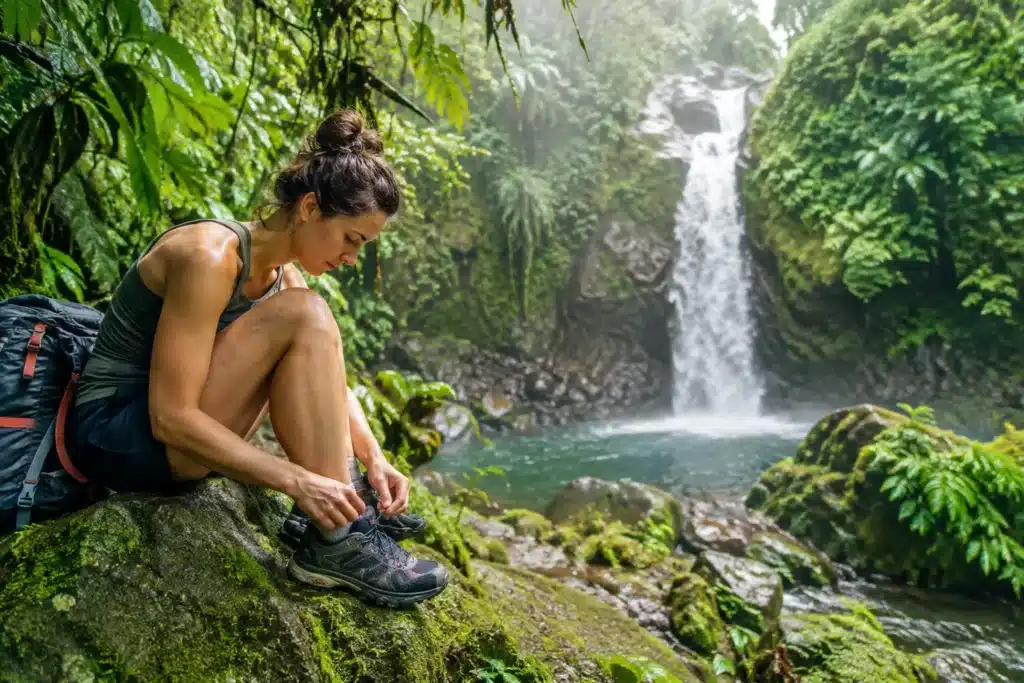
Comfort on a jungle trail begins with your feet. Choose closed-toe hiking shoes or trail shoes with dependable grip. Trails can be damp, root-covered, or rocky even on a bright day, and footwear with solid traction gives you the confidence to notice your surroundings rather than watch every step.
Wear lightweight, breathable clothing that can handle humidity and dry reasonably quickly. Long pants or leggings are often more comfortable than shorts when walking through brush or near insects, though the right choice depends on the trail, the weather, and your own preferences. A moisture-wicking shirt, a light long-sleeve layer, and a packable rain jacket usually offer more flexibility than heavy clothing.
Avoid cotton when possible. It absorbs moisture and can remain damp long after a sudden shower has passed. Choose fabrics that feel comfortable against the skin and will not distract from the experience once the air turns warm.
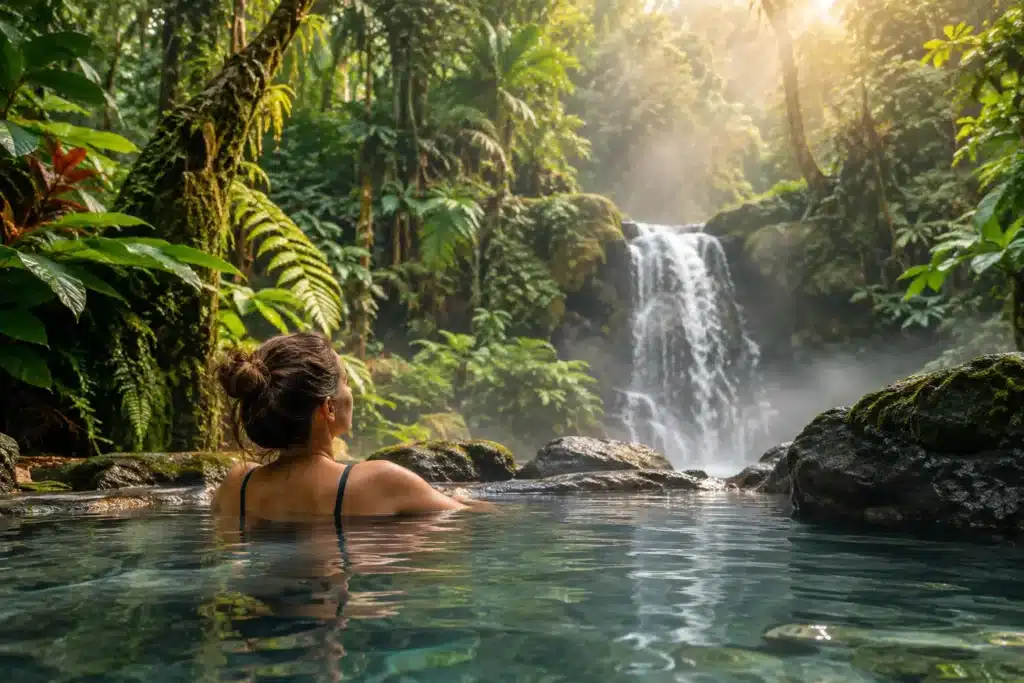
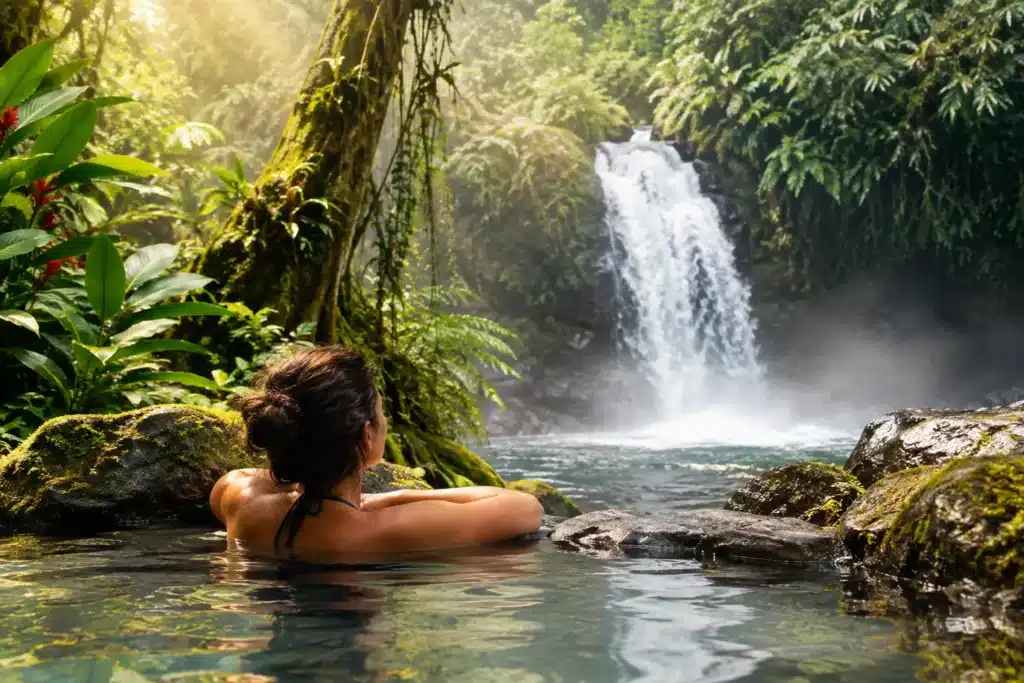
Bring a swimsuit if the itinerary includes waterfalls or thermal pools, along with a dry change of clothes for the journey back. At a refined reserve experience such as Sensoria, this simple preparation allows you to transition naturally from trail to water, without turning a restorative pause into a logistical concern.
Pack With Intention, Not Excess
A jungle day is more elegant when your hands and shoulders are free. A small daypack is usually sufficient, especially when the excursion provides essentials such as water, towels, lockers, or refreshments. Keep valuable items to a minimum and protect electronics in a waterproof pouch or dry bag.
Your essentials should include sun protection, insect repellent, sunglasses, a reusable water bottle if one is not provided, and any personal medication you may need. A hat can be useful in open areas, although it should be secure enough to stay in place on breezy overlooks or near waterfalls.
For photography, bring equipment you genuinely plan to use. A phone with a protective case may be all many guests need. Those carrying a camera should consider a compact rain cover and a secure strap. The humidity, spray, and quick shifts between light and shadow make the rainforest visually extraordinary, but they can be demanding on gear.
A few items are best left behind: unnecessary jewelry, strong fragrances, disposable plastics, and anything that will make you worry about loss or damage. The forest has a way of clarifying what matters.
Prepare for Weather That Changes Its Mind
Costa Rica’s rainforest does not operate on a visitor’s forecast. Even during drier months, conditions can change quickly with elevation and location. A brief rain shower may cool the trail, deepen the colors of the canopy, and transform a waterfall from beautiful to unforgettable.
Check the forecast before departure, but do not treat it as a verdict. Instead, prepare for warmth, moisture, and rain, then let the experience unfold. A quality rain layer and shoes with traction are far more useful than trying to predict every hour of the day.
There is also a difference between being weather-ready and being overequipped. Carrying too much can make a gentle hike feel burdensome. If you are joining a guided excursion, ask what is supplied and tailor your pack around that answer. Private and premium experiences often include comforts that allow guests to travel with less.
Eat, Hydrate, and Pace Yourself
Tropical heat and humidity can be more tiring than the distance on a trail suggests. Begin the day hydrated, eat a balanced breakfast, and bring a small snack if your excursion does not include a meal. Something simple and nourishing is better than a heavy meal before a walk in warm conditions.
During the excursion, sip water consistently rather than waiting until you feel thirsty. If you are enjoying cocktails, champagne, or a celebratory meal later in the day, save those pleasures for after the more active portion of your itinerary. Hydration and a measured pace make the difference between feeling pleasantly tired and feeling depleted.
Give yourself permission to slow down. A jungle excursion is not a race to the next viewpoint. Stop when your guide points out a hidden orchid, when a waterfall invites a longer look, or when the sounds of the canopy become more interesting than the conversation. Luxury in nature is often the freedom to take your time.
Follow Your Guide and Respect the Reserve
The best preparation for a rainforest visit is an understanding that you are a guest in a complex habitat. Stay on designated trails, follow your guide’s instructions, and do not touch plants, nests, insects, or animals unless specifically invited to do so by a trained professional.
Wildlife sightings cannot be guaranteed, and that is part of their value. Animals are not performances. They are living beings moving through their own territory. Keep a respectful distance, lower your voice when asked, and resist the urge to pursue a photograph at the expense of the animal’s comfort or the group’s safety.
The same consideration applies to waterfalls, streams, and thermal pools. Do not leave food, plastic, or personal-care products in natural water. Use only designated facilities, and be mindful that sunscreen, insect repellent, and lotions can affect sensitive ecosystems. Conservation is not separate from the experience. It is the reason a private reserve can remain a sanctuary of clear water, healthy forest, and extraordinary biodiversity.
Consider Your Personal Comfort and Limits
Be candid about mobility, allergies, medical concerns, dietary needs, and your confidence on uneven terrain when booking. A well-designed excursion can often be adapted, but only when the host has the information needed to plan thoughtfully. This is particularly valuable for multigenerational families, honeymooners seeking privacy, and travelers recovering from busy itineraries.
If you are prone to motion sickness, bring what helps you for the drive to the reserve. If you have sensitive skin, test insect repellent and sunscreen before travel. If you are unsure about a trail’s difficulty, ask how long it takes, what the elevation is like, and whether there are opportunities to rest along the way.
There is no prize for choosing an itinerary that leaves you exhausted. The ideal experience should feel enlivening: active enough to awaken the senses, spacious enough to leave you restored.
How to Prepare a Jungle Excursion With Children
For children, the rainforest is often most meaningful when it feels like discovery rather than instruction. Give them a small water bottle, a light rain layer, and a simple role, such as listening for bird calls or spotting different shades of green. Keep expectations realistic about walking pace, and choose an outing with time for swimming, snacks, and rest.
Parents should pack an extra set of dry clothes, familiar snacks if needed, and any required medication. More importantly, allow children to linger. A child who spends five minutes fascinated by a butterfly may be having a richer rainforest experience than an adult hurrying toward the next stop.
Prepare well, then leave room for surprise. The forest is at its most generous when you meet it with dry shoes, an unhurried mind, and enough quiet to hear what has been there all along.