The most meaningful rainforest therapy benefits rarely arrive as a dramatic revelation. They begin more quietly: with cool, mineral-rich air on the skin, the measured pace of a trail beneath a living canopy, and the sound of water that gradually makes the rest of life feel less urgent. In Costa Rica’s rainforest, restoration is not a treatment performed on you. It is an experience shaped by attention, movement, stillness, and the rare privilege of entering a protected natural world with care.
For travelers who spend much of the year moving quickly, a day in the rainforest can offer a different rhythm. It invites the body to slow down, the mind to widen, and the senses to return to their natural range. When that immersion is thoughtfully guided and paired with thermal waters, privacy, comfort, and refined hospitality, it becomes more than a beautiful excursion. It becomes a restorative pause with a lingering effect.
What Rainforest Therapy Really Means
Rainforest therapy is not a clinical diagnosis or a substitute for medical care. It is an intentional form of nature immersion, informed by the idea that time in biodiverse, living landscapes can support relaxation, mental clarity, and a stronger sense of connection. Its closest relative is forest bathing, a Japanese practice known as shinrin-yoku, but a tropical rainforest offers its own distinct atmosphere.
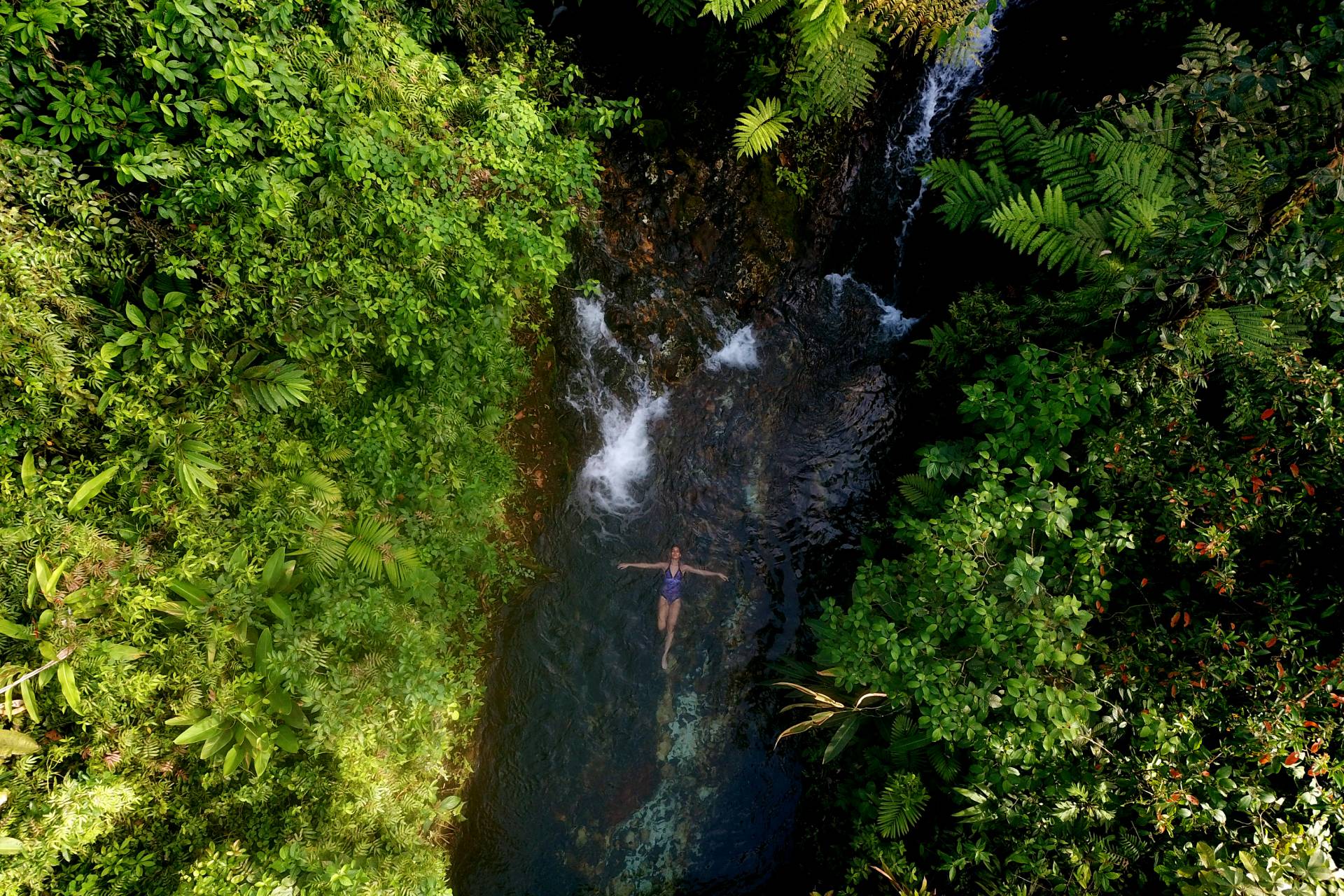
Here, the landscape is deeply sensory. Mist settles on broad leaves. Birdsong moves through layers of green. Waterfalls create a steady natural rhythm, while volcanic terrain may warm the pools beneath the forest. The point is not to cover as much ground as possible or collect a checklist of sightings. It is to experience the place at a human pace.
A guided experience adds depth to this pause. An expert can reveal the small dramas that are easy to miss: the architecture of a leaf, a hidden orchid, the call of a distant bird, the ecological role of an insect, or the reason a stream changes color after rain. Knowledge turns scenery into relationship. It also helps visitors move respectfully through a sensitive environment rather than treating it as a backdrop.
Rainforest Therapy Benefits for Mind and Body
The strongest benefit of rainforest immersion may be its ability to redirect attention. Modern travel can be surprisingly demanding, even when it is luxurious. Flights, reservations, messages, schedules, and crowded attractions ask the mind to keep sorting information. A rainforest asks for something else: presence.
A calmer nervous system
Gentle walking, humid air, birdsong, and the visual complexity of the forest can create conditions that feel naturally calming. Many guests notice that their breathing becomes slower and their thoughts less insistent after time beneath the canopy. The experience does not erase stress at its source, but it can create a valuable distance from it.
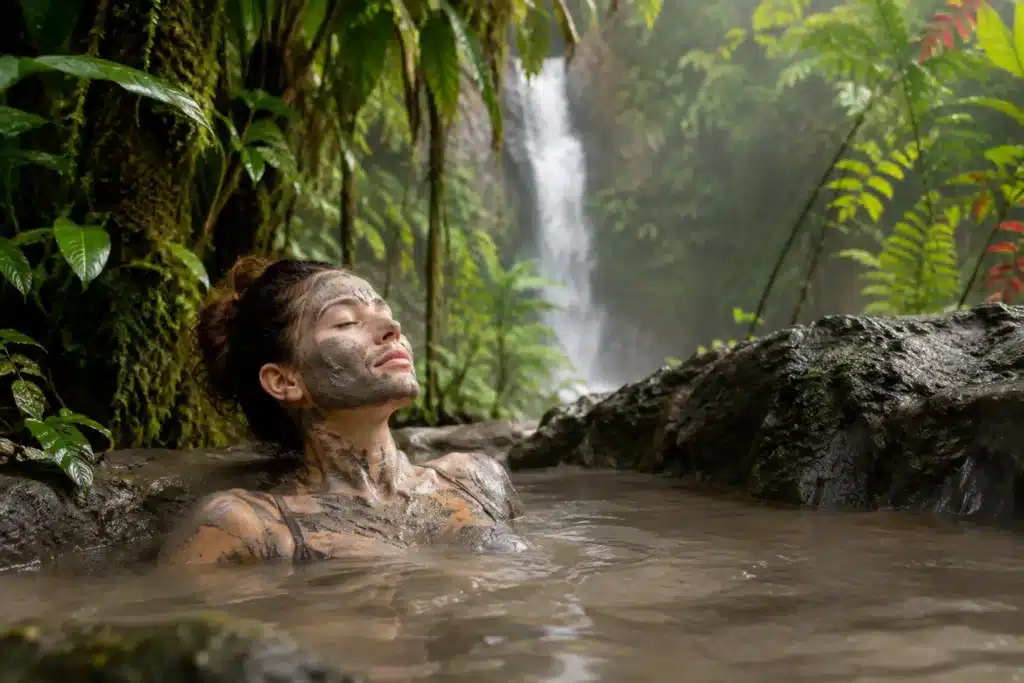
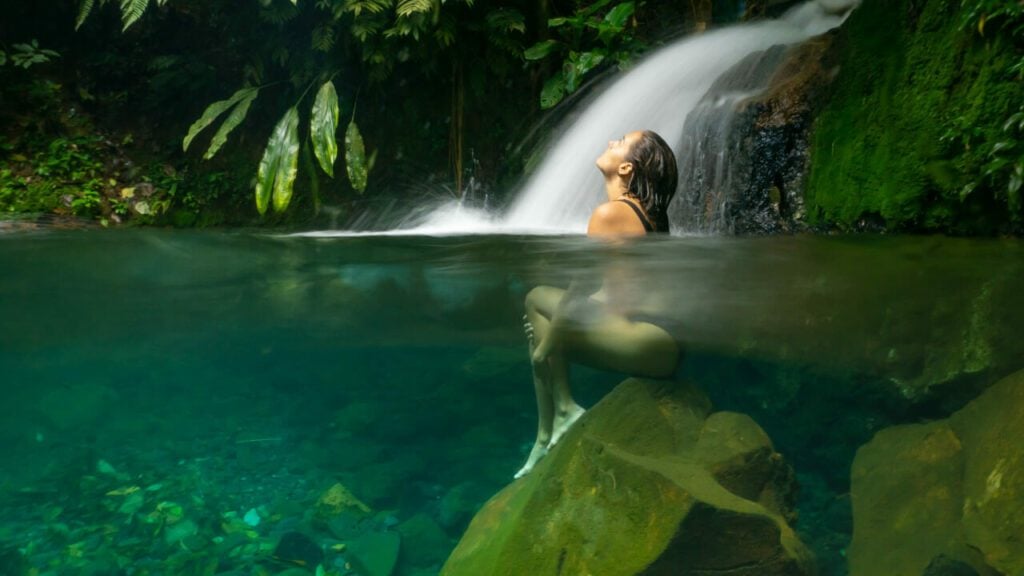
Water plays a particular role. The continuous sound of a waterfall can soften the sharp edges of conversation and city noise, allowing the mind to settle without effort. Floating or resting in a warm thermal pool adds another layer of ease, especially after a trail walk. Heat, buoyancy, and stillness can relax tired muscles and make it easier to simply be present.
Attention restored by beauty
There is a difference between being entertained and being restored. Entertainment often demands focus. The rainforest holds attention more gently. A flash of blue from a butterfly, sunlight moving across the water, or a hanging garden of ferns gives the mind something beautiful to notice without asking it to perform.
This is why a well-paced nature experience matters. If every moment is filled with instructions, photos, or rushing between stops, the restorative quality can be lost. Time to pause beside a cascade, sit in silence, or linger in warm water is not empty space in the itinerary. It is where much of the experience takes root.
Movement without the pressure of a workout
Rainforest trails invite purposeful movement, but they are not all the same. Terrain, elevation, weather, and personal mobility affect how a day feels. For some travelers, a moderate walk provides an energizing sense of accomplishment. For others, a slower route with ample rest and thermal time is the more restorative choice.
The ideal experience is not necessarily the most strenuous one. It is the one that matches your body and your intention. A private or small-group setting allows for greater flexibility, whether that means taking time for photographs, moving slowly as a family, or allowing a couple to enjoy a more secluded pace.
A renewed sense of connection
A rainforest is one of the planet’s great reminders that life is interdependent. Roots, fungi, insects, birds, water, and trees are part of a system far more intricate than any single visitor can fully understand. That perspective can be quietly humbling.
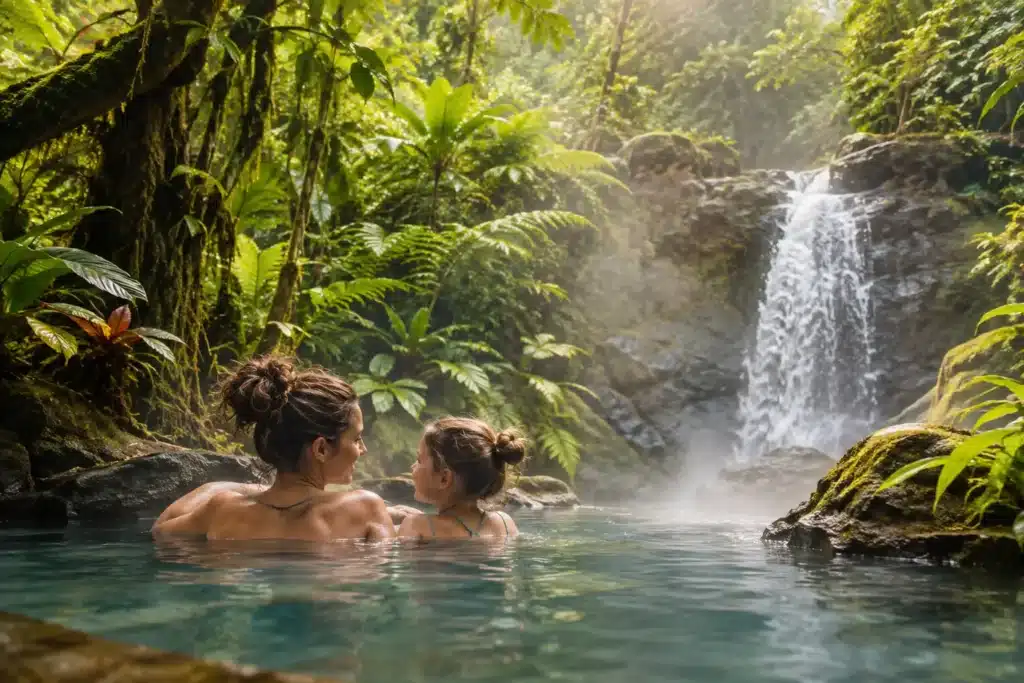
For couples, this shared encounter can become a meaningful memory precisely because it is unlike a typical dinner reservation or beach afternoon. For families, it gives children a living lesson in wonder and stewardship. For travelers celebrating a honeymoon, proposal, or milestone, the forest offers a setting that feels intimate without being manufactured.
Why Thermal Waters Deepen the Experience
Thermal pools are often treated as a pleasant add-on to a rainforest day. In truth, they can be one of its most restorative elements. After walking through cool shade and listening to rushing water, entering naturally warm mineral waters creates a striking contrast. The body softens. The pace changes again.
Thermal bathing has long been associated with rest and relaxation, though individual responses vary. Guests with certain health conditions, sensitivity to heat, pregnancy concerns, or questions about circulation should seek personal medical guidance before using hot pools. Hydration, moderation, and listening to your body are always part of a wise wellness experience.
For most visitors, the value lies in the ritual. Leave the trail, rinse away the day, slip into warm water, and allow the forest to continue around you. When this is followed by a nourishing meal, a quiet lounge, or a spa-style treatment, the experience feels complete rather than hurried.
The Difference Between Seeing the Rainforest and Entering It
Not every rainforest outing delivers the same benefits. A crowded trail, rigid timetable, or noisy group can make it difficult to feel the privacy and sensory depth that draw travelers to nature in the first place. Luxury in this setting is not only found in a robe, a glass of champagne, or an elegant meal, though those details can be lovely. It is also found in space, thoughtful pacing, and access to a landscape that has been protected.
This is where a private reserve and an experienced host make a genuine difference. Conservation creates the conditions for meaningful encounters with wildlife, clean water, mature forest, and quiet. Responsible tourism helps sustain those conditions when it respects the land’s limits and treats preservation as part of the experience, not a marketing detail.
At Sensoria, the day can be shaped as a curated journey through rainforest trails, waterfalls, thermal pools, and moments of elevated rest. The intention is not to separate adventure from wellness, but to let each deepen the other. A guide provides context; the forest provides wonder; comfort creates room to absorb it all.
How to Receive More From a Rainforest Day
The simplest preparation is to arrive willing to be unhurried. Wear appropriate footwear, bring a light rain layer, and let your guide advise you on trail conditions. Tropical weather is part of the experience, and a passing shower can make the colors brighter, the air cooler, and the waterfalls more dramatic.
It also helps to decide what you want from the day before you arrive. Do you want gentle movement and deep rest? A celebratory experience with your partner? A family day that balances discovery with comfort? Or a private escape from an itinerary that has become too full? Naming that intention makes it easier to choose the right pace and package.
Consider putting the phone away for portions of the experience. Take the photographs you will treasure, then allow yourself to notice what cannot be captured: the texture of warm stone underfoot, the scent released by rain, the changing temperature near a waterfall, and the quiet confidence that comes from feeling fully present.
A Memory the Body Recognizes
The finest nature experiences do not demand that you become someone new. They remind you of something easily forgotten: that rest can be active, beauty can be medicinal in spirit, and a day spent with care can alter the way you carry yourself home.
Long after the flight from Guanacaste, you may remember the waterfall or the warmth of the thermal water. More likely, you will remember the feeling beneath those details: quieter, lighter, and newly awake to what a living forest can give when you allow it the time.