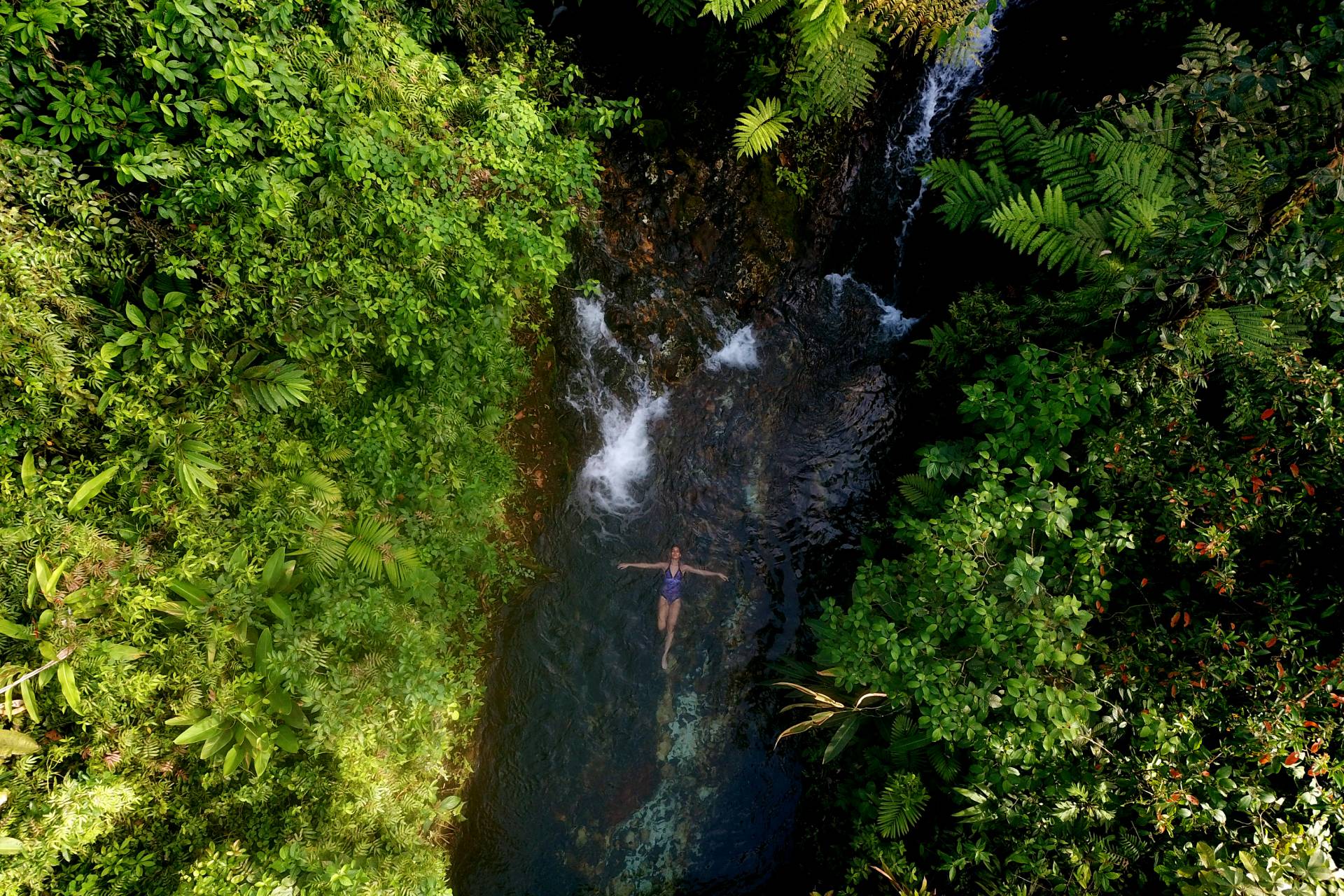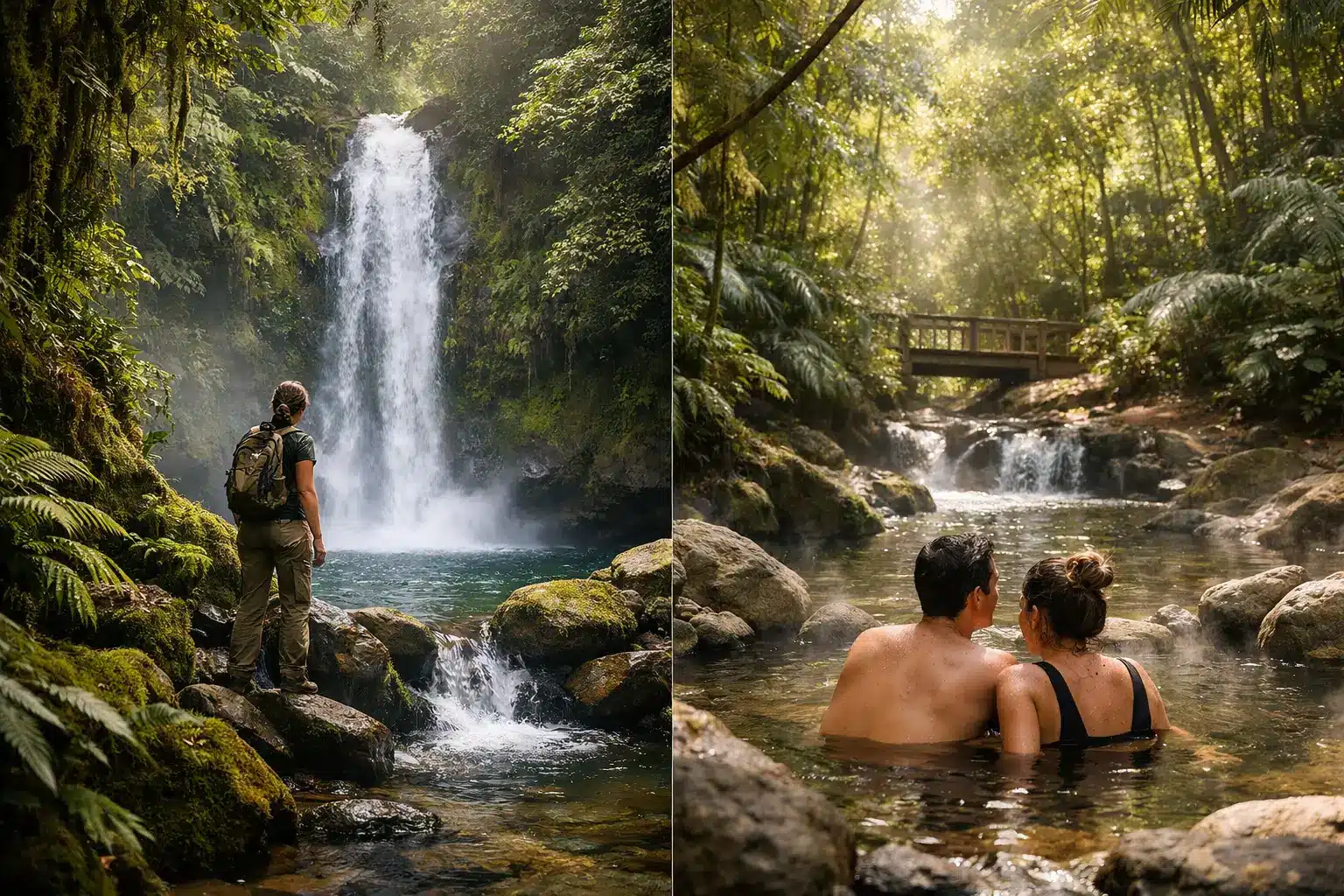

The difference between a memorable rainforest day and a tiring one often comes down to a simple choice: private reserve vs public park. Both can reveal Costa Rica’s extraordinary beauty, but they offer very different rhythms, levels of comfort, and ways of connecting with nature. For travelers seeking more than a checklist stop, that distinction matters.
A public park can be magnificent. It can also be busy, less flexible, and shaped by the pace of larger visitor volumes. A private reserve, by contrast, tends to feel more intentional – quieter trails, more personal guiding, and an atmosphere that invites you to slow down enough to actually notice the forest. Neither model is inherently better for every traveler, but they serve different expectations.
Private reserve vs public park: what changes the experience?
At first glance, the landscape may seem similar. You may still walk through tropical forest, hear birds overhead, and reach waterfalls or thermal waters. The real difference lies in how the experience is designed around you.
In a public park, the priority is broad public access. That is valuable and essential for conservation, but it usually means standardized routes, fixed infrastructure, and more people sharing the same space. During peak travel periods, trails, entrances, parking areas, and key viewpoints can feel crowded. Even in a beautiful setting, that changes the emotional tone of the day.
A private reserve usually operates with more control over access, pacing, and guest flow. That often creates a more serene atmosphere, especially for couples, families, or small groups who want nature to feel restorative rather than rushed. When the forest is quieter, sound changes. Bird calls become clearer. Waterfall mist feels more present. Wildlife is often easier to observe because the environment is less disturbed.
For luxury travelers, this is where the distinction becomes meaningful. The question is not only where you go, but how you feel while you are there.
Access, privacy, and space
Privacy is one of the clearest advantages of a private reserve. Not absolute solitude, necessarily, but a more sheltered kind of access. Instead of moving shoulder to shoulder with large groups, you are more likely to experience the rainforest with room to breathe.
That sense of space is particularly valuable for travelers celebrating something personal – a honeymoon, an anniversary, a proposal, or simply a long-awaited escape. In those moments, crowded boardwalks and noisy gathering points can dilute what should feel intimate.
Public parks, on the other hand, are built for shared enjoyment. That can be wonderful for travelers who do not mind a more communal setting or who prioritize iconic sites over exclusivity. If your goal is to see a landmark and you are comfortable planning around crowds, a public park may work well.
Still, there is a trade-off. Shared access can mean waiting for viewpoints, less flexibility in how long you linger, and a more logistical feel overall. A private reserve tends to offer the opposite: a more fluid, personal encounter with the landscape.
Wildlife encounters are not just about luck
Many travelers assume wildlife sightings depend entirely on chance. Chance does matter, but conditions matter too. In the private reserve vs public park conversation, one of the most overlooked differences is how the environment supports observation.
In quieter reserves with controlled visitor numbers, wildlife may behave more naturally. Guides can also adapt the route to current conditions, recent sightings, and your pace. That does not guarantee a rare animal sighting, but it can improve the quality of the encounter. Instead of rushing toward a crowded stop where everyone points at the same branch, you may have time to watch, listen, and understand what is happening around you.
Public parks can absolutely deliver remarkable biodiversity. Many protect extraordinary habitats on a large scale. But high foot traffic often changes the experience of looking for wildlife. Noise levels rise. Paths become busier. Viewing moments may feel brief and less personal.
For guests who care about interpretation as much as spectacle, a guided private reserve experience usually offers more depth. You are not simply being shown what is there. You are being invited to understand the ecosystem through a more attentive lens.
Comfort is part of the journey
Nature does not need to be stripped of comfort to feel authentic. In fact, for many travelers, comfort is what allows deeper presence. When details are handled well, you spend less energy managing logistics and more energy absorbing the place.
This is another area where private reserves often stand apart. Depending on the property, the experience may include curated entry times, refined amenities, more attentive service, elevated dining, changing areas, wellness spaces, or access to thermal pools in a more peaceful setting. These elements do not diminish the rainforest. They frame it with care.
Public parks are generally more utilitarian. That is not a flaw. It reflects their mission. Facilities may be simpler, routes more straightforward, and staffing more oriented toward access and safety than highly personalized hospitality. For adventurous travelers on a flexible budget, that may be completely appropriate.
But for visitors seeking a premium day in nature, the difference is substantial. After a forest walk, soaking in thermal waters, enjoying a beautifully prepared meal, or returning to a private lounge changes the memory of the day. It becomes less like an excursion and more like a complete experience.
Conservation values, expressed differently
A comparison of private reserve vs public park should not reduce conservation to a marketing talking point. Both models can play important roles in protecting Costa Rica’s ecosystems.
Public parks preserve large landscapes, safeguard biodiversity corridors, and make natural heritage accessible to residents and visitors alike. Their public mission is indispensable.
Private reserves often protect critical habitats too, especially in areas where conservation depends on stewardship beyond state-managed lands. Some actively restore forest, limit development pressure, and invest in guided experiences that help guests value preservation on a more emotional level. When carefully managed, exclusivity and conservation are not opposites. Controlled access can reduce pressure on fragile environments while funding long-term care.
The key is discernment. Not every private nature experience is deeply conservation-minded, and not every public park visit feels crowded or impersonal. The best choice depends on how thoughtfully the place is managed.
Which traveler is each option best for?
If you are an independent traveler who enjoys self-directed exploration, does not mind sharing trails, and wants access to well-known natural sites at a more accessible price point, a public park may suit you beautifully. It can be a rewarding way to experience Costa Rica, especially if your expectations are realistic.
If you are looking for quiet, personalized guiding, a sense of sanctuary, and a higher level of comfort, a private reserve is often the better fit. This is especially true for couples, wellness-minded travelers, families seeking a smoother day, or anyone who wants immersion without the feeling of being processed through a tourist circuit.
For many luxury travelers, the real value lies in emotional texture. A reserve can offer the chance to hear the forest before anyone speaks, to move at an unhurried pace, to pause in thermal waters surrounded by rainforest, and to feel that your day has been thoughtfully composed rather than merely booked. That is why some guests choose experiences like Sensoria, where private reserve access is paired with guided interpretation, wellness elements, and a more refined sense of care.
How to decide without overthinking it
Start with the kind of day you want to remember. If you want a famous park stamp on your itinerary, a public park may satisfy that goal. If you want the rainforest to feel restorative, intimate, and deeply felt, a private reserve will usually offer more of what you are actually seeking.
Also consider your tolerance for crowds, your interest in comfort, and whether you value guidance that is educational in a personal way rather than purely functional. Price matters, of course, but so does what the day gives back to you. Sometimes the better question is not what costs less, but what allows you to experience more.
Costa Rica offers both public treasures and privately protected sanctuaries. Choosing well is not about status. It is about alignment. When the setting, pace, and level of care match your intentions, the rainforest stops being a place you pass through and becomes a place that stays with you.
If your trip calls for more stillness than crowds, more care than convenience, and more presence than volume, that choice tends to become clear.