A beautiful destination can impress you for an afternoon. A protected one stays with you far longer.
That is the real answer to why choose conservation based tourism. It changes the quality of what you experience. Instead of rushing through a landscape shaped for volume, you enter a place that is being cared for with intention – where the forest is not a backdrop, but the reason the journey exists at all.
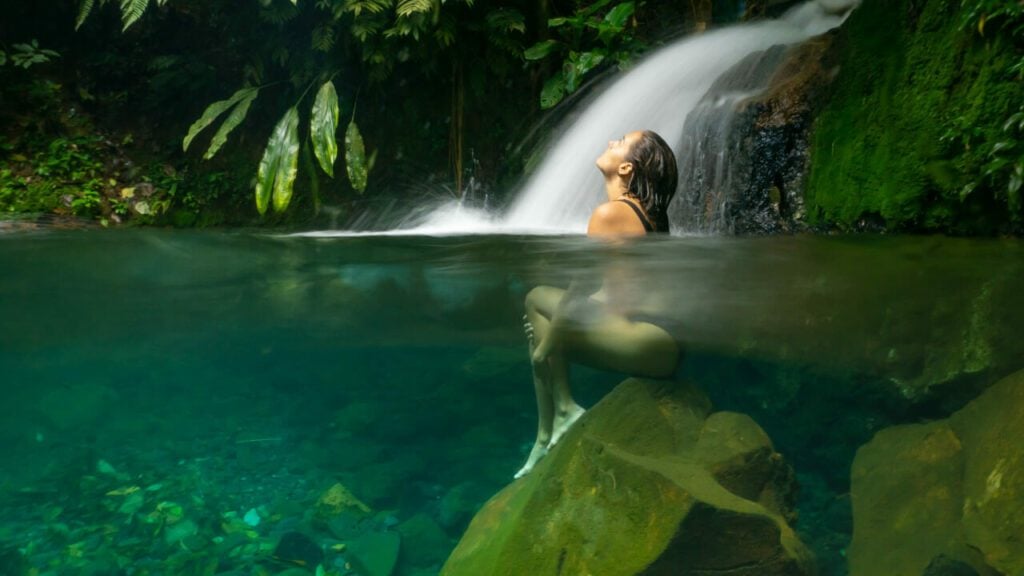
For travelers who want more than a checklist, this matters. The sound of water feels different when the watershed is protected. A rainforest trail feels more intimate when access is limited. Wildlife sightings become more meaningful when your presence supports preservation rather than pressure. Conservation-based tourism does not ask you to give up comfort or beauty. At its best, it refines both.
Why choose conservation based tourism for a luxury escape?
Luxury has changed. For many thoughtful travelers, it is no longer defined only by thread count, champagne, or private transfers. True luxury is increasingly about access, space, stillness, and the privilege of entering an environment that remains intact.
Conservation-based tourism answers that desire in a way conventional sightseeing rarely can. It protects the very conditions that make a place extraordinary. Clean rivers, thriving forest canopies, healthy wildlife corridors, and uncrowded trails do not happen by accident. They are the result of stewardship, investment, and limits.
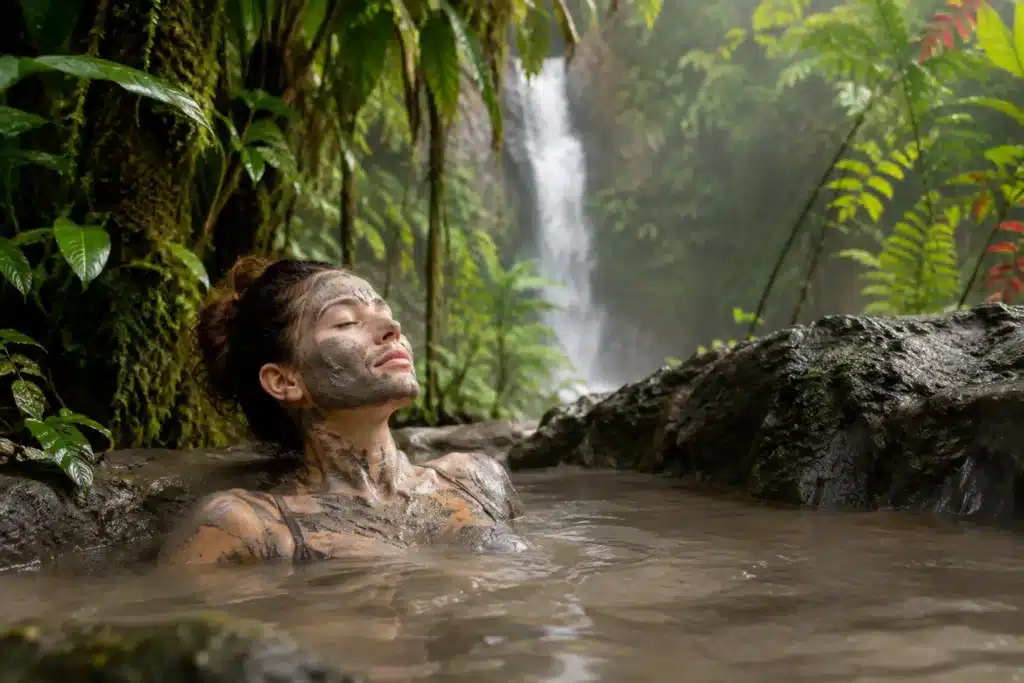
This is where the experience becomes more refined, not less. A private reserve, an expertly guided walk, healing thermal waters fed by a living ecosystem, and a carefully paced day in nature offer a form of abundance that mass tourism cannot replicate. You are not consuming a destination. You are being welcomed into a sanctuary.
That distinction is especially relevant in Costa Rica, where biodiversity is one of the country’s greatest treasures. Travelers often arrive hoping to see waterfalls, tropical birds, and lush rainforest. Conservation-based experiences make those moments richer because they protect the ecological integrity behind them.
The experience feels deeper because the place is alive
Many tours show you nature. Conservation-based tourism lets you feel its presence.
There is a profound difference between walking a crowded path and moving through rainforest where the pace is quieter, the interpretation is more thoughtful, and the environment has been preserved with care. You notice more. The scent of wet earth after rain. The layered calls of birds hidden in the canopy. The shift in air near a waterfall. The warmth of mineral-rich waters after a forest hike.
This sensory depth is not incidental. It depends on healthy ecosystems. When forests are fragmented or overused, the experience becomes thinner, even if the scenery remains photogenic. Conservation keeps the destination whole enough to offer restoration, not just entertainment.
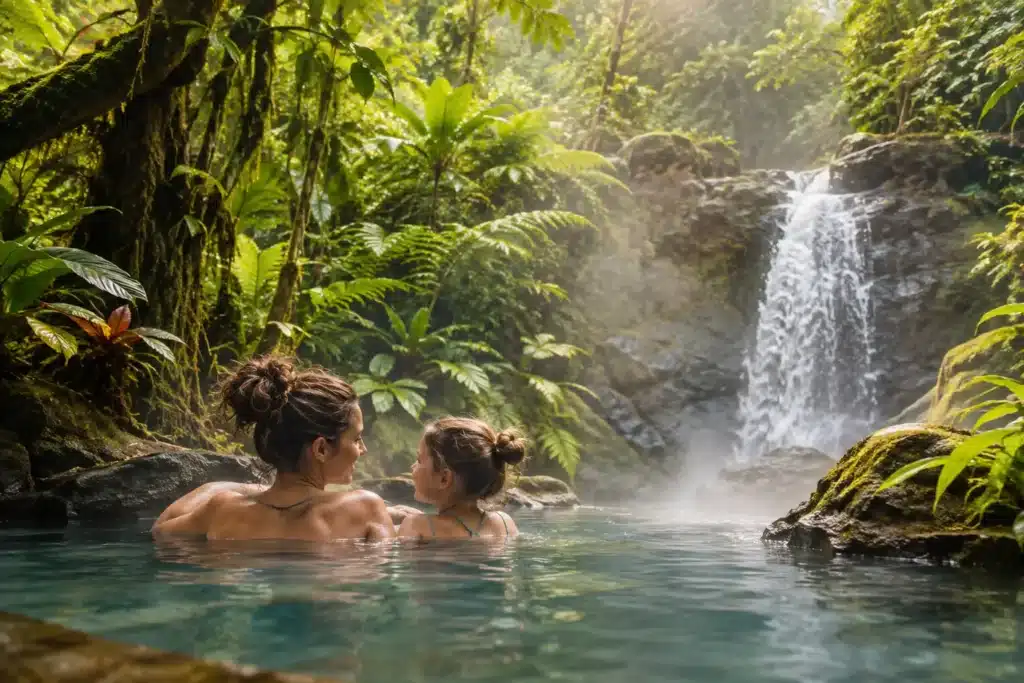
For couples, families, and private groups, that often translates into something more memorable than a standard excursion. The day feels intentional. The setting feels rare. And the emotional effect lingers long after the photos are taken.
Conservation based tourism supports the places you came to see
There is also a practical reason why choose conservation based tourism. Your travel dollars can help protect land, habitat, and biodiversity rather than simply extracting value from them.
Not every business uses sustainability language in the same way, so discernment matters. Some experiences are lightly green in their messaging but still built around high volume, environmental strain, or superficial contact with nature. Conservation-based tourism is stronger when preservation is part of the operating model itself – through protected land, habitat management, low-impact access, environmental education, and a direct commitment to keeping the ecosystem healthy.
That support can take different forms. In some cases, it helps maintain private reserves. In others, it funds trail care, water protection, reforestation, or wildlife monitoring. Often, it also creates employment for local guides and teams whose livelihoods are tied to keeping the landscape flourishing.
For the guest, this creates a quieter kind of confidence. You are not only enjoying a beautiful day. You are participating in a better travel equation, one where pleasure and responsibility are not at odds.
Why choose conservation based tourism instead of a standard tour?
The most honest answer is that it depends on what you want from your time in Costa Rica.
If your priority is seeing as many attractions as possible in the shortest time, a standard high-volume tour may suit you. It can be efficient, social, and budget-friendly. There is nothing inherently wrong with that.
But if your goal is to feel restored, to encounter nature with greater intimacy, and to choose an experience aligned with preservation, conservation-based tourism is usually the more rewarding path. It tends to offer more thoughtful pacing, more meaningful interpretation, and a stronger sense of place. It often feels less transactional and more curated.
There can be trade-offs. These experiences may cost more because they support lower visitor density, land protection, specialized guiding, and elevated service. They may also be more selective in what they include, choosing quality over quantity. For many travelers, that is precisely the point.
A single day in a protected rainforest can deliver more emotional and sensory value than several rushed stops. When the environment is pristine and the experience is designed with care, less can become much more.
It creates a more personal relationship with nature
One of the quiet luxuries of conservation-based travel is attention.
Attention from guides who know how to interpret the forest beyond surface facts. Attention to pacing, so the day does not feel hurried. Attention to comfort, so immersion and ease coexist. And attention to the land itself, which is treated as something worthy of protection, not merely productized scenery.
This changes how guests relate to the experience. Instead of observing nature from the outside, they begin to feel part of it. A waterfall becomes more than a photo stop. A thermal pool becomes more than a pleasant amenity. The rainforest becomes a living system that shapes every sensation around you.
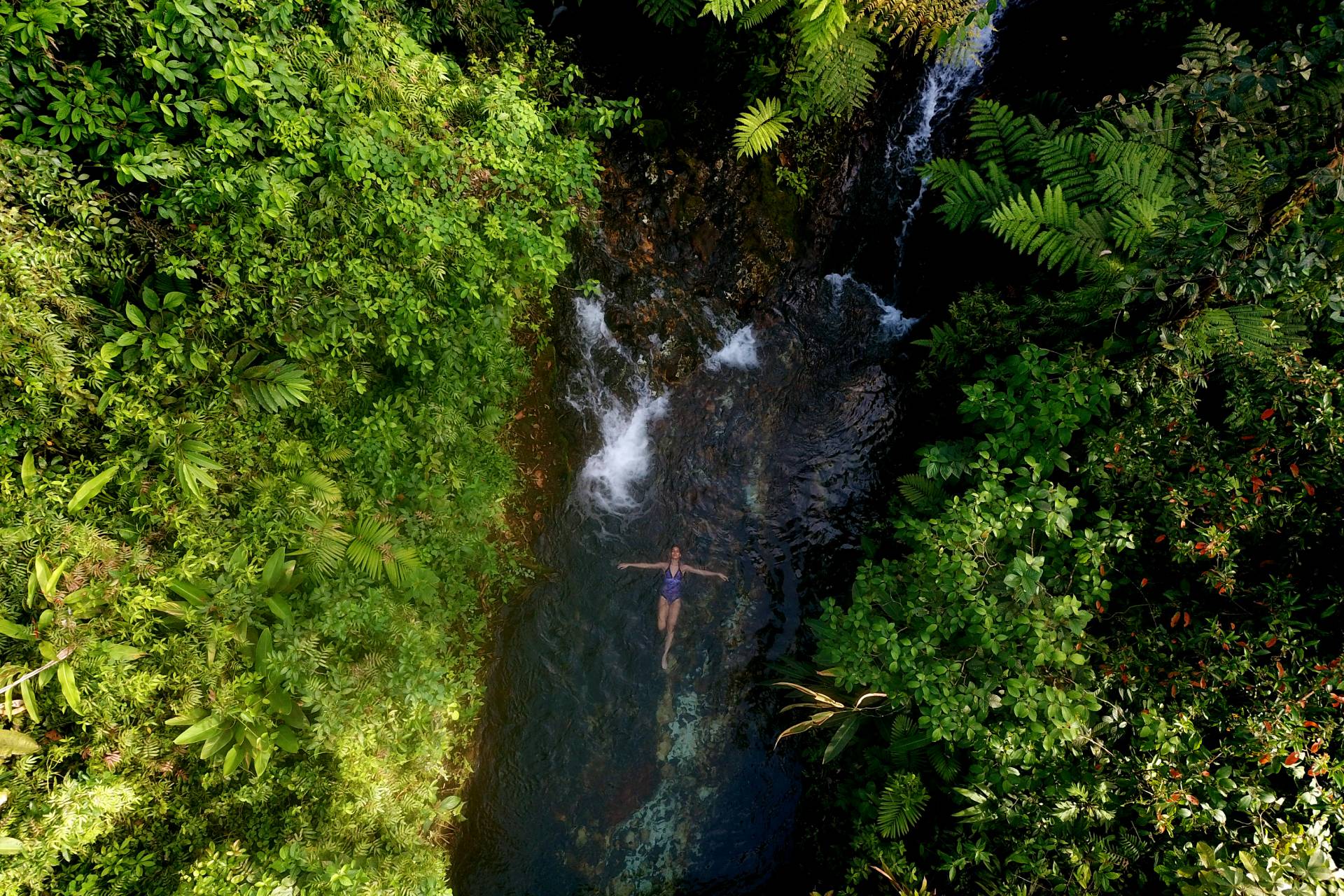
For wellness-minded travelers, this is especially compelling. Restoration is not only about spa treatments or beautiful settings. It comes from the nervous system response of being somewhere genuinely intact. Protected nature has a calming intelligence to it. The body recognizes clean air, flowing water, natural quiet, and the absence of crowding.
That is why a conservation-based experience can feel unexpectedly healing. It does not force transformation. It simply creates the conditions where it can happen.
What to look for when choosing a conservation-based experience
If you want the benefits without the greenwashing, look closely at how the experience is built.
A strong conservation-based tourism provider usually shows evidence of stewardship in the setting itself. Protected land matters. So does the quality of the natural environment, the expertise of the guides, the care given to trails and water sources, and the overall philosophy behind guest access.
The best experiences also understand that luxury and conservation are not opposites. They can coexist beautifully when comfort is used to deepen presence rather than distract from it. Thoughtful hospitality, refined dining, private access, and wellness elements can elevate a nature experience without overwhelming it.
In a place like Guanacaste, where rainforest, waterfalls, thermal waters, and biodiversity can converge in a single day, that balance is particularly powerful. Sensoria embodies this idea by pairing private reserve access and ecological reverence with a polished, restorative standard of hospitality. The result is not only a tour, but a rare form of immersion.
The future of travel belongs to places that are protected
The most desirable destinations in the years ahead will not simply be the most beautiful. They will be the ones that remain beautiful because someone chose to protect them.
That is why conservation-based tourism deserves the attention of discerning travelers. It offers a more intelligent kind of escape – one that honors fragility, preserves wonder, and allows luxury to feel grounded in something real. You return home with more than memories of scenery. You carry the feeling of having spent time somewhere that still knows how to breathe.
When travel is chosen this way, the experience becomes more than indulgence. It becomes a vote for the kind of world you still hope to find when you set out again.