You feel the rainforest before you fully see it. The air is warmer, the path is softer, and every step carries a little more moisture than expected. If you are wondering what to wear rainforest excursion days in Costa Rica, the answer is not about dressing for rugged hardship. It is about dressing for comfort, movement, and the quiet luxury of being fully present in a living, breathing landscape.
A well-planned outfit lets you focus on the waterfall mist, the mineral warmth of thermal waters, and the vivid stillness between birdsong and rushing streams. In Guanacaste, where a curated rainforest day may include guided trails, hanging bridges, swimming, and restorative pools, the right clothing makes the experience feel effortless.
What to wear rainforest excursion days in Costa Rica
The best rainforest attire balances three things: breathability, light protection, and adaptability. You want fabrics that dry quickly, layers that move with you, and pieces that feel polished without being precious. This is not the setting for stiff denim, delicate sandals, or anything that becomes heavy when wet.
Think in terms of refined practicality. A lightweight performance top, comfortable shorts or hiking pants, and dependable trail shoes create a strong foundation. From there, your choices should reflect the pace of your day. If your excursion includes thermal pools or waterfall access, your outfit should transition easily from trail to water and back again.
Start with lightweight, quick-dry clothing
Humidity changes everything. Cotton may feel pleasant when you first get dressed, but once the air turns warm and damp, it can stay wet and clingy for hours. Quick-dry materials are the better choice because they keep you more comfortable on the trail and recover faster after rain or splashes.
A breathable short-sleeve or long-sleeve top works well depending on your preference. Long sleeves can be especially appealing for travelers who want a little extra sun coverage or a polished layer between skin and nature. For bottoms, lightweight hiking pants or tailored active shorts are usually the easiest option. If you prefer leggings, choose a technical pair that handles heat well rather than anything thick or compressive.
Color matters more than many travelers expect. Earth tones, soft greens, taupes, and muted neutrals feel naturally suited to the setting and tend to hide a little trail dust better than bright white. Black is perfectly workable, though it can feel warmer in direct sun.
Choose shoes for wet trails, not just pretty photos
If there is one place to be practical, it is footwear. Rainforest paths can be smooth one moment and slick the next, especially near waterfalls, streams, or shaded stone. The ideal shoe has grip, support, and enough structure to keep you confident on uneven ground.
Closed-toe hiking shoes or trail sneakers are usually the best choice for most guests. They offer traction without feeling too heavy for a one-day adventure. Some travelers prefer hiking sandals with secure straps, and those can work well if they are designed for wet terrain. Flat fashion sandals, leather slides, and anything without grip are rarely a good idea.
New shoes are also a gamble. Even on a beautifully curated trail, discomfort travels with you. Wear footwear you already trust.
What to wear rainforest excursion experiences with waterfalls and thermal pools
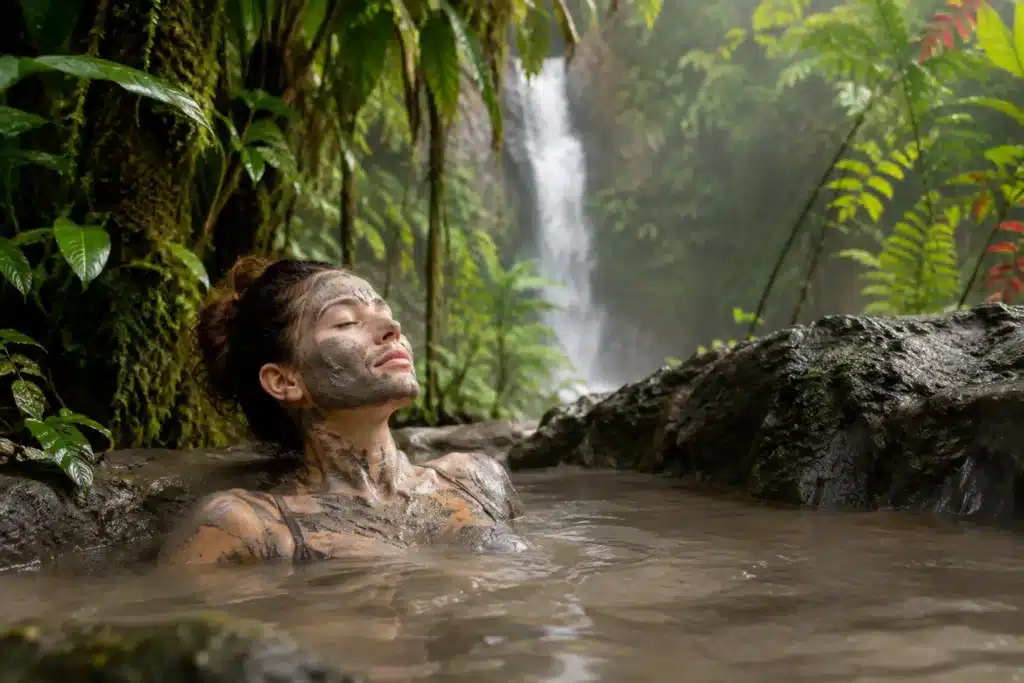
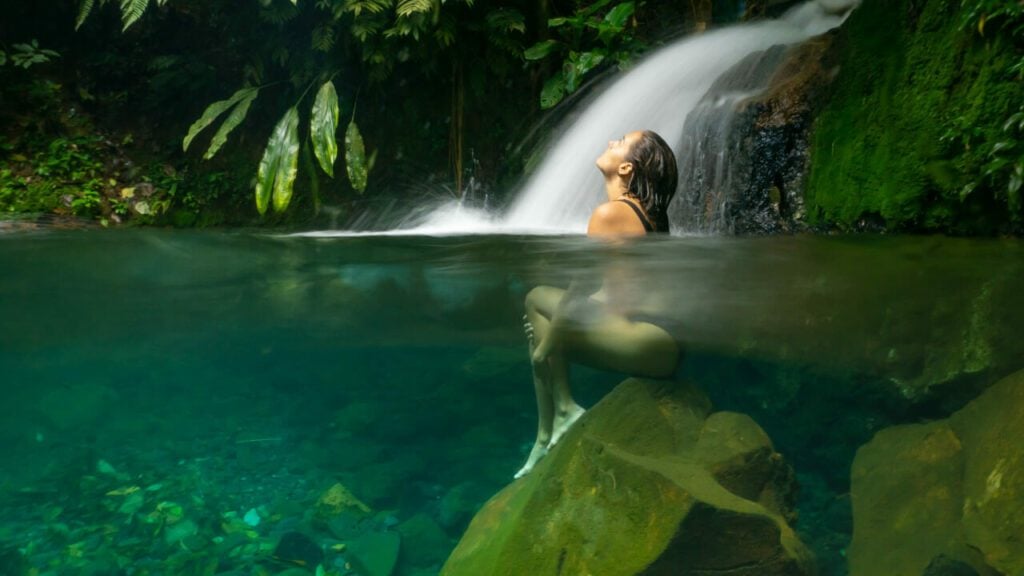
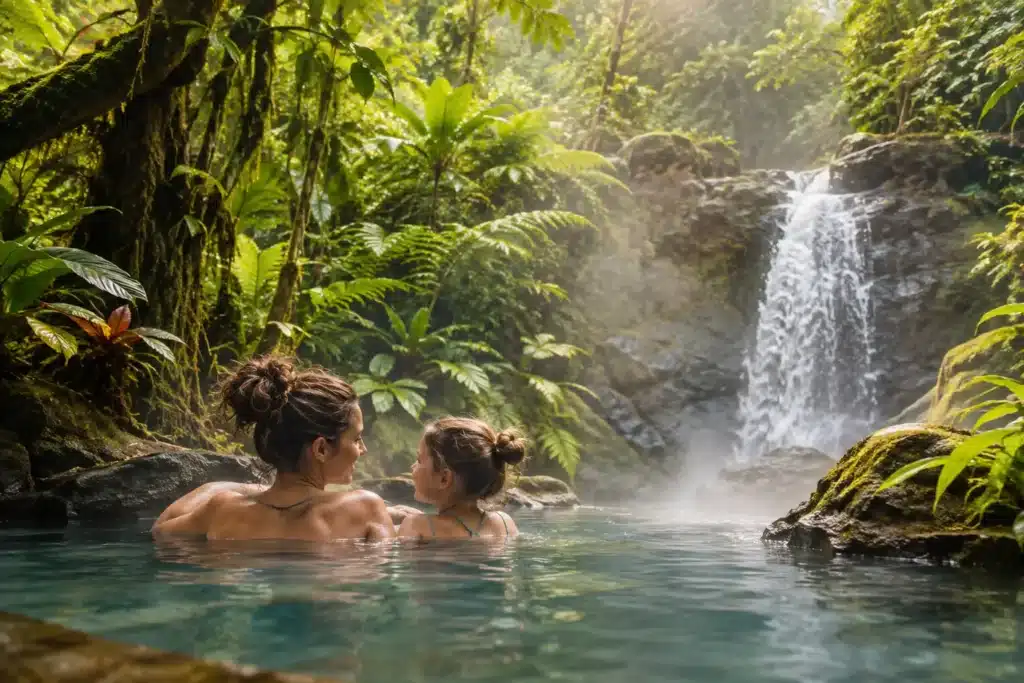
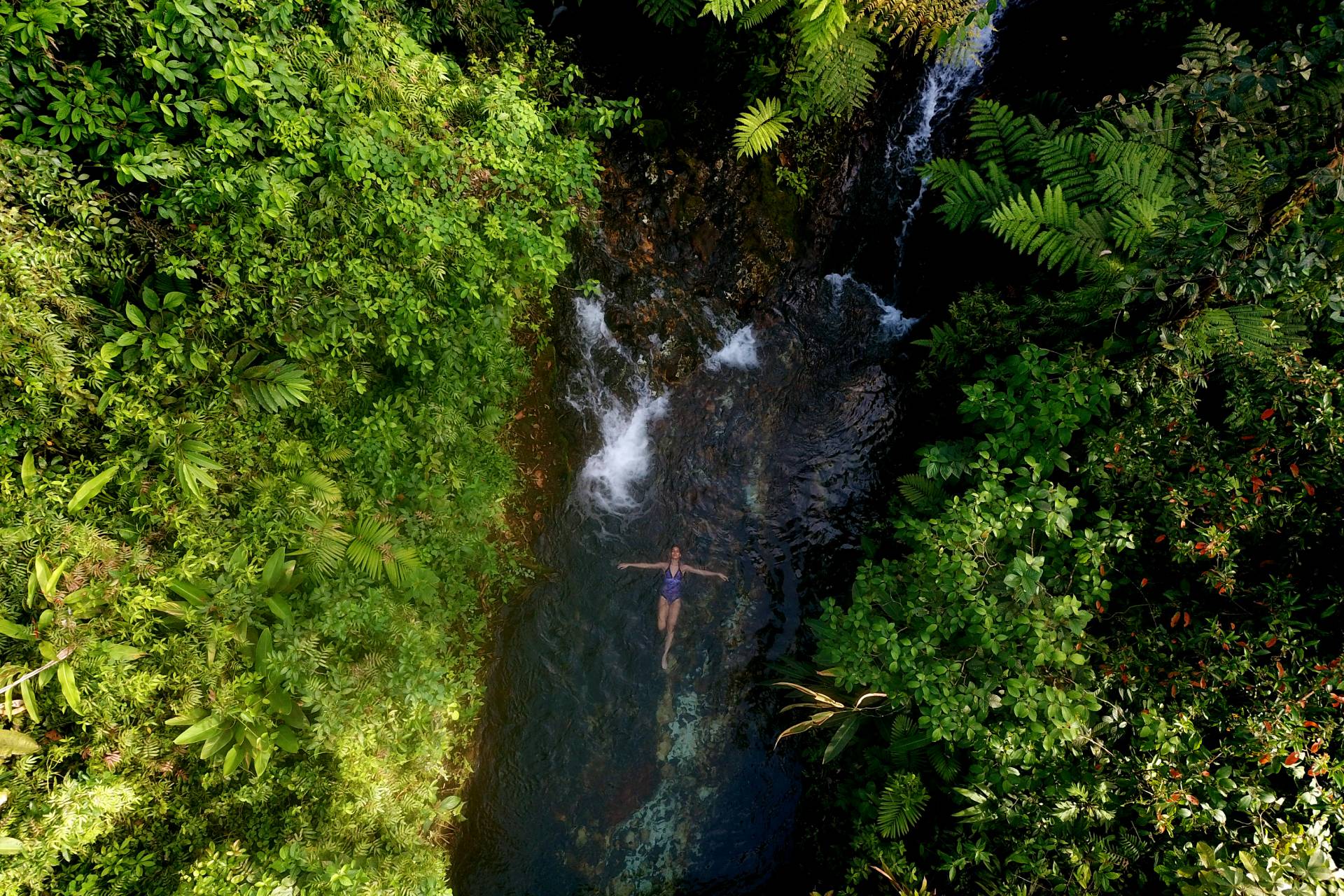
Many elevated rainforest outings are not only about walking through the forest. They may also include moments of immersion, such as swimming beneath a waterfall or sinking into mineral-rich thermal waters. That changes what to pack and how to dress.
A swimsuit is worth bringing even if you are undecided at first. Few things compare to stepping from a lush trail into warm thermal water surrounded by forest sounds. For women, a one-piece or secure bikini tends to be the most comfortable choice for moving between walking and swimming areas. For men, tailored swim trunks that can double as daywear often work beautifully.
It is often easiest to wear your swimsuit under your clothing from the start, especially on a seamless luxury day experience where transitions are meant to feel smooth and unhurried. Over that, choose pieces you can remove and replace easily. A quick-dry cover-up, a light shirt, or relaxed shorts can make the shift from trail to pool feel elegant rather than awkward.
A dry change of clothes can also be a thoughtful addition, particularly if you plan to enjoy lunch or the ride back in complete comfort. Fresh, breathable clothing after time in water has its own kind of luxury.
Rain protection should be light, not bulky
Travelers often imagine rainforest weather as constant downpour, but conditions can vary. You may have long stretches of bright warmth followed by a brief shower that passes almost as quickly as it arrived. The goal is not to armor yourself against weather. It is to stay flexible.
A lightweight rain jacket or compact poncho is usually enough. Heavy waterproof coats can feel excessive in tropical humidity and are often less comfortable than simply allowing quick-dry clothing to do its job. If your excursion is guided and thoughtfully organized, you may not need much more than a light outer layer and a willingness to enjoy the atmosphere as it shifts.
A small hat with a brim can also help with sun and light rain, though it should be something secure and easy to carry when not needed.
Accessories that make a rainforest day more comfortable
The most useful accessories are the quiet ones. They support the experience without asking for attention.
A small day bag or lightweight backpack is ideal for carrying essentials such as sunscreen, insect repellent, sunglasses, a phone, and a reusable water bottle. If you are bringing a camera, a little weather protection is wise. A waterproof pouch for your phone is especially helpful around waterfalls or pools.
Sunglasses can be useful during open-sky moments, though deep forest shade may mean you use them less than expected. Jewelry is best kept minimal. The rainforest does not need embellishment, and delicate pieces are easy to forget, snag, or misplace during a day of movement.
If you are someone who values looking polished in every setting, this is the place to edit rather than add. Let the textures of the day do the work.
What not to wear
Certain items seem tempting but rarely perform well. Jeans are the clearest example. They hold moisture, restrict movement, and can become surprisingly uncomfortable in warm conditions. Heavy cotton T-shirts have a similar problem.
Avoid anything too tight, too fragile, or too dependent on staying pristine. A rainforest excursion is luxurious in feeling, but nature remains gloriously unscripted. Mud splashes happen. Mist settles. Trails invite motion. The more relaxed you are about your clothing, the more fully you can receive the experience.
High-maintenance fabrics, slippery shoes, and oversized bags tend to create friction where none is needed. The most refined choice is often the simplest one.
Dressing for a premium rainforest experience
There is a difference between dressing for a strenuous expedition and dressing for an elevated nature journey. In a premium setting, comfort and beauty are not opposing ideas. You can absolutely wear active pieces that feel tasteful, flattering, and well considered.
For women, that might mean a beautifully cut performance tank, airy hiking pants, and a light overshirt for transitions. For men, it could be tailored quick-dry shorts, a breathable polo or technical tee, and trail-ready shoes with clean lines. The common thread is ease.
At Sensoria, for example, the rhythm of the day can move from forest trails to waterfalls to thermal relaxation with remarkable grace. Clothing should support that sense of flow. Dress for movement, but also for moments when you want to pause, exhale, and simply absorb the sanctuary around you.
A simple outfit formula that works
If you want an uncomplicated answer to what to wear rainforest excursion outings require, start here: wear a quick-dry top, lightweight bottoms, secure walking shoes, and a swimsuit underneath if water is part of the day. Bring a light rain layer and a dry change of clothes if you like finishing the day refreshed.
That formula works because it leaves room for variation. Some travelers run warm and prefer shorts. Others feel more comfortable in light pants. Some want maximum sun protection, while others prioritize staying cool. The best choice is the one that lets you move freely and forget about your outfit once the experience begins.
When clothing is chosen well, it quietly disappears. You stop adjusting straps, worrying about slippery soles, or wishing you had packed differently. Instead, your attention goes where it belongs – to the scent of wet earth, the softness of rising steam, the cool shock of waterfall spray, and the rare pleasure of being cared for in a place that still feels wild.
Wear what helps you feel comfortable enough to be amazed.