The first sound of the rainforest is rarely dramatic. It may be water moving over volcanic stone, a distant birdcall, or leaves settling after a brief tropical rain. Sustainable tourism in Guanacaste begins with the willingness to notice these details – and with the understanding that a meaningful visit should leave the forest with the space, resources, and respect to continue thriving.
Guanacaste is often associated with golden beaches, dry-season sunshine, and wide Pacific horizons. Yet just beyond the coast, the landscape rises into a vastly different world: cloud-veiled slopes, mineral-rich thermal waters, rivers, waterfalls, and rainforest alive with intricate relationships. Traveling responsibly here is not about giving up comfort or limiting beauty. At its best, it is a more intentional form of luxury, one that values privacy, expert care, local knowledge, and the preservation of the place that makes the experience possible.
What Sustainable Tourism in Guanacaste Really Means
Sustainability is sometimes reduced to a reusable water bottle or a hotel’s linen policy. Those choices matter, but they are only a small part of the picture. In Guanacaste, sustainable travel means considering how a visit affects water, wildlife, neighboring communities, local livelihoods, and the long-term health of fragile ecosystems.
The province experiences a pronounced dry season, and water is a precious resource. Coastal development, agriculture, and tourism all place demands on it. A thoughtful traveler looks beyond a property’s aesthetic and asks quiet but essential questions: Where does the water come from? How is wastewater managed? Does the experience support conservation or simply borrow nature as a backdrop?
It also means recognizing that not every natural attraction benefits from unlimited access. A crowded trail may create noise, erosion, litter, and stress for wildlife. Smaller groups, guided routes, limited daily capacity, and carefully maintained paths can feel more exclusive, but their value is ecological as well as experiential. They allow guests to encounter a living forest without turning it into a spectacle.
Choose Depth Over a Packed Itinerary
There is a familiar temptation on a Costa Rica vacation: fill every day with another activity, another transfer, another checklist moment. Zipline in the morning, beach in the afternoon, dinner far across the province at night. The result can be exciting, but it often comes with long drives, rushed encounters, and a larger transportation footprint.
A more considered itinerary chooses depth. Spend a full day in one remarkable landscape. Walk slowly with a naturalist who can identify the movement in the canopy and explain why a river changes color after rainfall. Pause in thermal water rather than treating it as a quick photo stop. Let a meal become part of the setting, not merely fuel between activities.
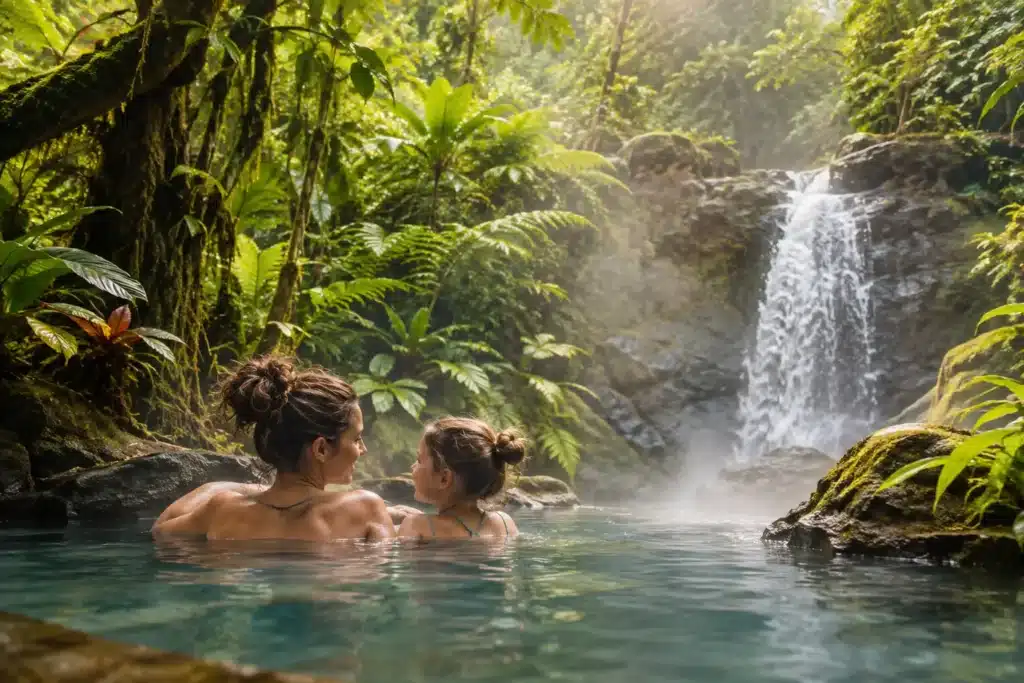
This approach is especially rewarding for couples, families, and private groups who want more than an impressive itinerary. It creates room for restoration. Children have time to ask questions. Partners have time to be present with one another. The rainforest becomes less like an attraction and more like a sanctuary.
The Value of Private Reserves and Guided Access
Protected areas and public parks are vital to Costa Rica’s conservation story. Private reserves can play an equally meaningful role when they preserve habitat, restore degraded land, protect water sources, and create an economic reason for a forest to remain standing.
Not all private nature experiences are alike, however. The distinction lies in management. Responsible operations invest in trail maintenance that minimizes erosion, control visitor numbers, train guides, reduce single-use waste, and protect sensitive areas from casual access. They treat the land as a living responsibility rather than an amenity.
Guides are central to this relationship. A knowledgeable guide does more than point out a sloth or a blue morpho butterfly. They help guests understand why silence matters near wildlife, why staying on a trail protects root systems and nesting areas, and why a fallen tree can be a source of new life rather than a sign of disorder. Interpretation transforms admiration into care.
At Sensoria, the private rainforest reserve is experienced as a place of wonder and restoration, shaped through guided exploration, waterfalls, thermal pools, and a reverence for the natural systems surrounding each guest. That sense of stewardship is what gives refined nature travel its deeper meaning.
Let Wellness Be Part of the Conservation Mindset
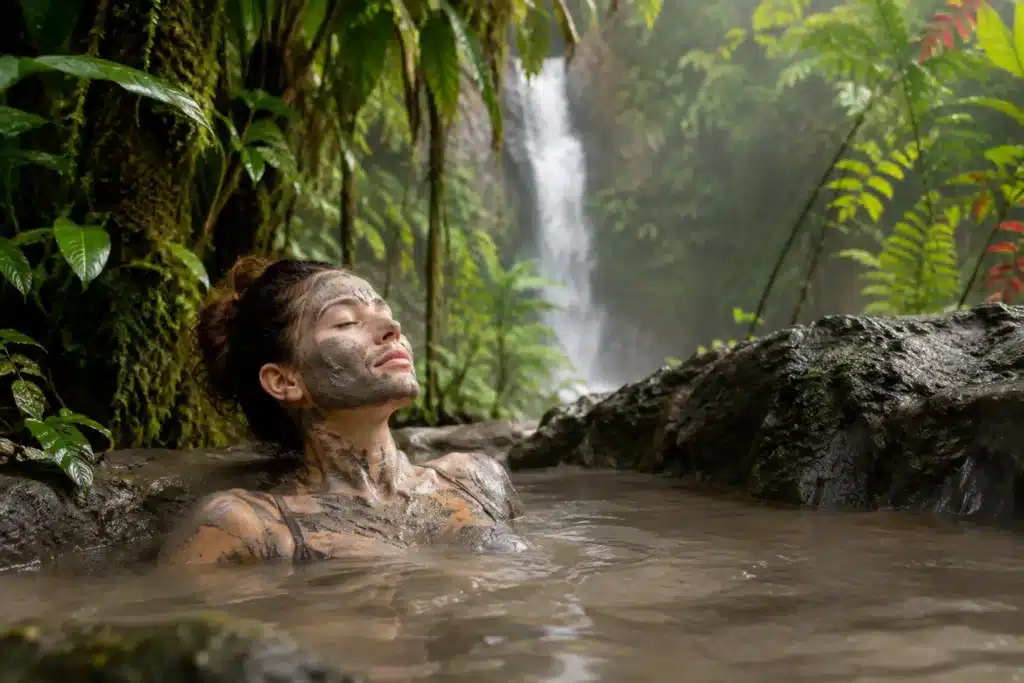
Wellness travel and sustainable travel are often discussed separately, though they share an important principle: attention. A thermal soak, a mud ritual, a quiet walk beneath the forest canopy, or a meal enjoyed without hurry can shift the pace of a trip. In that slower state, it becomes easier to understand that nature is not an endless resource created for human consumption.
Guanacaste’s volcanic landscape makes this connection especially tangible. Thermal waters emerge through geological processes far older than any resort or trail. Their warmth can feel deeply healing, but that experience deserves respectful management. Responsible operators monitor water use, maintain facilities carefully, and avoid placing excessive pressure on the surrounding habitat.
Luxury has a role here. Comfort can encourage people to spend more time in nature, support well-managed conservation experiences, and choose quality over volume. The trade-off is that luxury must be more than polished surfaces. It should be expressed through thoughtful service, small-group access, excellent local guides, nourishing cuisine, and settings that protect a sense of calm without demanding more from the landscape than it can give.
Spend Where the Place Benefits
The most direct way travelers can support sustainable tourism is through their spending decisions. Choose locally owned or locally rooted businesses when possible. Seek guides who are compensated for their knowledge. Favor restaurants that highlight Costa Rican ingredients and experiences that employ people from nearby communities.
This does not require turning a vacation into a research project. It means paying attention to what an operator values and where its investment goes. A business that maintains trails, trains local staff, purchases from regional producers, and protects forest habitat contributes to a more resilient visitor economy than one built solely around high volume.
There are nuances. An international hotel may have meaningful conservation programs and strong labor practices, while a smaller operator may have limited resources but deep local impact. Labels alone cannot tell the whole story. Look for specificity rather than vague environmental claims. The strongest sustainability commitments are visible in daily decisions: group size, waste systems, sourcing, staff knowledge, habitat protection, and honest communication about limitations.
Travel With the Season, Not Against It
Guanacaste changes dramatically throughout the year. During the dry season, its landscapes can appear sun-washed and open, with brilliant beaches and dusty roads framed by flowering trees. The green season brings powerful rains, fuller rivers, vibrant vegetation, and a rainforest that seems to breathe more deeply.
Neither season is inherently better. It depends on what you seek. Travelers drawn to reliable beach weather may prefer the drier months, while those who long for lush forest, flowing waterfalls, and fewer visitors may find the green season especially rewarding. Traveling outside the busiest periods can also distribute tourism income more evenly and reduce pressure on popular destinations.
Seasonality should shape practical choices as well. Bring a refillable bottle, use reef-conscious sun protection when swimming in the ocean, and follow local guidance around weather and trail conditions. In the rainforest, conditions can change quickly. Preparedness is not a barrier to spontaneity; it is what allows an experience to remain safe and gracious.
Small Gestures That Protect a Larger Place
Respectful travel is often quiet. Keep a comfortable distance from wildlife, even when a photograph seems irresistible. Do not feed animals or collect plants, stones, shells, or insects as souvenirs. Keep voices low on trails and in thermal areas. If a guide asks you to wait, reroute, or avoid a section of path, understand that the request is likely protecting something you cannot yet see.
The same care extends to culture. Learn a few Spanish phrases, arrive on time for guided experiences, and approach local customs with curiosity rather than expectation. Guanacaste is not a stage set for vacation memories. It is home to communities, working landscapes, and ecosystems whose future is shaped in part by the kind of tourism visitors choose to support.
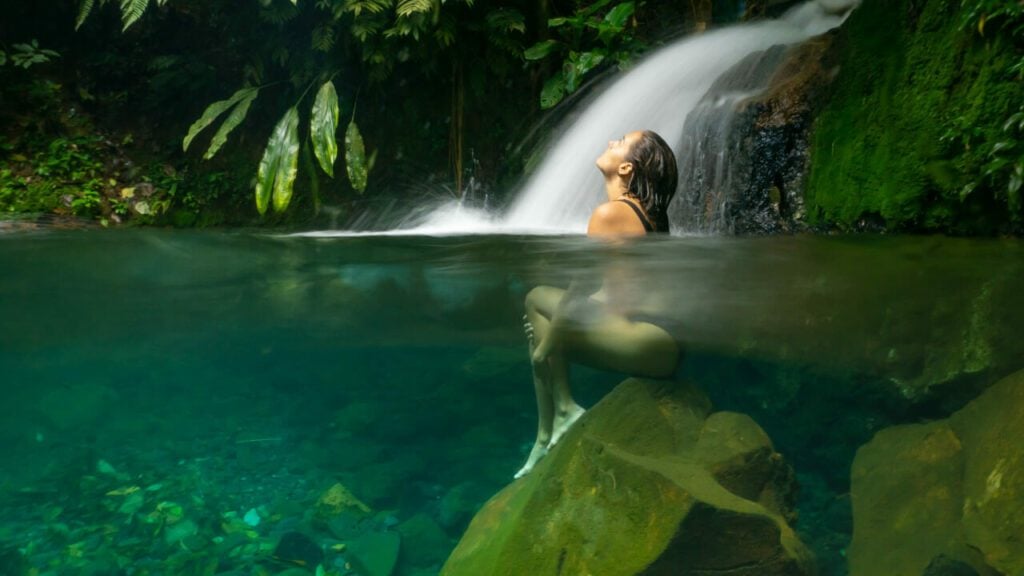
The most memorable day in Guanacaste may not be the one with the most activities. It may be the moment you stand beside a waterfall, warm rain on your skin, and realize that the privilege of entering a wild place carries a simple responsibility: leave it with more respect than you found it.