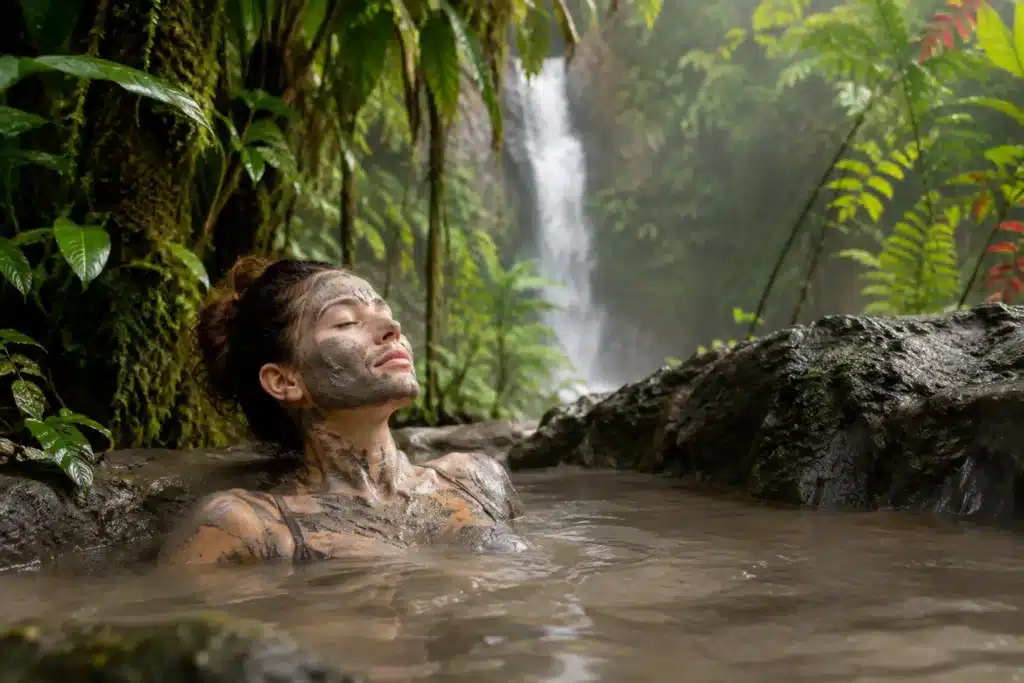
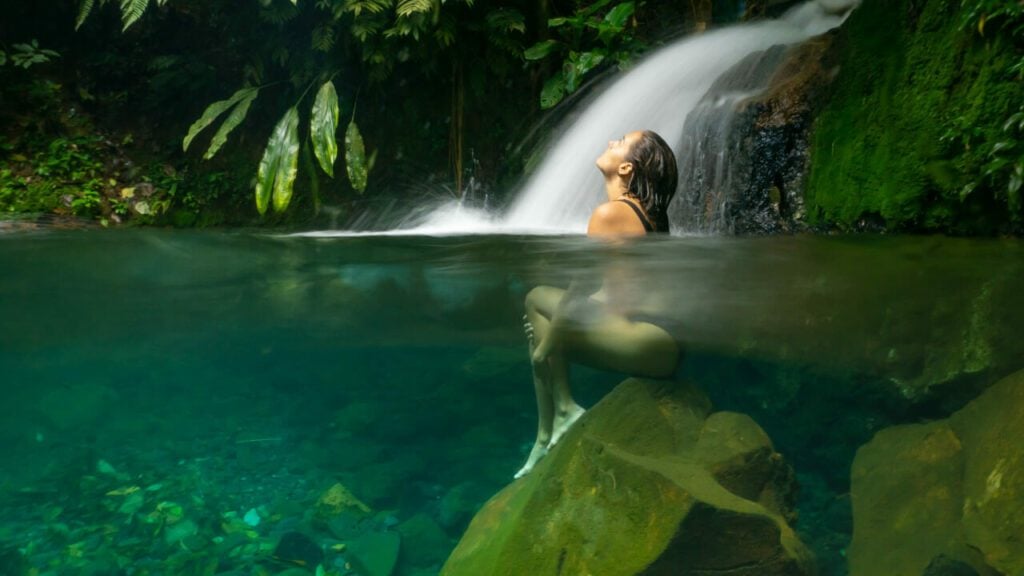
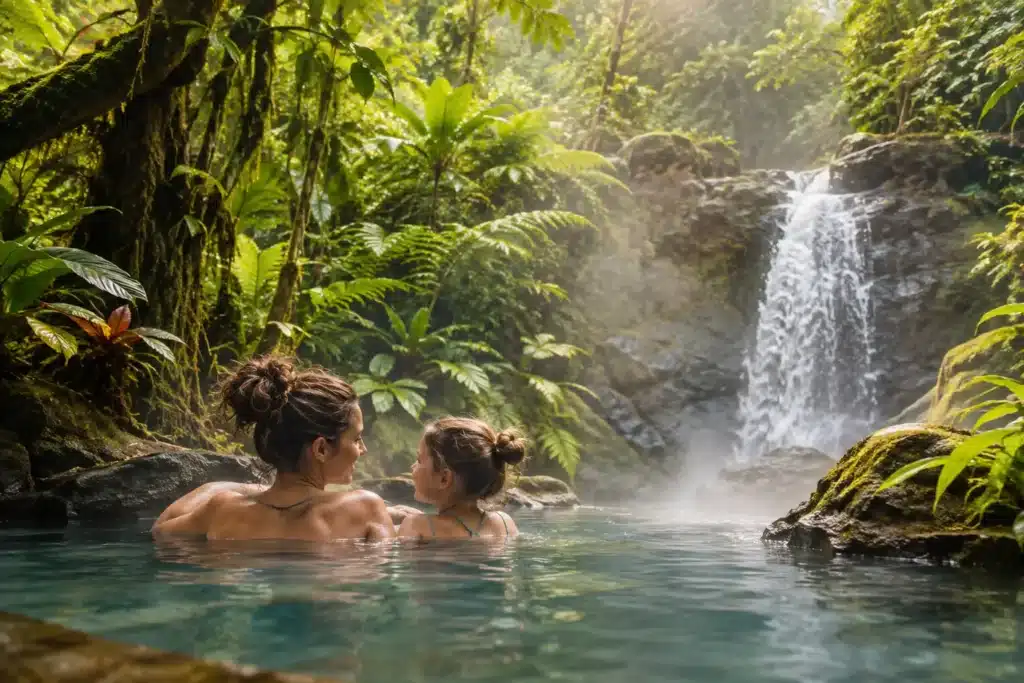
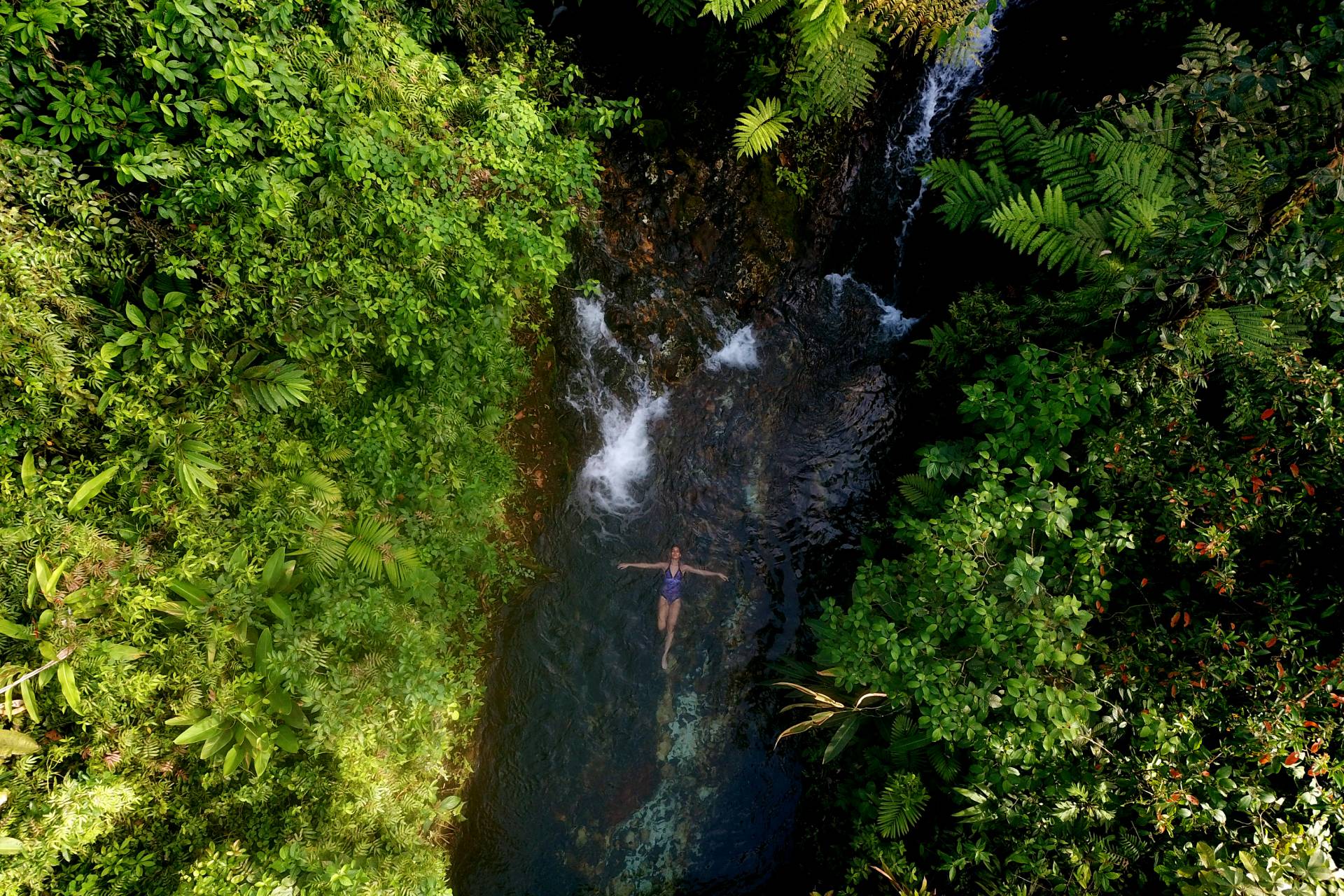
A waterfall is not simply something to photograph. Its mist changes the temperature on the skin. Its rhythm softens conversation. The mineral scent of the forest rises after rain, while the trail beneath your feet asks for your full attention. This is the deeper promise behind sensory tourism trends: travel designed not just to be seen, but to be felt, heard, tasted, and remembered in the body.
For travelers who have outgrown crowded viewpoints and rushed itineraries, sensory travel offers a more intentional form of luxury. It pairs the beauty of exceptional places with time, privacy, thoughtful guidance, and the freedom to be present. In a rainforest setting, that might mean entering warm thermal waters after a guided walk, enjoying a carefully prepared meal surrounded by living green, or staying long enough at a waterfall to notice the forest changing around it.
Sensory Tourism Trends Move Beyond Sightseeing
For decades, travel has been shaped by a visual culture: landmark checklists, panoramic photos, and fast-moving excursions designed to fit as much as possible into a day. Sight still matters, especially in Costa Rica, where volcanic landscapes, dense rainforest, and clear pools create unforgettable scenes. Yet discerning travelers increasingly want an experience that reaches beyond the camera roll.
Sensory tourism answers that desire by treating the destination as a living environment rather than a backdrop. Sound becomes part of the journey: birdsong layered over flowing water, the hush of a private forest, the evening calls that emerge after daylight fades. Touch has a role too, from cool river stones and rainforest mist to warm mud treatments and restorative thermal pools. Flavor is no longer an afterthought when dining reflects the freshness, place, and pace of the experience.
The distinction is meaningful. A conventional tour can show guests where to stand. A sensory journey creates conditions for them to notice what the place is offering. That requires more than beautiful scenery. It requires a well-considered rhythm, knowledgeable hosts, comfortable transitions, and spaces protected from unnecessary crowds.
Wellness Is Becoming a Travel Priority
One of the strongest sensory tourism trends is the merging of nature travel and wellness. Guests are seeking journeys that leave them restored rather than depleted. They want a real adventure, but not one that requires sacrificing comfort, privacy, or a sense of ease.
This does not always mean a formal spa itinerary. Wellness can be as simple as the contrast between a rainforest trail and a mineral-rich thermal pool. It can be the pause after a waterfall swim, a nourishing lunch enjoyed without haste, or the relief of being guided by someone who understands both the terrain and the ecosystem.
For many couples, families, and small groups, this is a welcome change from the false choice between activity and relaxation. A day in nature can hold both. The best experiences offer a gentle progression: movement that awakens the body, water that restores it, and quiet moments that allow the mind to settle.
There is, however, a difference between wellness that is genuinely rooted in place and wellness added as decoration. A treatment becomes more meaningful when it draws on the character of its setting. Thermal water has a story in a volcanic landscape. Botanical ingredients carry greater resonance when guests understand the rainforest that produces them. Luxury feels most authentic when it honors the environment instead of insulating guests from it.
Privacy Has Become Part of the Experience
Privacy is no longer a simple upgrade. For premium travelers, it is often essential to sensory connection. It is difficult to hear the rainforest when a large group is moving quickly through it. It is hard to feel restored in a pool shared with a crowd on a rigid schedule.
Private reserve access, limited group sizes, and personalized pacing allow guests to engage more deeply with their surroundings. A guide can adjust the walk for a family with young children, give a honeymooning couple more space, or share a richer ecological interpretation with travelers who are fascinated by biodiversity. The experience becomes responsive rather than standardized.
This is why exclusivity has real value when handled with care. It should not mean separation from nature. It should mean a more respectful, unhurried way of entering it. At Sensoria, this philosophy can transform a one-day rainforest experience into a curated escape, where each transition from trail to waterfall to thermal water feels intentional.
The New Luxury Is Ecological Depth
Luxury travelers are asking more thoughtful questions about where they go and what their presence supports. They want beauty, but they also want to know that a place is protected. They want comfort, but not at the expense of the land, water, or communities that make the journey possible.
This is shifting sensory travel toward conservation-based experiences. In a healthy rainforest, sensory richness is evidence of ecological vitality. The sound of insects and birds, the density of foliage, the clarity of water, and the variety of textures along a trail all reflect a complex living system. Expert interpretation gives these details meaning. A guest who learns why a thermal spring exists, how a forest regenerates, or what a particular call in the canopy signals will remember more than a view.
The trade-off is that true ecological depth cannot be rushed or manufactured. Preserved landscapes need limits on access. Trails require care. Wildlife encounters cannot be guaranteed on command, and weather may reshape the day. For travelers accustomed to total control, this can require a shift in expectations. Yet it is also where the most powerful memories begin: in the recognition that nature is not performing for us.
Night Experiences Invite a Different Kind of Wonder
After dark, the forest becomes less visual and more immediate. The air cools. Sounds move closer. Familiar trails acquire a different atmosphere, shaped by shadows, moisture, and the quiet confidence of a guide who knows the terrain.
This has made intimate night experiences an emerging expression of sensory luxury. Rather than chasing spectacle, they invite a more attentive encounter with the natural world. A private evening in thermal waters, a candlelit meal, or a guided walk beneath the rainforest canopy can create the rare feeling that time has widened.
Night travel is not for every guest. Families with very young children may prefer daylight adventures, and some visitors find unfamiliar terrain more comfortable in the sun. But for couples, celebration travelers, and guests seeking a more atmospheric escape, evening experiences offer a powerful alternative to the predictable resort night.
Food Is Becoming Part of the Place
The sensory travel movement is also changing expectations around dining. Guests increasingly value food that supports the emotional arc of the day. After humidity, movement, and immersion in water, a meal should feel restorative rather than incidental.
Elevated dining in nature does not need to be elaborate for its own sake. It should be fresh, beautifully presented, and suited to the setting. Local ingredients, thoughtful service, and time to enjoy the meal can turn lunch into a moment of connection rather than a logistical stop between activities. For private celebrations, a glass of champagne or a specially arranged table can make the setting feel even more personal without overwhelming the landscape itself.
What Discerning Travelers Should Look For
As sensory tourism grows, the phrase may be used loosely. Not every experience with a scenic view or a spa component is truly immersive. Travelers seeking meaningful luxury should look for journeys that balance comfort with authenticity.
Consider whether the experience allows enough time to slow down, whether guides can interpret the destination beyond surface facts, and whether group size supports privacy. Ask how the natural environment is protected and whether the wellness elements are connected to the place rather than imported as generic additions. Details such as changing facilities, dining quality, transportation support, and flexibility matter as well. They do not distract from immersion when designed thoughtfully. They make it easier to surrender to it.
The most memorable journeys will not be the ones that ask you to consume more in less time. They will be the ones that sharpen your attention: warm water against tired muscles, a sudden burst of color in the canopy, the fragrance of wet earth, and the quiet realization that you are fully present. Choose the experience that gives those moments room to unfold.