A waterfall is most powerful when there is room to hear it fully: the rush of water, the calls rising from the canopy, the soft percussion of rain on broad leaves. That sense of presence is at the heart of luxury ecotourism benefits. At its best, refined travel in nature is not about placing comfort above the landscape. It is about creating the conditions to enter it with more attention, more respect, and less disruption.
For travelers drawn to Costa Rica’s wild beauty, this distinction matters. A day in the rainforest can be exhilarating, but it can also be rushed, crowded, and disconnected from the very ecosystem that made the journey worthwhile. Thoughtfully designed eco-luxury experiences offer another possibility: private access, knowledgeable guidance, restorative amenities, and a conservation-minded approach that gives the natural world the space and value it deserves.
Luxury Ecotourism Benefits Begin With Time and Space
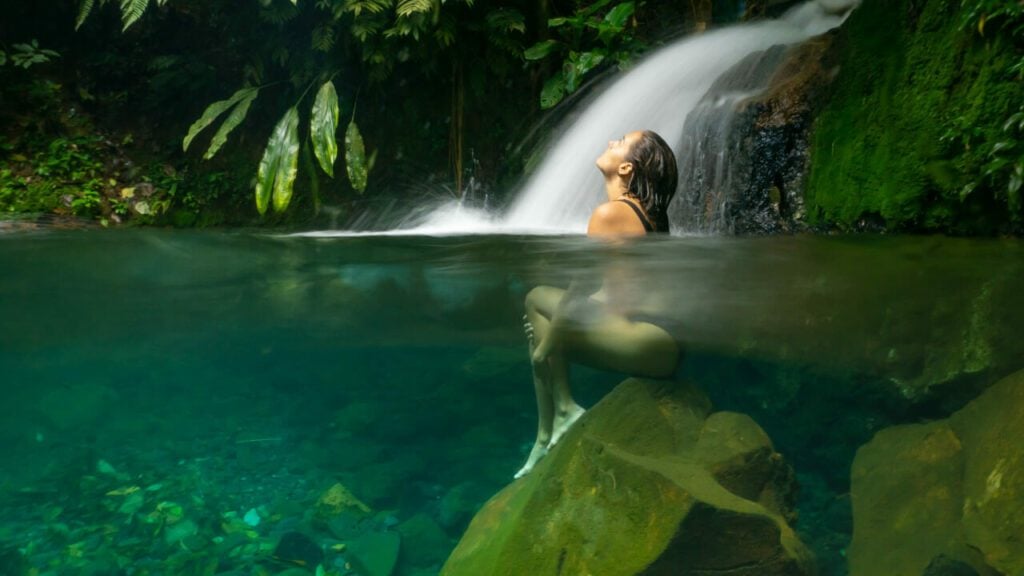
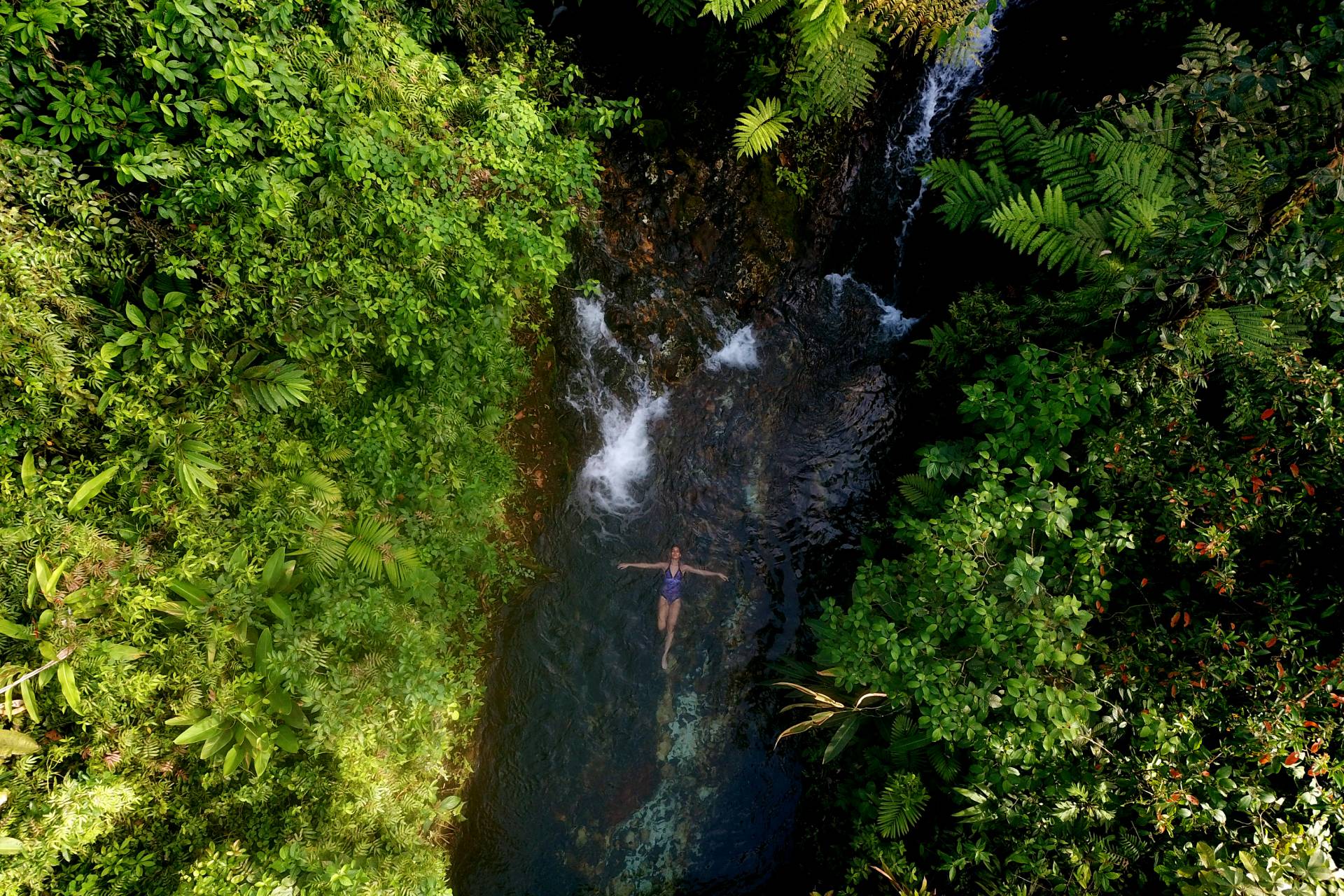
The rarest travel luxury is often not excess. It is unhurried access. In a protected rainforest, smaller groups and carefully managed visitation allow guests to move at a more natural pace, pausing at a hidden waterfall, watching a morpho butterfly cross a sunlit trail, or simply breathing in the mineral-rich air near thermal waters.
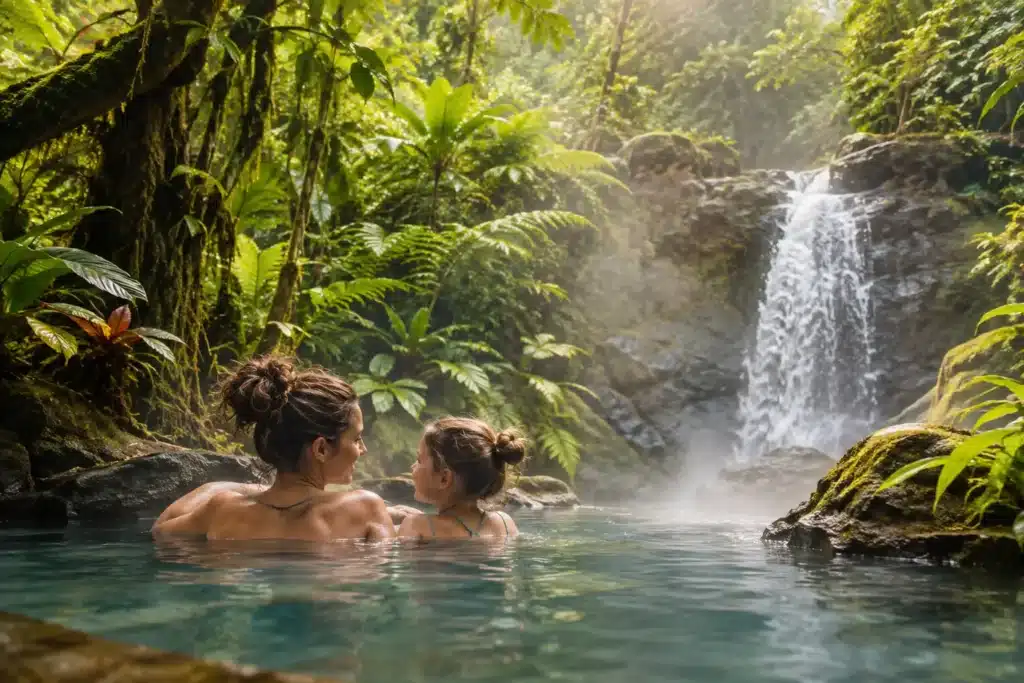
Privacy changes the emotional texture of an experience. Instead of following a crowded line of visitors, couples, families, and small groups can enjoy moments of genuine stillness. A guide can adapt the rhythm to the people in front of them, whether that means lingering for birdwatching, choosing a gentler trail, or allowing extra time to rest in a warm spring.
This does not mean nature becomes a private backdrop for indulgence. The responsible version of exclusivity is controlled access. Fewer people in sensitive areas can mean less trail erosion, less noise, and less pressure on wildlife. It depends, of course, on how the experience is managed. Privacy without ecological standards is merely isolation. Privacy guided by conservation is a meaningful form of care.
Comfort Can Deepen Respect for the Landscape
There is a persistent idea that authentic nature travel must be difficult. Certainly, adventure has its place, and some travelers want demanding terrain, rain-soaked hikes, and a little mud on their boots. But discomfort is not the only path to connection.
Well-considered comfort can help guests stay present. A shaded lounge after a rainforest walk, a nourishing meal prepared with care, dry robes near thermal pools, and reliable transportation support can turn a physically taxing outing into a restorative day. When people are warm, hydrated, well-fed, and not preoccupied with logistics, they often notice more.
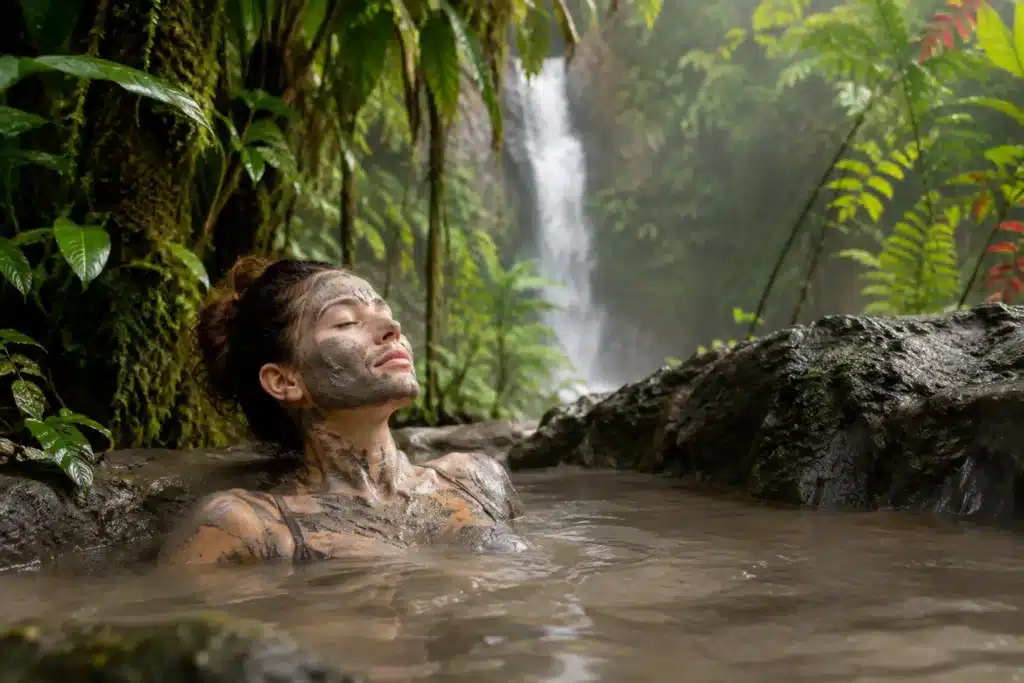
The quality of the experience also invites a different kind of gratitude. A heated mineral pool surrounded by forest is not simply a beautiful amenity. It becomes an opportunity to feel the living forces beneath the landscape: volcanic heat, flowing water, humid air, and the remarkable density of a tropical ecosystem. Spa-style rituals, such as a mineral mud treatment or a peaceful soak, can make that relationship feel personal rather than abstract.
For wellness-minded travelers, this is one of the most enduring benefits. Nature is no longer a checkbox between hotel meals. It becomes a setting for genuine restoration.
Expert Interpretation Turns Scenery Into Understanding
Rainforests reward curiosity. A trail that appears lush and green to the untrained eye contains intricate relationships among trees, insects, birds, amphibians, fungi, and water. Without context, visitors may miss the quiet marvels entirely.
An exceptional naturalist guide does more than identify species. They explain why a leaf has a particular shape, how a forest regenerates after disturbance, what signals an animal leaves behind, and why clean water depends on intact habitat upstream. This interpretation adds depth without turning a day of beauty into a lecture.
It also helps travelers recognize that conservation is not a distant concept. It lives in the quality of a river, the health of a trail, and the presence of wildlife that would not thrive in a fragmented landscape. For children, this can be an especially powerful lesson: a family adventure becomes a memory tied to wonder and stewardship rather than passive entertainment.
At Sensoria, the rainforest is approached as a sanctuary with stories to tell, not a spectacle to be consumed quickly. That difference is felt in the details: the pace of the trail, the attention paid to water and wildlife, and the invitation to awaken the senses rather than simply collect photographs.
Conservation Gains Value When Travelers Choose Carefully
One of the strongest luxury ecotourism benefits is economic. Premium experiences can create a compelling reason to protect land that might otherwise be vulnerable to development or extractive use. When a forest is valued for its biodiversity, watersheds, and ability to offer meaningful guest experiences, preservation becomes part of a viable long-term model.
Still, the word “eco” should not be accepted at face value. A high price does not automatically equal responsible travel. Travelers should look for clear signs that an operator manages visitor numbers, maintains trails thoughtfully, protects water sources, employs local expertise, and speaks specifically about how the natural area is cared for.
The most credible experiences do not treat sustainability as decorative language. They make it visible in operations. They avoid overbuilding, respect wildlife boundaries, reduce unnecessary waste, and understand that a pristine setting has limits. In sensitive environments, saying no to unlimited volume is often a more meaningful environmental commitment than adding another green label.
This is where a premium model can be constructive. Revenue from a smaller number of higher-value visits may reduce the pressure to move large crowds through fragile habitats. It is not a perfect formula, and every operation must prove its practices over time. Yet when luxury funds attentive stewardship rather than excess, travelers can participate in a more considered form of tourism.
A More Meaningful Way to Mark an Occasion
Luxury ecotourism is especially suited to moments that deserve more than a reservation at a beautiful restaurant. Honeymoons, proposals, anniversaries, milestone birthdays, and private family gatherings gain emotional weight when they unfold in a place that feels alive and singular.
A champagne toast near the forest, a private thermal soak after a guided walk, or a refined meal following a waterfall visit can be deeply celebratory without becoming disconnected from place. The setting does much of the work. It asks people to slow down, to look at one another, and to remember that extraordinary moments do not need excessive staging.
For corporate incentive groups and private hosts, the same principle applies. The most memorable experience is not necessarily the loudest. It is the one that makes guests feel genuinely considered while honoring the environment around them. Personalized timing, elevated hospitality, and a dramatic natural setting can create that feeling with a quieter kind of confidence.
The Trade-Off Is Intentionality
Eco-luxury travel is not designed for every traveler or every budget. Smaller groups, specialized guides, protected private settings, and high-touch service require significant care and investment. The price is often higher than a large-group excursion, and the experience may involve rain, uneven trails, insects, and the beautiful unpredictability of the tropics.
Those are not failures of the experience. They are part of its honesty. The aim is not to sterilize the rainforest or remove every element of adventure. It is to offer support and refinement around the wildness, so guests can meet it with curiosity rather than strain.
Before choosing an experience, consider what you want to feel at the end of the day. If the answer is rested, moved, informed, and more connected to the place you visited, seek a journey that protects time, comfort, and the landscape in equal measure. The finest memory may be the moment you step out of warm water, listen to the rainforest breathing around you, and realize that the privilege of being there carries a responsibility to keep it alive.