The rainforest does not reward rushing. It asks for a slower pace, a little humility, and the kind of preparation that lets you notice what others miss – the scent of wet earth after morning mist, the distant call of howler monkeys, the cool relief of shade beneath towering trees. If you are wondering how to prepare for a rainforest walk, the answer is not simply what to pack. It is how to arrive ready for heat, moisture, uneven terrain, and the rare privilege of moving through a living sanctuary with ease.
How to prepare for a rainforest walk before you arrive
A beautiful rainforest experience begins long before you step onto the trail. The most common mistake travelers make is assuming that a walk in the rainforest is similar to a walk anywhere else. It is not. Even a well-guided, carefully maintained route can feel more physically demanding because of humidity, changing ground conditions, and the constant sensory richness that encourages you to stop, observe, and move more deliberately.
Start with your expectations. A rainforest walk is not about speed or distance. It is about presence. You may cover fewer miles than you would on a dry trail at home, yet feel far more immersed. If you are planning this experience during a Costa Rica itinerary, leave room in your day. Arriving hurried, dehydrated, or fatigued from other excursions changes the experience completely.
It also helps to think honestly about your comfort level with nature. Some guests love every part of the wild. Others are enchanted by waterfalls and birdsong but less thrilled by insects, mud, or sudden rain. Both reactions are normal. Preparation is what transforms uncertainty into confidence.
Dress for the climate, not the photos
The question of what to wear matters more than most people expect. In rainforest settings, comfort is not a luxury – it is what allows you to stay engaged with the landscape instead of distracted by damp fabric, slipping shoes, or overheating.
Choose lightweight, breathable clothing that dries quickly. Moisture-wicking fabrics are far better than cotton, which tends to stay wet and heavy once you begin to sweat or encounter rain. Long sleeves and lightweight long pants can be especially useful. They offer protection from sun, brush, and insects while still feeling polished and practical.
Footwear deserves special attention. If you want to know how to prepare for a rainforest walk successfully, begin with shoes that have grip, support, and tolerance for mud or shallow water. Fashion sneakers rarely hold up well on slick terrain. Sturdy walking shoes or trail shoes are usually the better choice. In some conditions, hiking sandals with excellent traction may work, but it depends on the route. If the trail includes roots, stones, or steep sections, more coverage is the wiser option.
A light rain jacket or compact poncho can make a significant difference. Rainforests are unpredictable by nature, and that unpredictability is part of their beauty. You do not need to fear the rain, but you do want to stay comfortable within it.
Pack lightly, but pack well
There is a difference between being prepared and being burdened. A rainforest walk feels more elegant when you carry only what you truly need.
Water is essential. Even on a shorter guided walk, humidity can deplete energy quickly. Bring enough to sip steadily rather than waiting until you feel thirsty. A small reusable bottle is often all you need if the experience is well supported.
Insect repellent is another wise addition, though it should be used thoughtfully. The best approach is often a light application before the walk rather than frequent use along the trail. Sunscreen matters as well, especially on open sections, transfer points, or elevated viewpoints where cloud cover can be misleading.
A few other items can quietly improve the day: a hat with breathable structure, sunglasses for brighter clearings, and a waterproof pouch for your phone or camera. If you take medications, keep them easily accessible. If you are sensitive to heat, consider a cooling towel. Small choices like these do not make the experience less adventurous. They make it more pleasurable.
Prepare for moisture, mud, and changing footing
One of the most important realities of rainforest walking is that the ground is alive with change. Trails can be firm in one section and slick in the next. Wooden steps, stones, roots, and leaf-covered slopes all require a little more care than a typical park path.
This is where mindset matters. You do not need to be an experienced hiker, but you do need to walk attentively. Shorter steps, steady footing, and a willingness to let the slowest person set a graceful pace create a better experience for everyone. Many travelers are surprised by how much more they enjoy the rainforest when they stop trying to move quickly through it.
If balance is a concern, ask in advance whether a walking stick is available or appropriate. If you are traveling with children or older family members, preparation should include an honest assessment of terrain and stamina. Luxury in nature is not about pretending every path suits every guest. It is about choosing the right experience and supporting it well.
How to prepare for a rainforest walk with comfort in mind
Comfort is often treated as an afterthought in outdoor travel. For a premium rainforest experience, it should be part of the design.
Eat lightly before your walk, but do not skip nourishment. A heavy breakfast in humid weather can feel uncomfortable, while no breakfast at all can leave you tired halfway through the trail. Something balanced and easy to digest is usually best. If your walk is part of a full-day nature experience, pace your energy across the day rather than spending it all at the beginning.
Hydration starts earlier than most people think. Drink water before arrival, especially if you are coming from a dry climate, a beach stay, or a long flight. Humidity can conceal dehydration until you suddenly feel drained.
Rest the night before if possible. The rainforest heightens the senses, and you enjoy it more when your body is not playing catch-up. Travelers often imagine that a luxury nature experience is effortless by default. The truth is more refined than that. Ease comes from thoughtful preparation.
Respect the rhythm of the rainforest
A rainforest walk becomes unforgettable when you stop treating it like a checklist. You may have imagined waterfalls, tropical birds, and luminous green canopies, and you may absolutely find them. But some of the most extraordinary moments are quieter – a guide noticing a camouflaged tree frog you would have walked past, the changing scent of mineral-rich water near thermal areas, the hush that settles just before rainfall.
This is why guided experiences matter so much. They shape your attention. In a place as biologically rich as Guanacaste, interpretation transforms the trail from scenery into story. You begin to understand not only what you are seeing, but how it belongs to a larger ecosystem of preservation, resilience, and wonder.
It also means accepting that nature is not staged. Wildlife sightings vary. Weather shifts. Light changes. The reward is authenticity. The rainforest gives you a real encounter, not a scripted one.
A few things travelers often overlook
Travelers preparing for a rainforest walk tend to remember shoes and forget the smaller details that affect comfort. Jewelry can feel distracting in humid conditions. Leather bags may not love moisture. Strong perfume is better left behind, both for comfort and for a more natural sensory experience.
Camera expectations can also shape the day. If taking photos is important to you, bring equipment you can manage easily in wet conditions. If it is not, give yourself permission to be fully present instead of documenting every turn. Some places are most memorable when experienced directly.
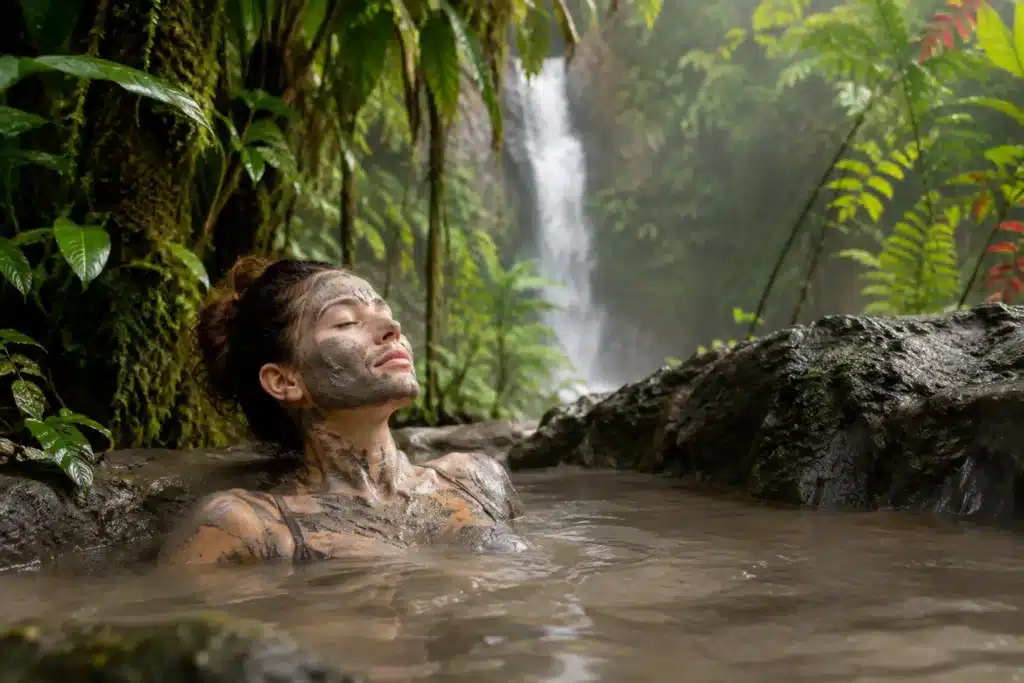
If your day includes thermal pools, spa-style elements, or a refined meal after the trail, pack with that transition in mind. A change of clothes can feel wonderful. So can a dry bag for wet items. The beauty of a curated rainforest day is that it allows you to move from wild immersion to deep restoration without losing the thread of the experience.
At Sensoria, that balance between nature, comfort, and intentional design is part of what makes the journey feel so restorative.
The best preparation is a receptive state of mind
When people ask how to prepare for a rainforest walk, they usually expect a packing list. The better answer is this: prepare your body for warmth and moisture, your clothing for movement and rain, and your mind for wonder that unfolds slowly. The rainforest is not a backdrop. It is a presence.
Come ready to listen more than perform, to observe more than conquer, and to let luxury mean something deeper than convenience. In a place this alive, the finest preparation is arriving calm enough to feel it.