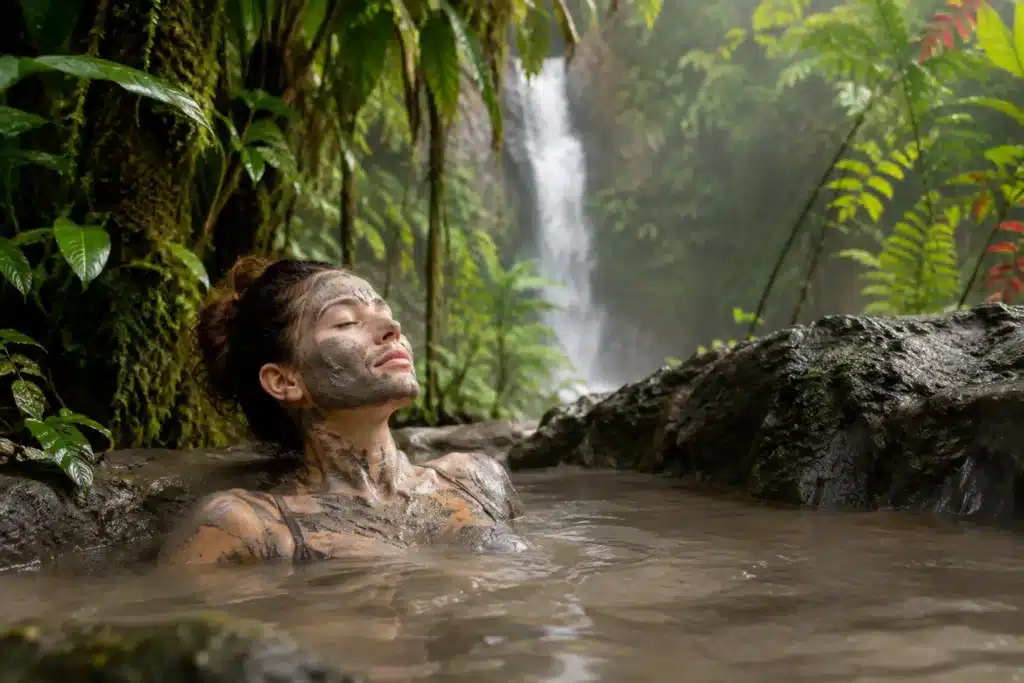
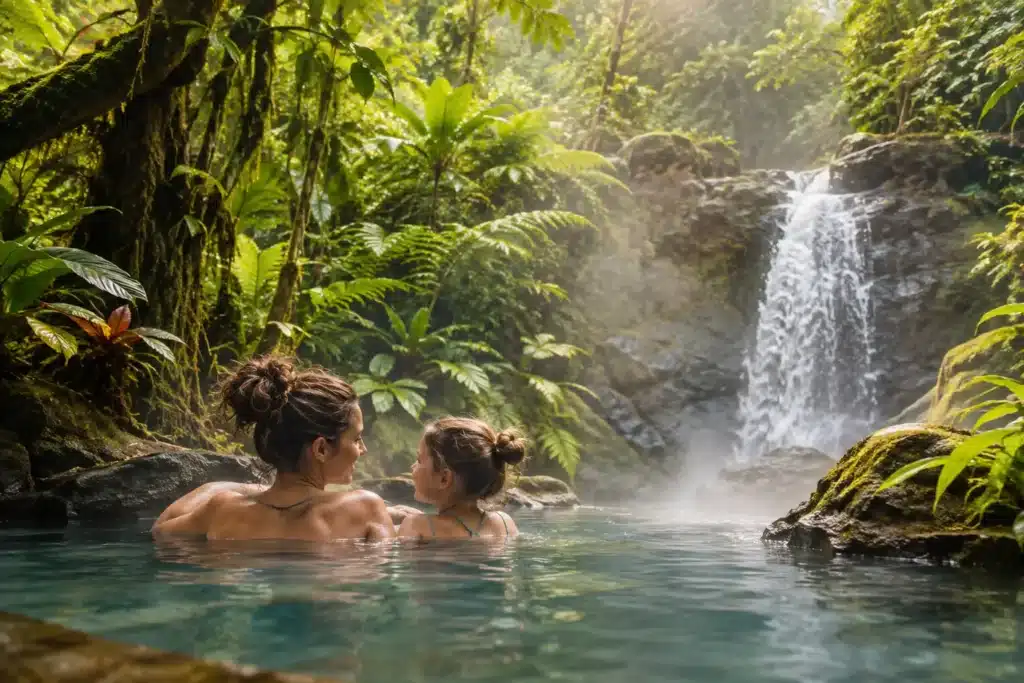
Steam rises through the rainforest canopy before the day has fully warmed. You step into a mineral-rich thermal pool, and the contrast is immediate: cool forest air on your face, enveloping water around tired muscles, and the unhurried sound of water moving over stone. This healing waters benefits guide is for travelers who want to understand what makes that moment feel so restorative – and how to approach it with intention.
Thermal bathing is not a cure-all, nor should it be treated as one. Its value lies in a gentler proposition: warm water, mineral contact, quiet surroundings, and time away from constant stimulation can support relaxation and help the body settle into a slower rhythm. In a protected rainforest setting, the experience becomes more than a soak. It is a sensory pause shaped by the living landscape around you.
Healing Waters Benefits Guide: What Thermal Soaking Can Offer
The most immediate benefit of a warm thermal pool is physical ease. Heat encourages blood vessels near the skin to dilate, which can create a feeling of warmth and release in muscles that have worked hard during travel, hiking, swimming, or long hours in transit. For many guests, a soak after a rainforest trail feels like an exhale the body has been waiting to take.
That response is partly physical and partly perceptual. Buoyancy reduces the sense of weight carried by joints and muscles, while warm water invites the nervous system to move away from alertness. A person who arrives preoccupied with flight schedules, messages, and plans may notice that their attention begins to narrow to simpler details: the temperature of the water, the fragrance of wet earth, birdsong from the trees.
Thermal waters may also support a deeper sense of rest later in the day. A warm soak can be a calming ritual before an afternoon of quiet or an early evening meal, particularly when followed by hydration and time to cool naturally. Results vary, of course. Some people feel wonderfully sleepy after thermal bathing, while others feel refreshed and energized. The temperature of the pool, the length of the soak, your activity level, and even the humidity in the forest all shape the experience.
Minerals are often central to the story of geothermal water. Depending on its source, thermal water can contain compounds such as calcium, magnesium, sulfur, sodium, and bicarbonates. These elements contribute to the water’s character, feel, and sometimes its scent. They should not be presented as a medical treatment, but many travelers find mineral water especially comforting on the skin and appreciate the timeless ritual of bathing in water drawn from deep within the earth.
Why the Rainforest Changes the Experience
A thermal pool in a hotel courtyard can be pleasant. A thermal pool held within a thriving rainforest carries a different kind of power. Here, restoration is not confined to the water. It begins on the path there, where leaves filter the light, waterfalls change the soundscape, and the air holds the green, mineral scent of a tropical forest.
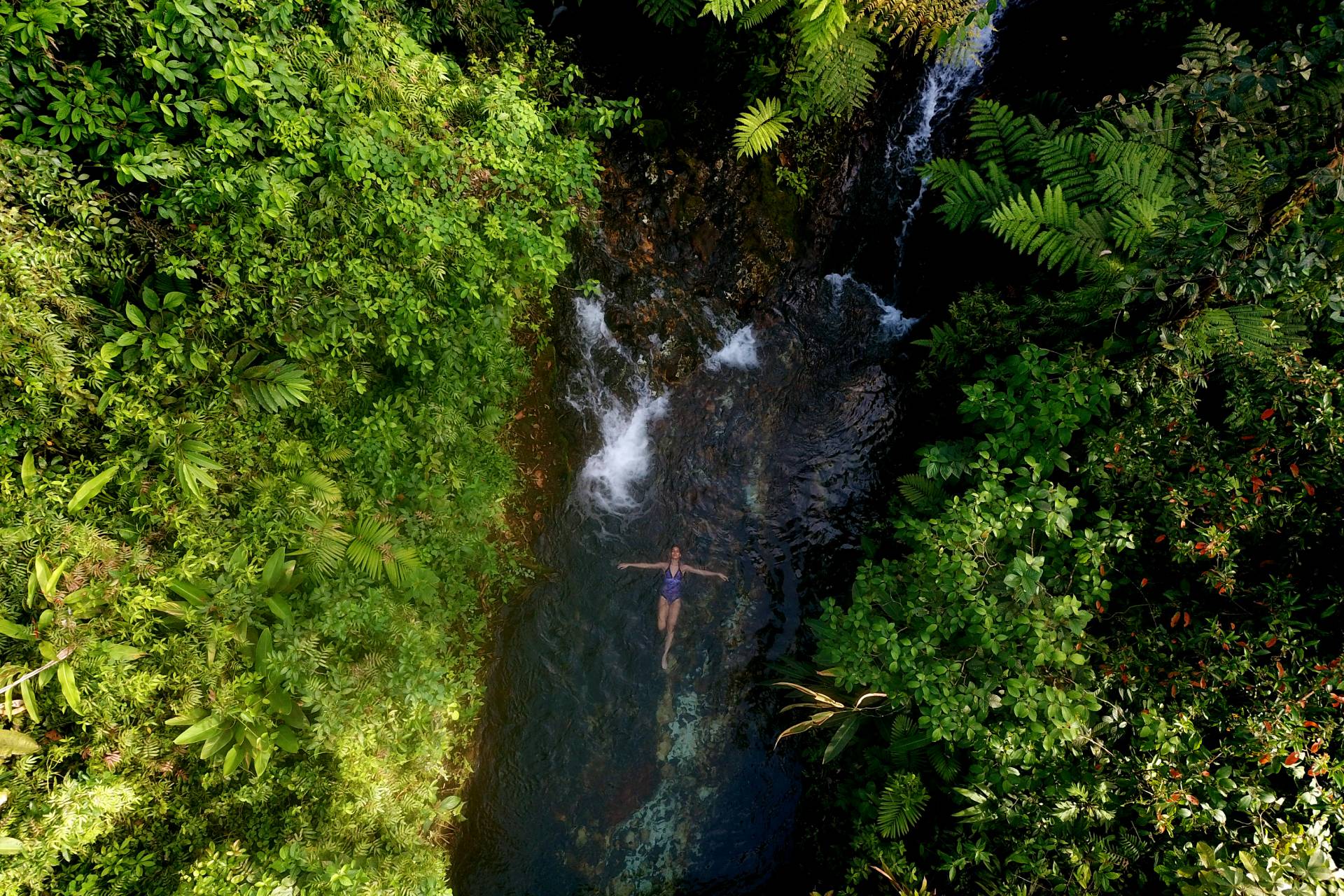
Research into nature exposure continues to affirm what many people feel instinctively: time in biodiverse, low-stimulation environments can help reduce mental fatigue and promote a calmer state of mind. The rainforest offers more than a beautiful backdrop. Its textures, sounds, shifting light, and fresh air invite attention outward, away from the mental loops that often follow us on vacation.
This is especially meaningful for travelers who prefer an elevated experience without separating themselves from the place they came to see. Privacy, thoughtful pacing, and attentive service can create comfort, but the forest remains the protagonist. A well-designed thermal experience does not flatten nature into an amenity. It allows guests to encounter water, stone, weather, and wilderness with greater presence.
In Guanacaste, geothermal landscapes and tropical rainforest meet in a particularly memorable way. Volcanic energy warms water beneath the ground, while abundant rain feeds rivers and waterfalls above it. The result is a landscape of contrast: heat and cool mist, polished pools and untamed foliage, stillness followed by the bright force of moving water.
The Value of Alternating Warmth and Coolness
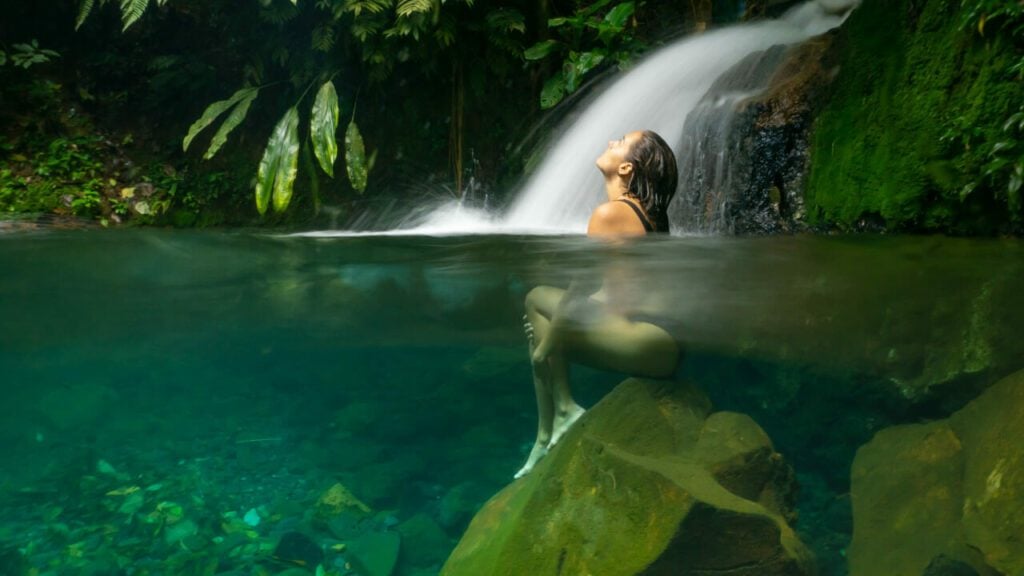
Many guests enjoy moving between warm thermal pools and cooler natural water. This contrast can feel invigorating, particularly after a hike in tropical conditions. A brief cool rinse or waterfall dip may leave you feeling alert before returning to a more temperate pool for rest.
There is no need to turn this into an endurance test. The goal is not intensity but awareness. Listen to your body, move slowly, and choose the temperature that feels genuinely comfortable. Travelers with heart conditions, uncontrolled blood pressure, circulation concerns, pregnancy-related restrictions, or other health questions should seek guidance from a medical professional before using hot pools or practicing strong hot-cold contrast.
How to Receive the Benefits More Fully
The most luxurious way to experience thermal waters is not necessarily to stay in the pool the longest. It is to give the experience enough space. Arrive hydrated, especially after a morning outdoors, and enter slowly so your body can adjust to the temperature. A shorter soak of 10 to 20 minutes may be plenty in a hotter pool, while milder water can invite a longer, more leisurely stay.
Let your body set the pace. If you feel lightheaded, overheated, unusually fatigued, or uncomfortable, step out, rest in the shade, and drink water. Alcohol can intensify dehydration and reduce your awareness of heat, so save celebratory drinks for after you have cooled down and rehydrated.
The setting matters as much as the water. Resist the urge to document every moment. Take a few photographs if they are meaningful to you, then place your phone aside. Notice the sound of insects rising and falling in the trees. Notice how the water touches your shoulders. Notice the change in your breathing after you have been still for a few minutes. These details are not incidental. They are part of why the memory stays vivid long after the journey ends.
After soaking, allow for a soft transition rather than rushing immediately to the next activity. Wrap in a robe, sit somewhere quiet, eat a nourishing meal, or enjoy a spa-style treatment that extends the sense of care. For couples, this can become an intimate shared ritual. For families, it can be a welcome moment of reconnection after active exploration. For private groups celebrating a milestone, it offers a rare kind of luxury: time that feels protected from interruption.
A More Thoughtful Kind of Wellness Travel
Wellness travel can sometimes become another packed itinerary, full of appointments and aspirations. Yet the most lasting forms of restoration are often less complicated. They ask for unstructured time, a place worthy of attention, and the freedom to be unhurried.
This is where a curated rainforest day has real value. Expert guidance can bring meaning to the forest’s ecology, while private access and considered amenities create the ease needed to receive it. At Sensoria, thermal waters are part of a broader encounter with waterfalls, rainforest trails, refined hospitality, and the preservation of a remarkable natural reserve.
There is also an ethical dimension to seeking healing in nature. A pristine thermal landscape is not simply a resource for visitors to consume. It depends on healthy forests, protected watersheds, and careful stewardship. Choosing experiences that respect the surrounding ecosystem helps ensure that the water remains clear, the habitat remains alive, and future travelers can feel the same sense of wonder.
The finest thermal experience does not promise to transform you in an hour. Instead, it offers something more credible and more valuable: a setting in which your body can soften, your attention can return, and the rainforest can remind you how restorative it is to feel fully present.