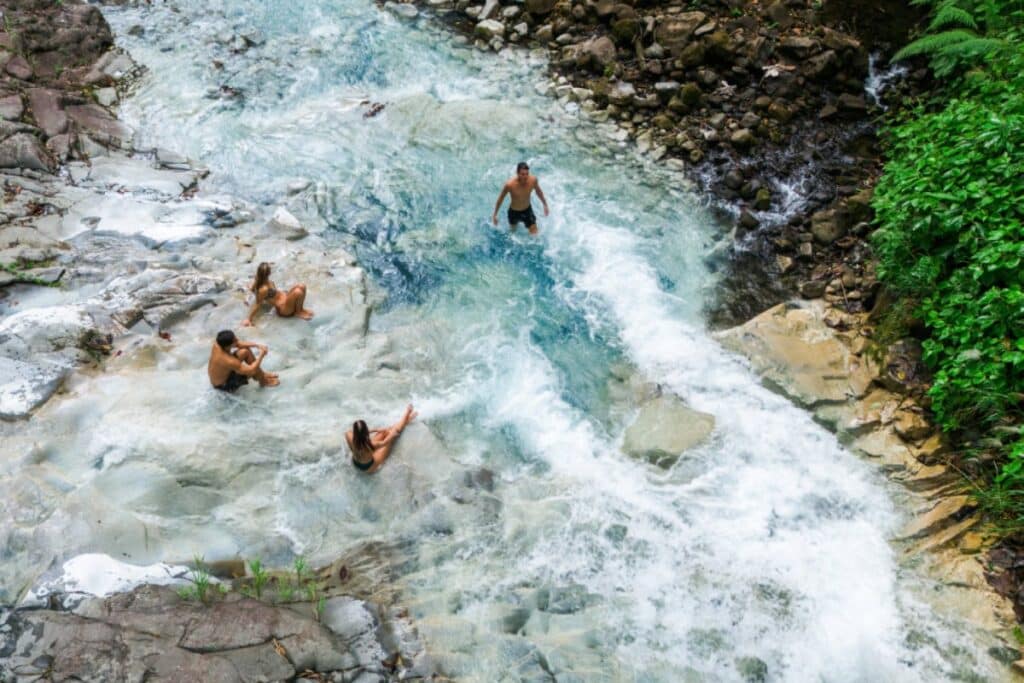
A morning in the rainforest should not begin with a crowd gathering beside a parking lot. It should begin with the sound of water moving through the forest, warm air carrying the scent of wet earth, and the sense that the day has been designed around your presence rather than a timetable. The future of luxury ecotourism is moving decisively in that direction: away from checklist travel and toward private, restorative encounters that honor both the guest and the landscape.
For discerning travelers, luxury is no longer defined only by a beautiful suite, a fine meal, or a chauffeur waiting at the curb. Those details still matter. Yet the rarest indulgence is increasingly something less manufactured – meaningful access to places that remain wild, guided with care and experienced without haste.
Why the Future of Luxury Ecotourism Is Personal
The era of one-size-fits-all nature tourism is beginning to feel out of step with what sophisticated travelers seek. A large group may see the same waterfall, but it cannot offer the same stillness as a quiet moment in front of it. A standard tour can identify a bird or describe a volcanic landscape, but a truly considered experience creates room to absorb what has been seen, felt, and understood.
This is where luxury and ecology become natural partners. The most valuable ecosystems are often those that need the most thoughtful protection. Limiting guest numbers, guiding travelers along intentional routes, and offering private access can reduce pressure on sensitive environments while making each visit more profound. Exclusivity, when practiced responsibly, is not merely a premium feature. It can be part of a preservation strategy.
Personalization also changes the emotional quality of a journey. A couple celebrating a honeymoon may want a secluded thermal pool, a quiet gourmet lunch, and time to linger beneath the rainforest canopy. A family may prefer a guide who can turn every frog call, medicinal plant, and forest track into a living story. A small corporate group may need a setting that allows people to reconnect without the distractions of conference rooms and screens.
The itinerary matters, but the intention behind it matters more. Future-facing ecotourism will be less concerned with how many stops fit into one day and more attentive to how a guest feels at each one.
Conservation Will Become a Measure of True Luxury
Luxury travel has often been associated with abundance. In the natural world, however, abundance has a different meaning: healthy watersheds, intact forest corridors, thriving pollinators, and wildlife that can move freely through its habitat. The next generation of premium travelers will look beyond polished service to ask what their visit protects.
That question deserves more than vague promises. Meaningful conservation-based tourism requires care in the daily details: maintaining trails to prevent erosion, managing waste thoughtfully, protecting water sources, respecting carrying capacity, employing knowledgeable local teams, and preserving habitat rather than simply using it as a scenic backdrop.
Travelers do not need every experience to feel like a lecture. They do want confidence that beauty has not been staged at nature’s expense. The best hosts make conservation visible through the quality of the place itself. Clear water, flourishing vegetation, quiet trails, and guides who speak with genuine knowledge all communicate a deeper ethic.
There is a trade-off worth acknowledging. More privacy, lower guest volume, and careful stewardship may mean a higher price than a crowded day excursion. For travelers who value time, comfort, and impact, that difference is increasingly understood as an investment in access that does not diminish the destination.
Costa Rica has long shown how conservation and tourism can reinforce one another. In Guanacaste, where dry forest, volcanic landscapes, rivers, and rainforest meet, the opportunity is especially compelling. Visitors can enter environments of extraordinary biodiversity while choosing experiences that support the long-term protection of those places.
Wellness Will Move From Add-On to Essential
The future traveler will not separate adventure from wellbeing as sharply as previous generations did. A rainforest walk, a mineral-rich thermal soak, a nourishing meal, and a massage-inspired ritual can belong to the same journey because each answers a shared desire: to feel restored.
This shift is especially relevant for guests arriving from busy cities, demanding careers, or milestone celebrations. They may be searching for beauty, but they are also searching for a change in rhythm. The rainforest offers this naturally. Its soundscape softens the mind. Its humidity and fragrance bring the body back into awareness. Its scale makes everyday urgency feel smaller.
Wellness in ecotourism should not be reduced to a menu of treatments placed beside a scenic view. It is the feeling of moving through a place with enough time to breathe. It is a guide who knows when to share a fascinating detail and when to let silence hold the moment. It is stepping into warm thermal water after a trail walk and realizing that comfort can deepen, rather than distract from, connection with the land.
At Sensoria, this philosophy is expressed through curated rainforest journeys that bring together private reserve access, expert guidance, waterfalls, healing thermal waters, refined dining, and moments designed for unhurried presence. The goal is not simply to show guests a destination. It is to create the conditions for nature to be felt fully.
Technology Should Stay Quiet
Technology will shape luxury ecotourism, but its finest role may be almost invisible. Better reservation systems can help manage visitor capacity. Data can support trail maintenance, weather planning, and habitat monitoring. Electric transportation and lower-impact infrastructure can improve the guest experience while reducing environmental strain.
Yet travelers who choose the rainforest are not seeking another layer of digital noise. The future is not an app that interrupts every view with a notification. It is technology used discreetly to make the experience safer, more personal, and lighter on the landscape.
There is room for thoughtful tools. A private photo gallery can preserve a proposal without placing a phone between the couple and the moment. Pre-arrival preference planning can ensure that dietary needs, mobility considerations, and celebration details are anticipated with grace. But the essential luxury remains the ability to put devices away and notice what is already present: birdsong, steam rising from thermal water, the changing color of the sky before evening.
The Guide Will Become the Heart of the Experience
As travelers become more selective, the human element will become even more valuable. Guests can find beautiful photographs of waterfalls in seconds. They cannot replace the perspective of a guide who understands the land, recognizes subtle wildlife signs, and can make a forest feel intelligible without making it feel overexplained.
Exceptional guiding is both expertise and intuition. It requires ecological knowledge, of course, but also the ability to read the pace of a group. Some guests want to know the scientific story behind a thermal spring. Others want to stand quietly at its edge. A skilled host understands that both responses are valid and creates space for each.
This is particularly important in luxury settings, where service should feel attentive rather than intrusive. The guest should never feel processed. They should feel welcomed into a place with confidence, warmth, and respect.
What Discerning Travelers Can Look For
Not every experience described as eco-luxury carries the same depth. Beautiful design and organic ingredients may be appealing, but they do not alone define responsible travel. The strongest choices tend to share a few qualities: modest group sizes, credible stewardship of the surrounding environment, knowledgeable local guides, a sense of place in the food and service, and enough time for the experience to unfold without rushing.
Privacy is also worth considering carefully. Private does not have to mean isolated from the culture or detached from the environment. At its best, it means protected space: a quieter trail, a table prepared with care, a thermal pool where conversation can soften, and an itinerary shaped around what matters to the people sharing it.
For some travelers, a full day of rainforest exploration and thermal restoration will feel ideal. For others, the most meaningful choice may be an evening experience, a celebration arranged in a secluded setting, or a custom itinerary built around a proposal, family milestone, or incentive retreat. The future of premium travel will not insist on one definition of luxury. It will make room for the personal reasons people journey in the first place.
The most memorable luxury ecotourism experiences will leave no need to prove anything afterward. They will remain in the body as calm, in the mind as clarity, and in the heart as a renewed respect for places that are still beautifully alive.