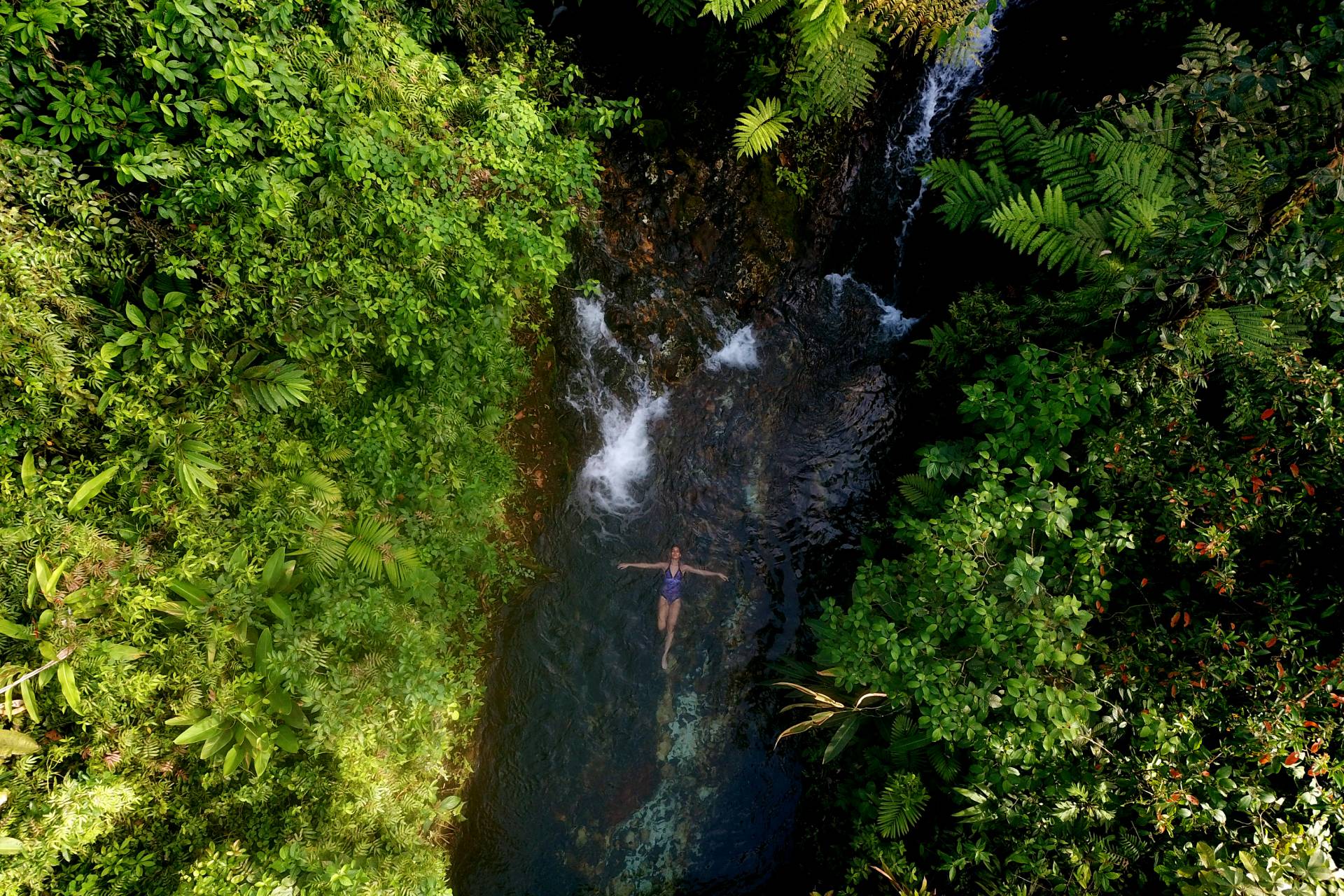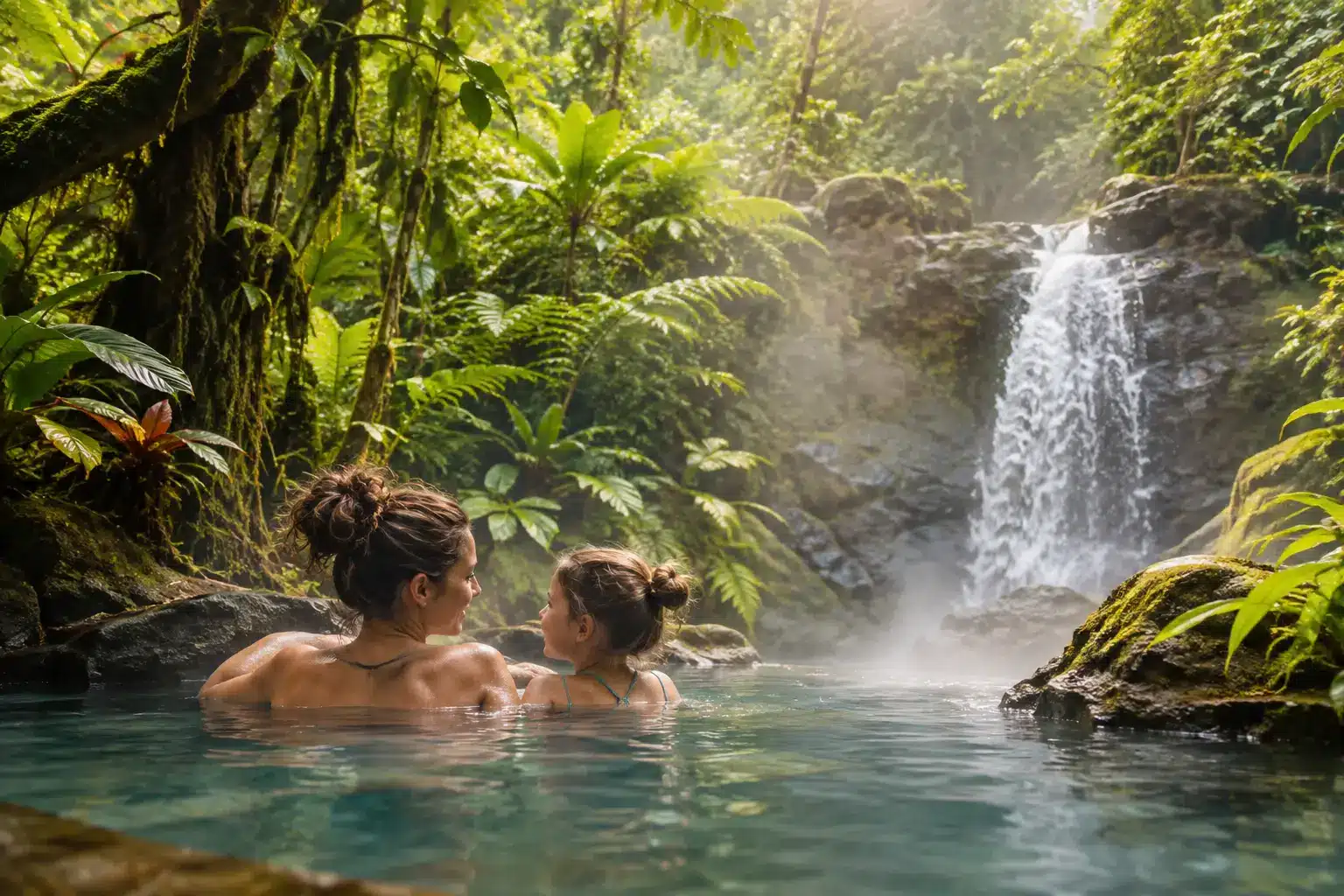

A child standing at the edge of a steam-softened pool, listening to the rainforest and testing the water with one curious toe, is not looking for a spa treatment. They are looking for wonder. For families planning a refined nature escape, the question is simple: can kids enjoy thermal pools? In the right setting, with the right pace and attentive adult supervision, they absolutely can.
Thermal bathing can become one of the most memorable parts of a Costa Rica family day. Warm mineral water, cool forest air, waterfalls, birdsong, and time away from screens offer something rare: a shared experience that feels both adventurous and deeply restful. Yet thermal pools are not interchangeable, and a thoughtful family visit depends on more than whether children are allowed in the water.
Can Kids Enjoy Thermal Pools Safely?
Yes, but comfort and safety should guide every decision. Natural thermal pools vary in temperature, depth, mineral composition, access, and surroundings. What feels pleasantly warm to an adult may feel too hot or tiring for a young child, especially after a rainforest walk in Guanacaste’s tropical climate.
The best approach is unhurried and observant. Adults should always enter first, assess the water temperature, and stay close enough to supervise without distraction. Children should never be left alone in or near a thermal pool, even when the water appears shallow. Slippery stone, changing pool depths, and the simple excitement of a new environment all deserve respect.
A quality experience also means choosing pools designed for comfort rather than endurance. Look for areas where families can move between warmer water, cooler water, and shaded places to rest. A child who is happy in a mildly warm pool for ten minutes may be uncomfortable after twenty. There is no prize for staying longer.
Heat, hydration, and individual needs
Children tend to warm up faster than adults, so shorter sessions are usually wiser. Encourage frequent water breaks, offer a light snack after swimming, and make shade part of the rhythm of the day. If a child looks flushed, tired, dizzy, unusually quiet, or simply says they are too warm, it is time to leave the water and cool down.
Parents should also consider each child’s age, health history, and confidence in water. Infants, very young children, and children with medical conditions may need more conservative choices. When in doubt, ask a physician before travel and speak with the experience provider about pool temperatures and family policies. A trusted guide or host can explain which pools are best suited to younger guests, but parents remain the best readers of their own child.
Why Thermal Pools Feel Different for Children
A thermal pool is more than warm water. In a rainforest reserve, it can feel like a secret landscape revealed after the trail: mineral-rich water held by stone, leaves moving above, and mist carrying the scent of rain and earth. Children notice details adults often pass by. They watch a blue morpho butterfly cross the path, trace the sound of a waterfall, and ask why the water is warm beneath a green canopy.
That sense of discovery is precisely why the setting matters. A crowded, noisy facility can turn thermal bathing into another attraction to rush through. A more private, guided environment gives families room to slow down. The experience becomes less about checking off a destination and more about being present together.
For children accustomed to busy schedules, a quiet soak can be surprisingly grounding. They may not describe it as wellness, but they understand the feeling of warm water after a walk, the pleasure of floating briefly beside a parent, and the calm that arrives when there is nowhere else to be. Adults often find that their children settle naturally when the day is not overprogrammed.
A Better Rhythm for a Family Thermal Day
The most enjoyable thermal-pool experiences are built around contrast. Begin with movement through the forest, pause at a waterfall or scenic overlook, then arrive at the pools when the body is ready to rest. Afterward, dry off, enjoy a nourishing meal, and leave space for conversation rather than immediately moving on to the next activity.
This rhythm matters because children can lose interest when a day leans too far in one direction. Too much hiking can feel demanding; too much soaking can become dull or overly warm. Pairing gentle exploration with moments of restoration keeps the day engaging for every age.
Timing also shapes the experience. An early arrival often brings cooler air and more energy for walking. A later soak can feel particularly soothing after the trail, provided the family has stayed hydrated and has not spent too long in direct sun. Private or small-group visits are especially valuable for families who prefer to move at their own pace, pause for photos, or step away from the water without feeling rushed.
What to bring without overpacking
Comfort is part of luxury, particularly when traveling with children. Bring swimsuits, dry clothes, water-resistant sandals with reliable grip, sun protection, and a reusable water bottle for each family member. A light cover-up or robe can be welcome between pools, while a waterproof bag helps keep dry clothing protected.
Avoid bringing valuables to the water’s edge. If your child uses floatation equipment, confirm in advance whether it is permitted and whether it is appropriate for the pool design. Most importantly, bring a flexible mindset. The perfect family day is not one in which every planned minute happens. It is one where everyone leaves feeling cared for.
Choosing a Thermal Experience That Welcomes Families
Not every thermal experience is meant for every family. Some are designed around intense temperatures, long wellness rituals, late-evening ambiance, or adult-focused quiet. Others offer a more balanced blend of nature, accessible trails, attentive hosting, and pools where families can relax together.
Before booking, ask practical questions. What are the typical water temperatures? Are there pool options with gentler warmth? How long is the walk to reach them, and what is the terrain like? Are changing facilities, towels, meals, and shaded rest areas available? Is the experience private, small-group, or high-volume? Clear answers reveal whether a property values thoughtful hospitality or merely admission numbers.
For families visiting Guanacaste, a curated rainforest day can make logistics feel beautifully simple. At Sensoria, the journey can combine guided reserve exploration, waterfall encounters, thermal waters, and elevated dining in a setting created for connection with the landscape. That kind of intentional design allows parents to enjoy the moment rather than constantly manage the next detail.
Setting Expectations With Children Before You Arrive
A brief conversation before the visit can transform the day. Explain that thermal pools are warm, natural spaces rather than a water park. Let children know they will walk carefully, listen to their guide, stay near an adult, and take breaks when their bodies need them. Framing these expectations as part of caring for the forest often works better than presenting them as a list of restrictions.
Invite children to become observant travelers. Ask them to listen for three different bird calls, look for changes in leaf texture, or notice how the air feels near moving water. These small invitations give them an active role in the experience and deepen their connection to the reserve.
It also helps to give them permission to opt out. A child may love the trail and dislike the pool temperature, or enjoy a short soak but prefer watching from the edge afterward. Their comfort does not have to match yours for the day to feel complete.
The Family Memory That Lasts
The real gift of thermal pools is not simply warmth. It is the rare pause they create: parents unhurried, children curious, and a living rainforest surrounding them with color, water, and quiet vitality. When the experience is thoughtfully chosen, safety and indulgence are not opposites. They become part of the same carefully held day.
Let the children set a gentle pace, listen to what the water and weather are telling you, and leave room for the unexpected moment that becomes the story your family tells long after Costa Rica fades from the itinerary.