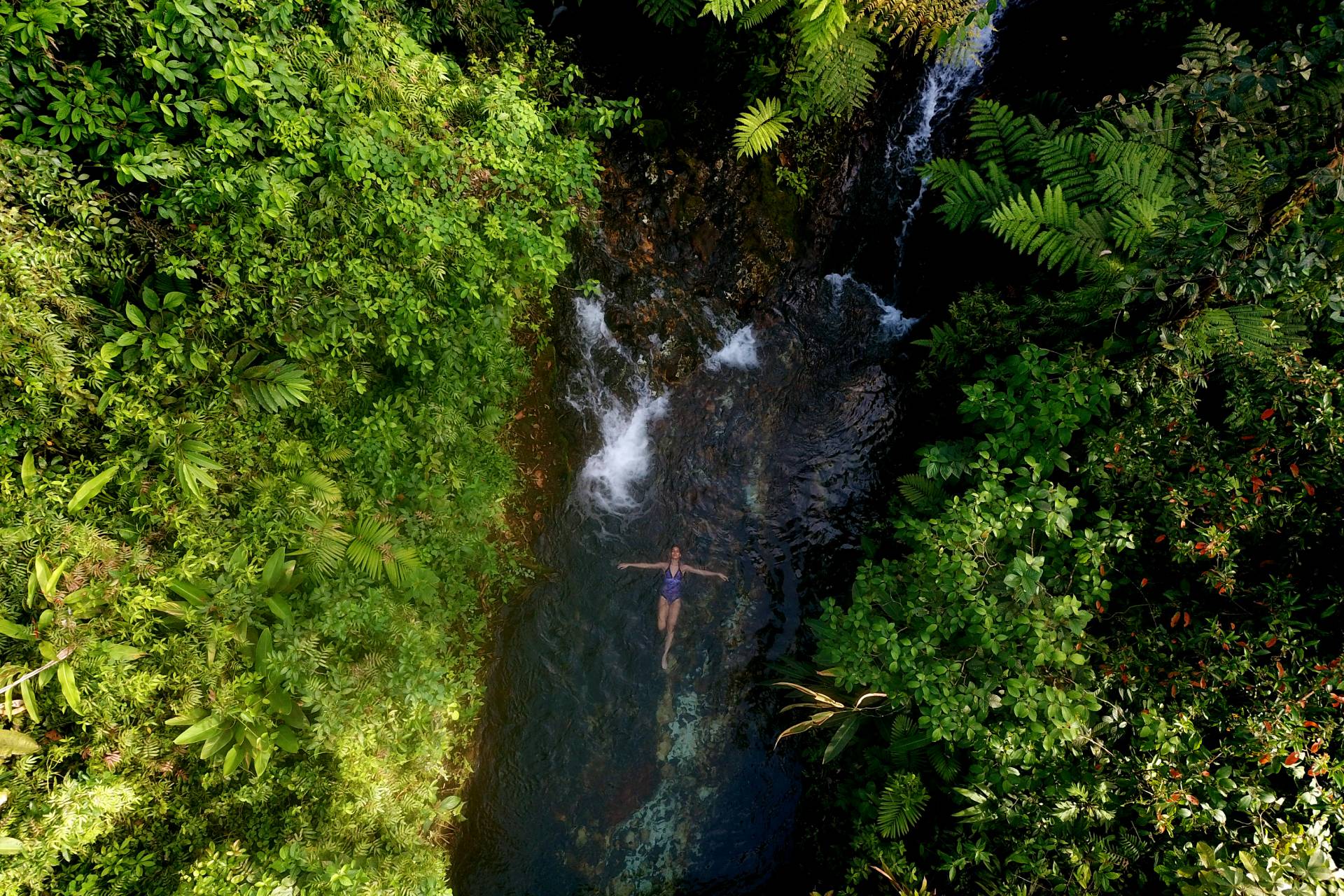
The sound arrives before the first course: water moving over volcanic stone, birds calling beyond the canopy, and the soft hush of a forest that has been left to thrive. A rainforest dining experience is not simply a meal served near beautiful scenery. At its finest, it is a pause within a larger journey – one that brings together exploration, restoration, and the rare pleasure of being fully present.
For travelers in Guanacaste, this distinction matters. The region is celebrated for sunlit beaches and wide-open Pacific views, yet its inland rainforest holds another kind of luxury: cool air, mineral-rich water, deep green trails, and a sense of privacy that cannot be staged. Dining in this setting becomes more memorable when it is approached with the same intention as the landscape itself.
What Makes a Rainforest Dining Experience Different
A restaurant can offer excellent food, polished service, and a dramatic view. A truly exceptional rainforest meal offers something more difficult to create: context. It follows the physical exhilaration of a waterfall trail, the calming warmth of thermal waters, or an unhurried afternoon spent noticing orchids, butterflies, and the changing light beneath the trees.
That sequence changes the way a meal is received. After a guided walk, flavors feel brighter. After time in healing thermal pools, a thoughtfully prepared lunch or private dining moment becomes an extension of wellness rather than an interruption between activities. The goal is not excess for its own sake. It is nourishment that feels earned, generous, and in harmony with the day.
This is also why setting matters as much as the menu. In a protected rainforest, the surroundings provide their own refinement: the clean scent of rain on leaves, the texture of natural stone, and the quiet confidence of a place that does not need crowds or artificial spectacle to impress.
The Pleasure of Dining After the Waterfall
There is a particular pleasure in arriving at a table after time near moving water. The body has slowed down, the mind has shed its usual distractions, and the senses are already awake. A fresh meal, enjoyed in comfort, can become one of the most vivid moments of the entire day.
In Guanacaste’s volcanic landscape, the contrast is especially striking. Cool rainforest paths can lead to cascading waterfalls and warm thermal pools, creating an experience shaped by water in many forms. Dining after these encounters allows guests to settle into the rhythm of the reserve rather than rushing back to the coast for a conventional lunch.
The best experiences honor this rhythm with attentive timing. Guests should have time to change, refresh, and enjoy the calm that follows a soak or spa-style treatment. There is a meaningful difference between being hurried into a meal and being welcomed into a space designed for lingering.
Cuisine Should Feel Grounded, Not Overdone
Luxury dining in nature does not require an overly formal performance. Often, the most fitting cuisine is fresh, elegant, and satisfying without competing with the forest. Seasonal fruits, vibrant vegetables, carefully prepared proteins, and Costa Rican ingredients can feel deeply elevated when quality and presentation are treated with care.
It depends, of course, on the occasion. A couple celebrating a honeymoon or proposal may want a more private, champagne-forward setting with a longer, more ceremonial meal. A family after an active morning may value comfort, flexibility, and dishes that satisfy a range of tastes. Small incentive groups may need an experience that feels special while still allowing conversation and connection.
The common thread is thoughtfulness. Fine dining should support the atmosphere, not overwhelm it. The rainforest has already provided the drama.
Privacy Is Part of the Luxury
Crowded attractions can make even a beautiful destination feel transactional. Long lines, noisy groups, and tightly timed stops leave little room for the restorative quality many travelers seek in Costa Rica. A private reserve offers a different proposition: space to move at a natural pace and a setting where dining can feel personal rather than programmed.
For couples, privacy creates room for conversation without competing voices nearby. For families, it offers a more relaxed environment in which each person can engage with the day differently. For celebration travelers, it turns a meal into a genuine occasion rather than a reservation squeezed between sightseeing stops.
At Sensoria, the experience is designed around this sense of intentional access. Guided rainforest exploration, waterfalls, thermal waters, wellness moments, and elevated dining are considered as one curated day, not a collection of unrelated amenities. That perspective is what allows a meal to carry emotional weight long after the last course.
The Guide Connects the Table to the Forest
The most memorable nature experiences are rarely defined by scenery alone. They are shaped by interpretation. A knowledgeable guide gives meaning to what might otherwise pass unnoticed: a medicinal plant beside the trail, the reason a river runs clear, the call of a hidden bird, or the intricate relationship between rainfall, volcanic soil, and the forest’s extraordinary abundance.
That knowledge adds depth to dining as well. When guests understand the living systems around them, a meal feels connected to place. The rainforest is no longer a backdrop for a photograph. It becomes a host in its own right.
This is one reason a guided experience is often preferable to independently seeking out a picturesque lunch spot. Independence has its appeal, particularly for travelers who want a loosely structured day. But guided access can bring safety, interpretation, timing, and a more considered level of comfort – important considerations in a humid, changeable rainforest environment.
How to Choose the Right Experience
When comparing rainforest dining options, look beyond menu descriptions and dramatic images. Ask whether the meal is integrated into a meaningful nature experience or simply added as a convenience. Consider how many people will be sharing the setting, whether there is a private area for your party, and how the day accommodates weather, mobility, and dietary preferences.
A well-designed experience should feel generous without feeling rushed. It should include clear guidance on trail conditions, what to wear, and how to transition comfortably from waterfalls or thermal pools to dining. In the rainy season, covered spaces and flexible planning become particularly valuable. Rain is part of the rainforest’s beauty, but it should be met with preparation rather than inconvenience.
For guests who value wellness, consider the full arc of the day. A meal after a mud treatment, mineral soak, or quiet moment beside the water carries a different quality than a standard lunch stop. For those marking an occasion, ask whether the setting can be shaped around the moment – with privacy, celebratory details, or a pace that allows the experience to unfold naturally.
A More Responsible Way to Indulge
There is a trade-off within luxury travel that deserves attention. The more pristine a natural place appears, the more carefully it must be treated. A rainforest dining experience should never come at the cost of the ecosystem that makes it extraordinary.
Responsible luxury means choosing operators that protect the landscapes they invite guests to enjoy. It means respecting designated trails, reducing unnecessary waste, honoring wildlife distance, and recognizing that water, food, and comfort are part of a larger living system. Preservation is not an accessory to the experience. It is the reason such an experience remains possible.
This awareness does not diminish pleasure. It sharpens it. Knowing that the forest is protected, that access is mindful, and that the day supports a deeper relationship with nature gives every detail more meaning.
A beautiful meal is quickly forgotten when it is separated from place. But when it arrives after a waterfall, beside a thriving forest, and within a day created for restoration, it becomes something more lasting: a sensory memory of Costa Rica at its most generous.