A private guide pauses beside a waterfall long enough for you to hear three different layers of sound – rushing water, distant birdsong, and the soft movement of leaves overhead. That moment says more about eco luxury travel trends than any glossy hotel lobby ever could. The new standard of luxury is no longer excess for its own sake. It is space, stillness, ecological integrity, and the rare feeling of being deeply cared for while surrounded by a living landscape.
For travelers who choose Costa Rica with intention, this shift feels especially clear. The most sought-after experiences are moving away from crowded itineraries and toward curated encounters that restore the body, sharpen the senses, and protect the places that make the journey worthwhile. Luxury has become more thoughtful. Eco has become more refined. And the best travel experiences now treat those two values as inseparable.
The eco luxury travel trends guests feel first
The most meaningful changes in high-end travel are not always visible on a booking page. They are felt in the pace of the day, the privacy of the setting, the quality of interpretation, and the sense that every detail has been chosen with care. Affluent travelers are asking better questions now. They want to know not only where they are staying, but how the place is protected, how many people share the experience, and whether the itinerary creates genuine connection or just polished distraction.
That has led to a more mature version of eco-luxury. Solar power and reusable amenities still matter, but they are no longer enough to define the category. Sophisticated travelers expect sustainability to be built into operations as a baseline. What distinguishes a truly elevated experience is how conservation, comfort, and emotional depth come together in a natural, coherent way.
Privacy is replacing spectacle
One of the clearest eco luxury travel trends is the move from public tourism to private immersion. Travelers with limited time and high expectations are less interested in being moved through a destination in large groups. They want access that feels protected, personalized, and calm.
This does not simply mean booking a nicer room. It means choosing experiences where the environment can still speak. A rainforest walk guided at an intentional pace, a thermal soak in a serene setting, or a meal served after a day of sensory exploration often carries more value than a high-volume attraction with luxury branding attached.
There is a trade-off here. Highly private experiences can cost more, and in sensitive natural settings they often should. Smaller groups, expert guides, protected land, and careful stewardship require investment. But for many guests, that higher level of care is exactly what makes the experience feel worthwhile.
Wellness is becoming less performative and more natural
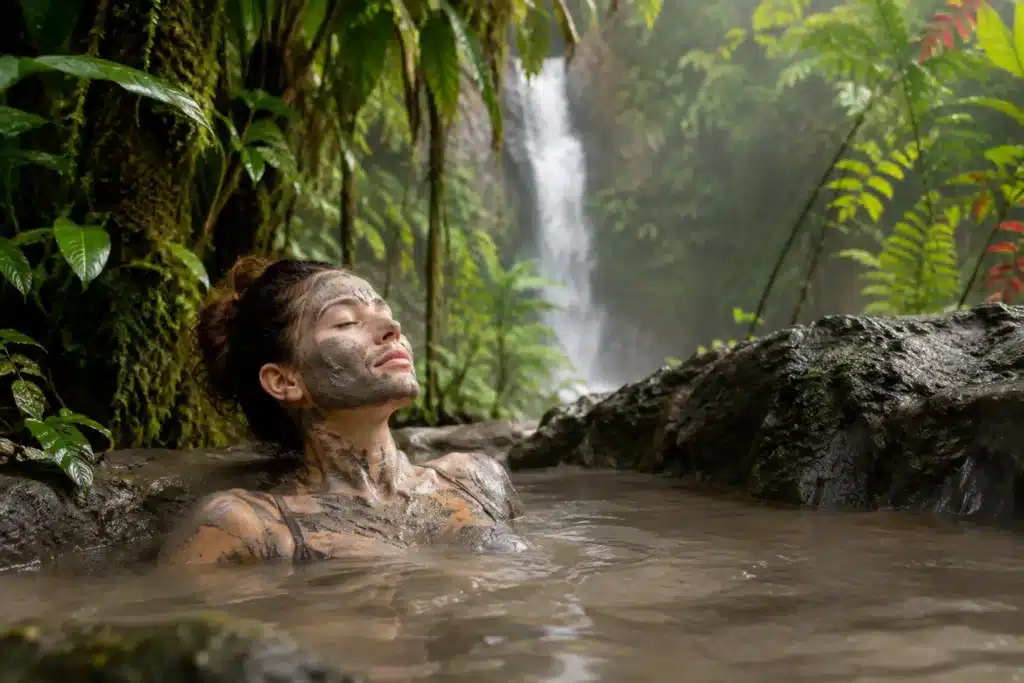
For years, luxury wellness travel leaned heavily on imported rituals and sleek spa aesthetics. Those still have their place, but travelers are gravitating toward experiences where wellness emerges from the landscape itself. Warm mineral waters, forest humidity, volcanic mud, clean air, and the nervous-system reset that comes from unhurried time in nature are becoming central to the luxury conversation.
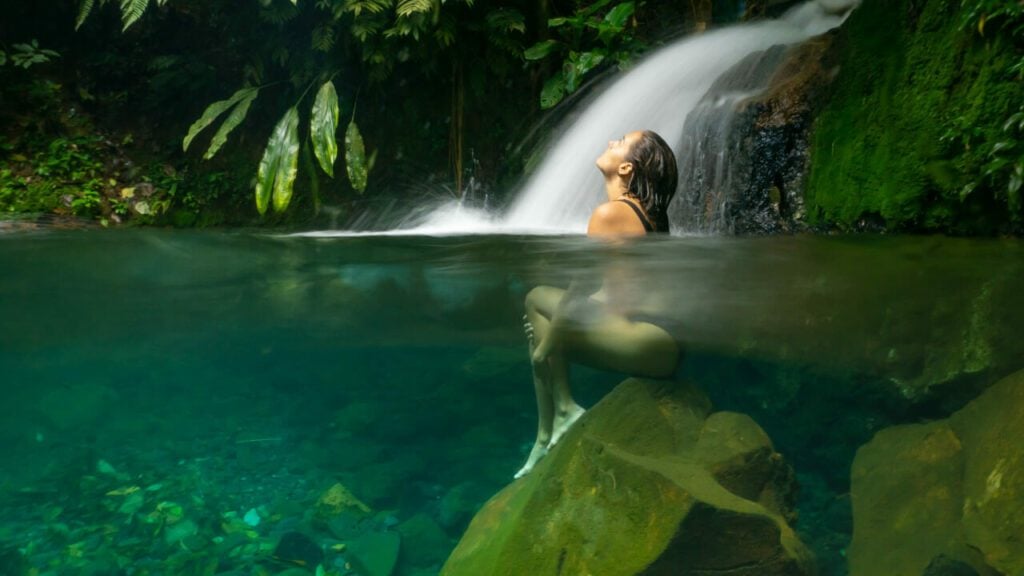
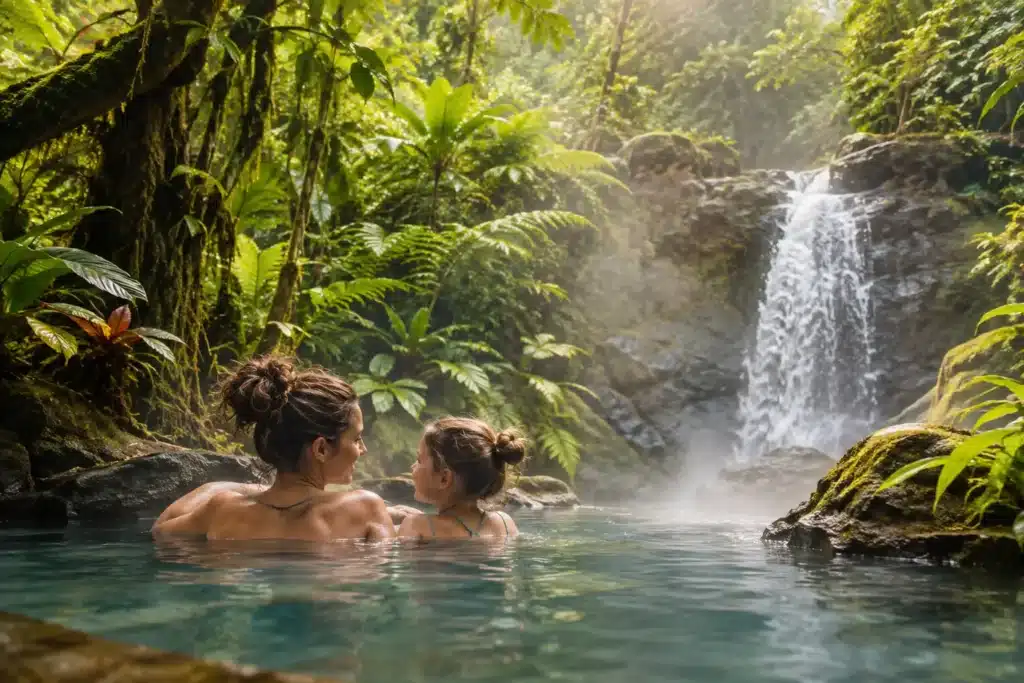
This is where eco-luxury travel feels especially compelling in destinations rich in biodiversity. Wellness no longer needs to be staged as something separate from adventure. The walk through the forest can be part of the treatment. The waterfall can be part of the release. The thermal pool can feel less like an amenity and more like a return to balance.
The strongest operators understand that guests do not want to choose between refinement and authenticity. They want both. A robe, a beautifully prepared meal, and attentive service can exist alongside raw natural beauty without diminishing it. In fact, when done well, comfort allows travelers to be more present to the landscape, not less.
Conservation is becoming a luxury marker
Another shift within eco luxury travel trends is that conservation itself now signals quality. Travelers are increasingly drawn to places that preserve habitat, limit impact, and treat biodiversity as a treasure rather than a backdrop. A protected reserve, thoughtful trail design, and expert interpretation offer a kind of exclusivity that cannot be manufactured later.
This is an important distinction. Some travel products still use sustainability as decoration – a few green phrases, a local ingredient, a recycled bottle. Discerning guests are looking beyond that. They want to see that the natural environment is central to the experience and that preservation is part of the business model, not just the marketing.
That also changes what counts as luxury. It is no longer only thread count, architecture, or access to premium extras. Luxury can mean hearing fewer voices on the trail, witnessing wildlife in an undisturbed setting, and knowing the place has been protected well enough to remain vibrant for years to come.
Guided interpretation matters more than ever
A remarkable landscape becomes more profound when someone helps you read it. Travelers are placing higher value on expert-guided experiences that reveal ecology, geology, and local natural rhythms with intelligence and grace. In high-end ecotourism, the guide is not an add-on. The guide shapes the emotional and intellectual depth of the day.
This reflects a broader change in traveler behavior. People still want beauty, but they also want meaning. They want to understand the medicinal uses of plants, the story behind thermal waters, the behavior of tropical birds, and the hidden relationships that keep a rainforest alive. They are not looking for a lecture. They are looking for insight delivered with warmth and precision.
For premium travelers, this transforms the outing from passive sightseeing into a curated encounter. It makes the destination more memorable, and it often makes travelers more protective of the place itself.
One-day luxury is rising
Not every guest wants a weeklong retreat. One of the more practical eco luxury travel trends is the rise of highly curated single-day experiences. For travelers staying at beach resorts or private villas, the ideal day trip offers immersion without logistical friction. They want a full emotional arc in one day – discovery, movement, restoration, and indulgence – without sacrificing comfort.
This is particularly attractive in destinations where visitors want to combine coast and inland experiences. A day in the rainforest with waterfalls, thermal pools, elevated dining, and private guidance can complement a broader itinerary beautifully. It allows travelers to step into a different rhythm without overcomplicating their plans.
The challenge, of course, is execution. A one-day experience must feel complete, not rushed. It requires thoughtful pacing, strong hospitality, and a setting rich enough to create a sense of arrival. When that balance is right, a single day can feel astonishingly expansive.
Celebration travel is becoming more intimate
Honeymoons, anniversaries, proposals, and milestone trips are also shaping the category. Luxury travelers are increasingly choosing nature-rich settings for personal celebrations, but they want those moments to feel elegant rather than theatrical. The appeal lies in intimacy – a private toast after a forest walk, a hidden thermal pool, a beautifully prepared meal in a lush setting, or a guided experience designed around a couple or small group.
This trend reflects a broader desire for emotional authenticity. Travelers want stories they can feel, not just photograph. The most memorable celebration settings are often those where the natural environment creates a sense of reverence on its own.
For a brand like Sensoria, this approach feels especially relevant because the experience already lives at the meeting point of restoration, exclusivity, and ecological wonder. In that setting, luxury does not interrupt nature. It frames it with care.
The future is intentional, not extravagant
What comes next in eco-luxury travel is likely to be even more selective. Travelers will continue to reward businesses that offer privacy, ecological credibility, and a sense of true place. They will be less impressed by visible opulence if it comes at the expense of atmosphere or environmental integrity. They will seek out experiences that feel rare because they are protected, not because they are overproduced.
That does not mean traditional luxury disappears. Beautiful design, attentive service, and exceptional food still matter. But the highest form of luxury now feels quieter. It gives guests room to breathe, room to notice, and room to reconnect with what travel is supposed to do in the first place.
If you are planning your next journey with discernment, follow the experiences that leave the landscape intact and your senses fully awake. Those are not passing trends. They are the future of meaningful travel.